
Oct. 6-18, 2021
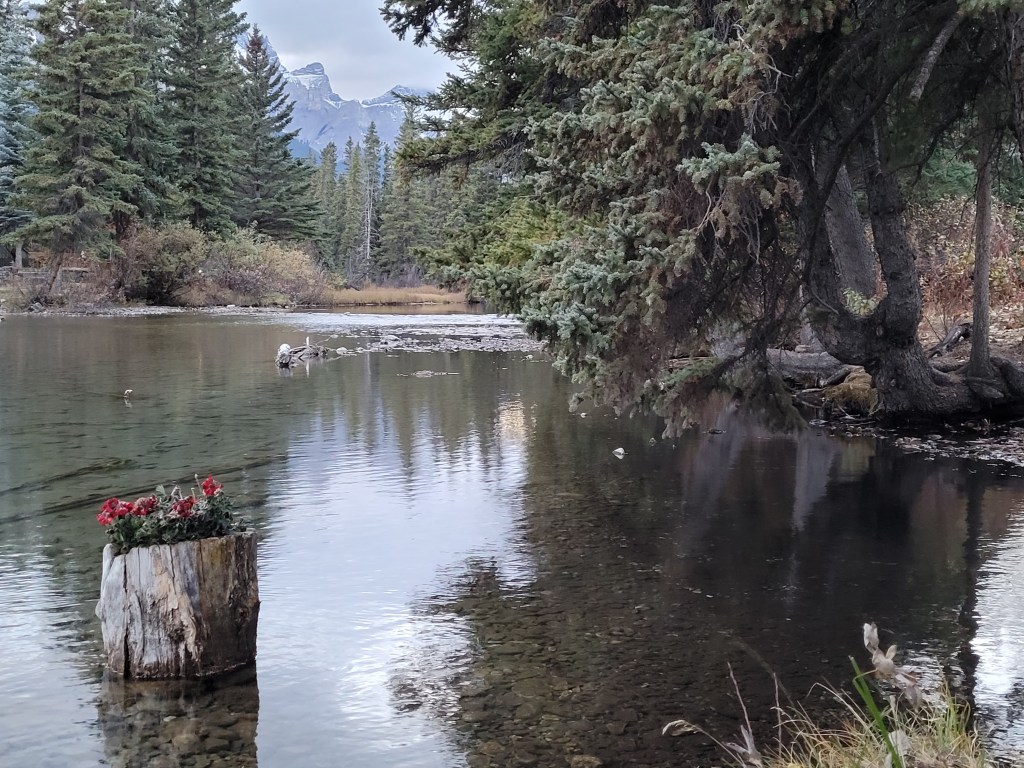
Once again, Covid restricted our travel plans so we decided to do another Alberta vacation. We decided to spend one night in each of the ritzy hotels that our mountain parks have to offer. The rest of the time we stayed in cheap AirBnB and motels. A fine balance…
We started our journey to the Rocky Mountains with a stop at the Edmonton Corn Maze. Why not? I’d never been there before and it sounded quirky and fun. I was not disappointed. The maze covers about 15 acres and is a different pattern every year.
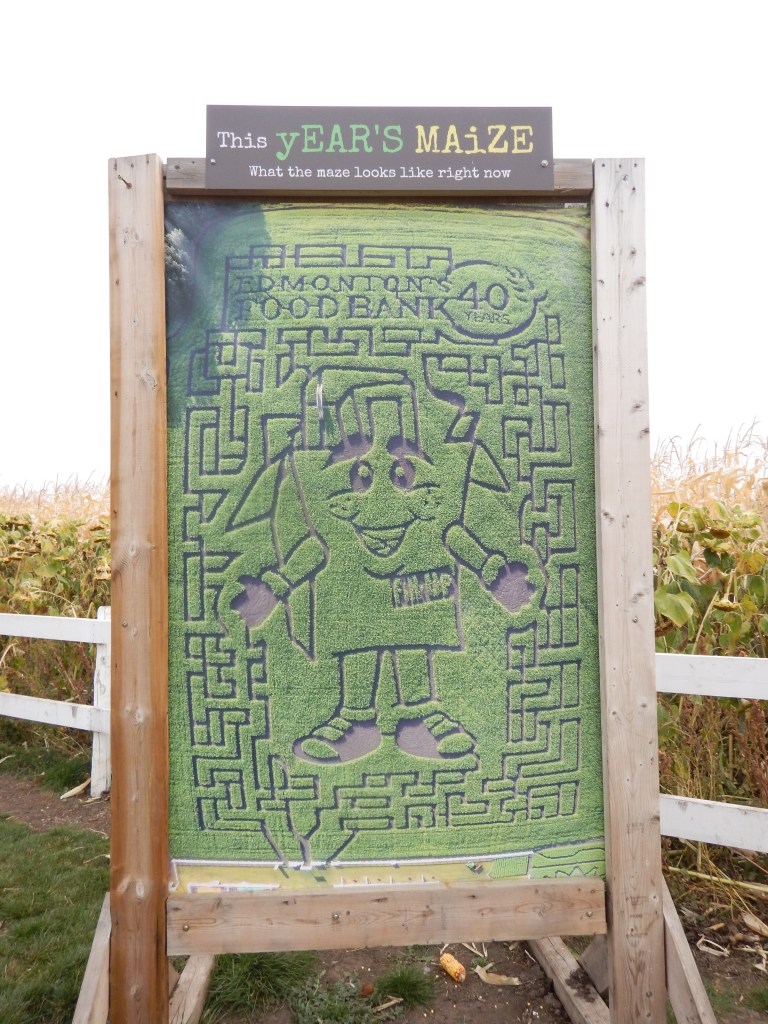
The corn is really tall, so there is NO chance of peeking over. There is a raised platform that overlooks the entire area, but that didn’t help either.
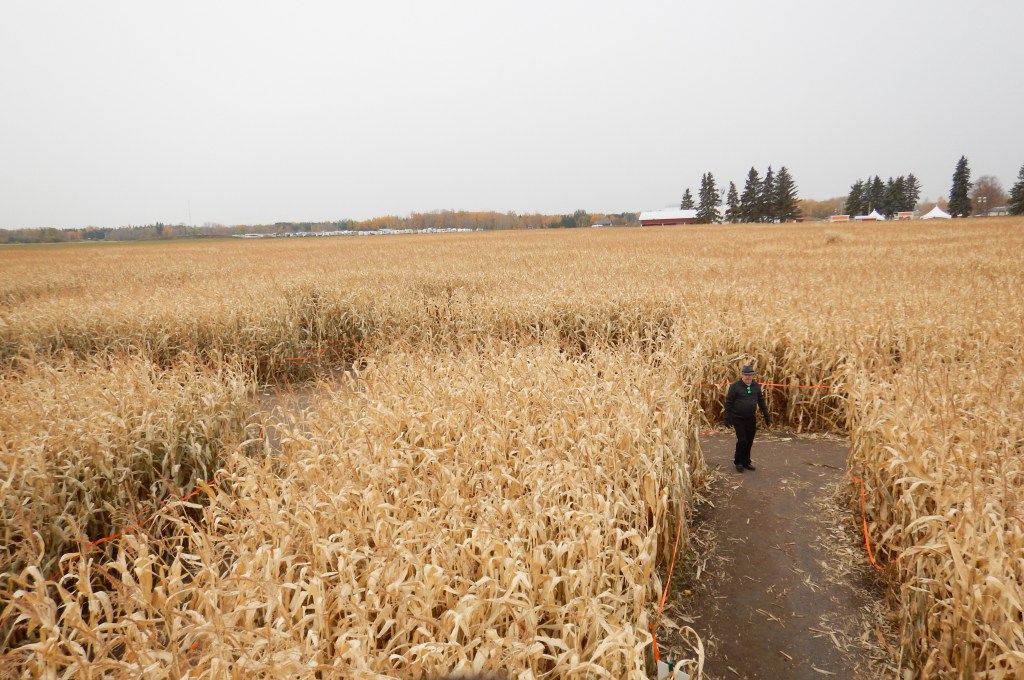
There are 2 different routes. Either takes about 45 minutes to work through. There are little quizzes which, if you answer correctly, will tell you which way to proceed. Answer wrong and it sends you in the opposite direction. It was designed for groups of people, with little games to choose a leader. Although it was just the two of us, it was still lots of fun. At times, I was certain we had to go left, while Ed was certain we had to go right. We each set off in our own direction only to meet each other halfway around a giant loop. OOPS! I guess we should have detoured somewhere along the loop. It was frustrating to see a path behind a tall row of corn and not be able to figure out how to get to it.
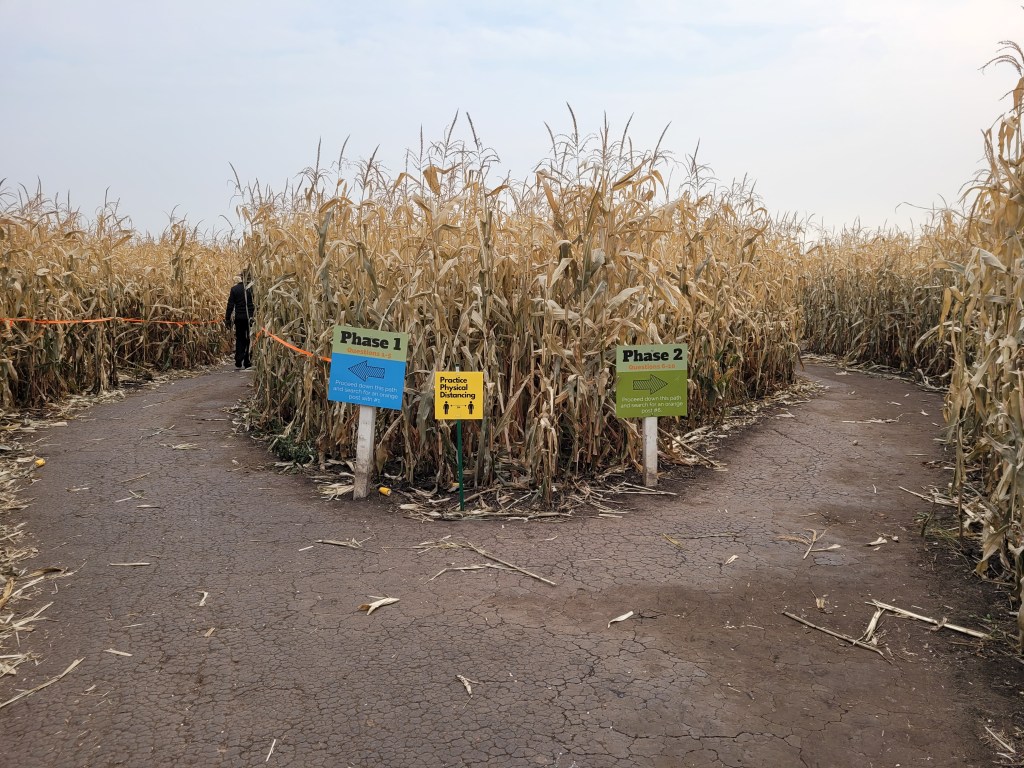
I would definitely go again!
The first night we stayed in Rocky Mountain House, a small town with a big history dating back to the 18th century when it was a fur trading post established by the Hudson’s Bay company. The next morning we took the David Thompson Highway (Hwy 11), stopping briefly at Allstones Lake. It was there that we met a young couple with a drone. The young man was so proud of his little whirling toy that he showed me how it works and what kind of aerial pictures he can take.
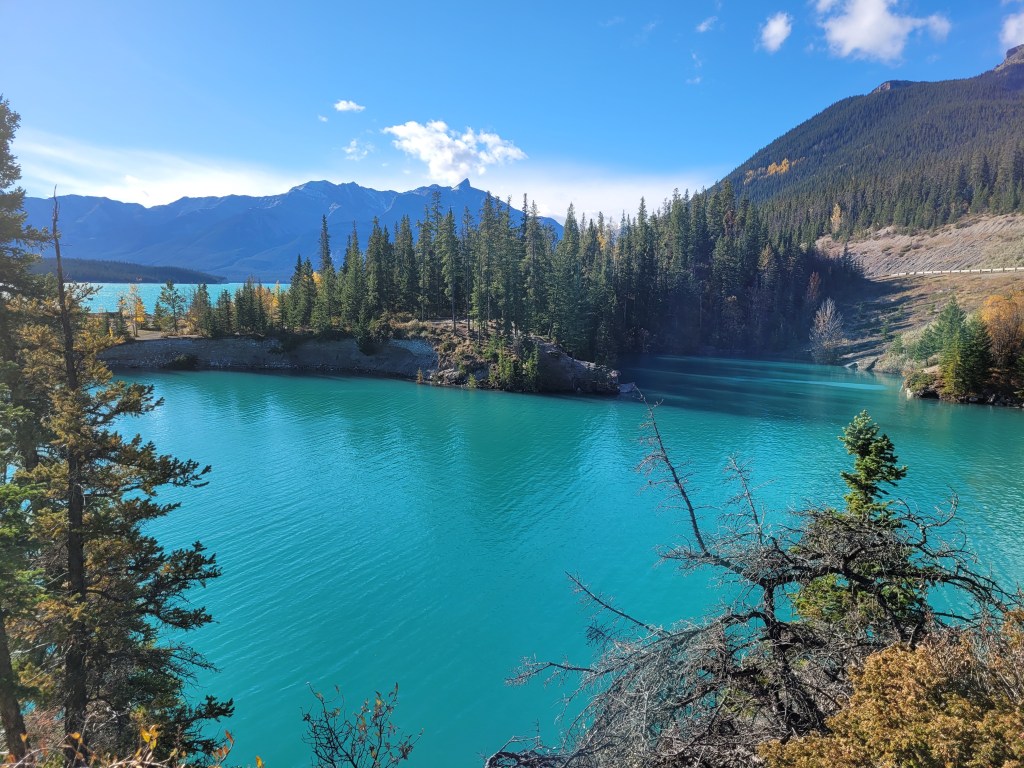
Turning off Highway 11 and onto Highway 93 we stopped again at The Big Bend viewpoint. We met another young couple (Mickey & Minnie – really!!) He worked in Whistler at a ski shop and she was from Australia – stuck here because of the pandemic. People have such interesting stories to tell!
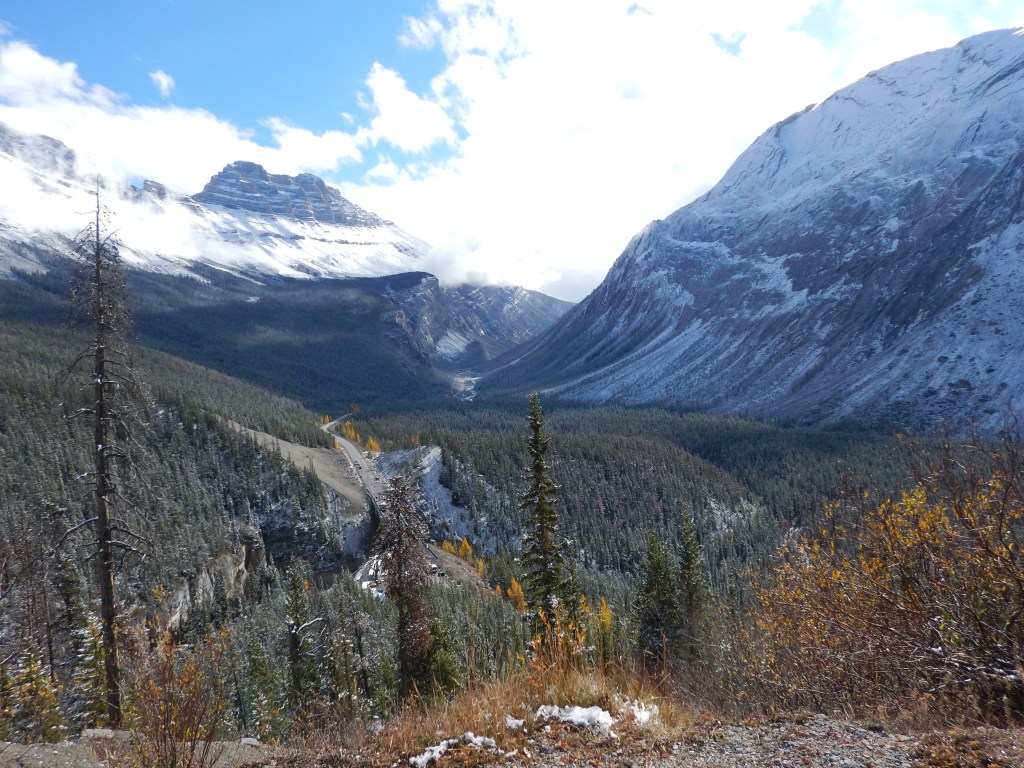
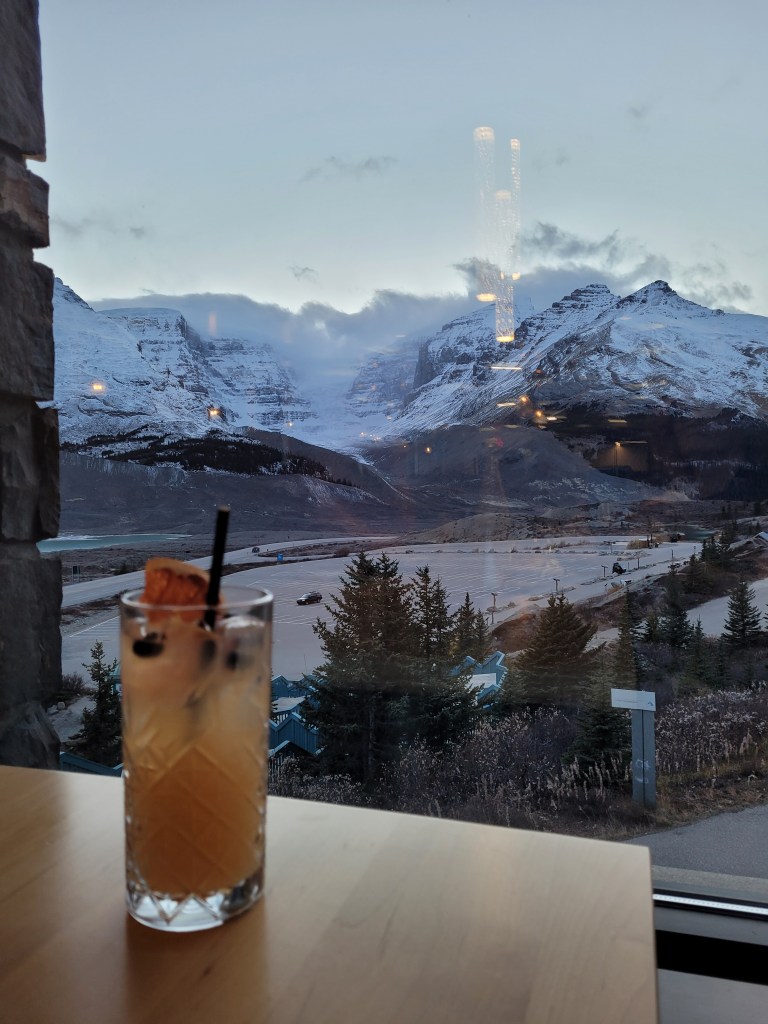
We had a reservation at the Glacier View Lodge, situated across the road from the Columbia Ice Field. It was the Thanksgiving Day weekend and the last weekend of the season for the hotel. Winters are brutal in this area. The area receives up to 7 metres (about 23 feet) of snow each winter. Couple that with the 60 kph (35 mph) winds and you can imagine the snow drifts! The manager told us when he arrived in April to open the hotel, a snow drift was piled up and over the second-story balcony.
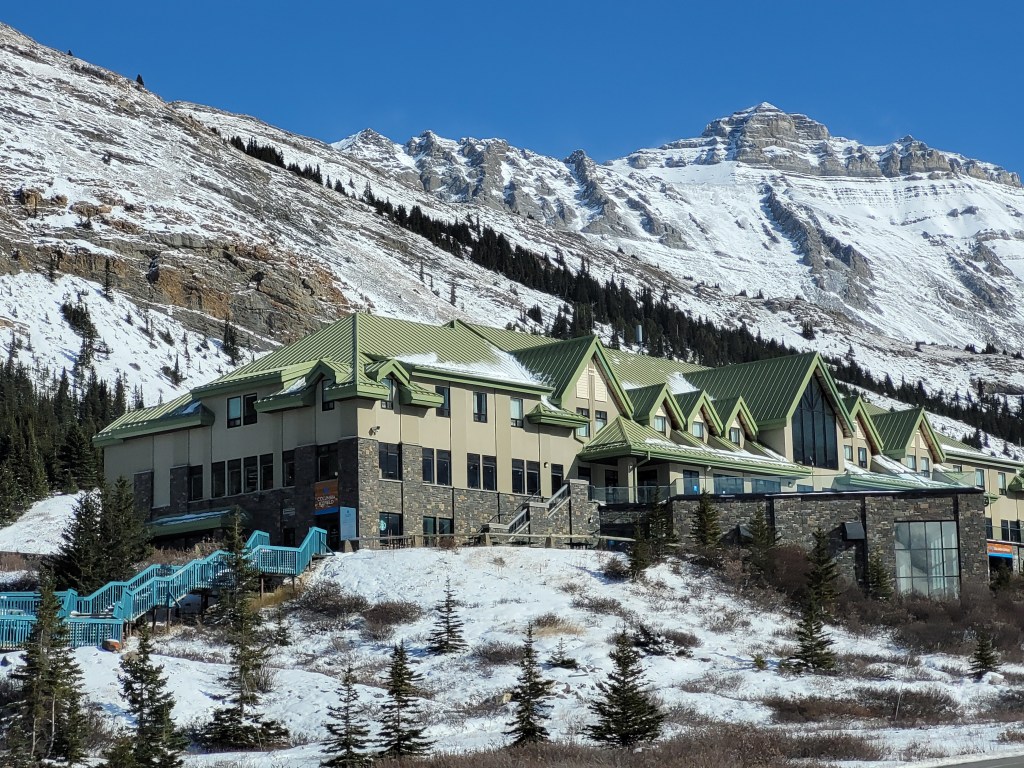
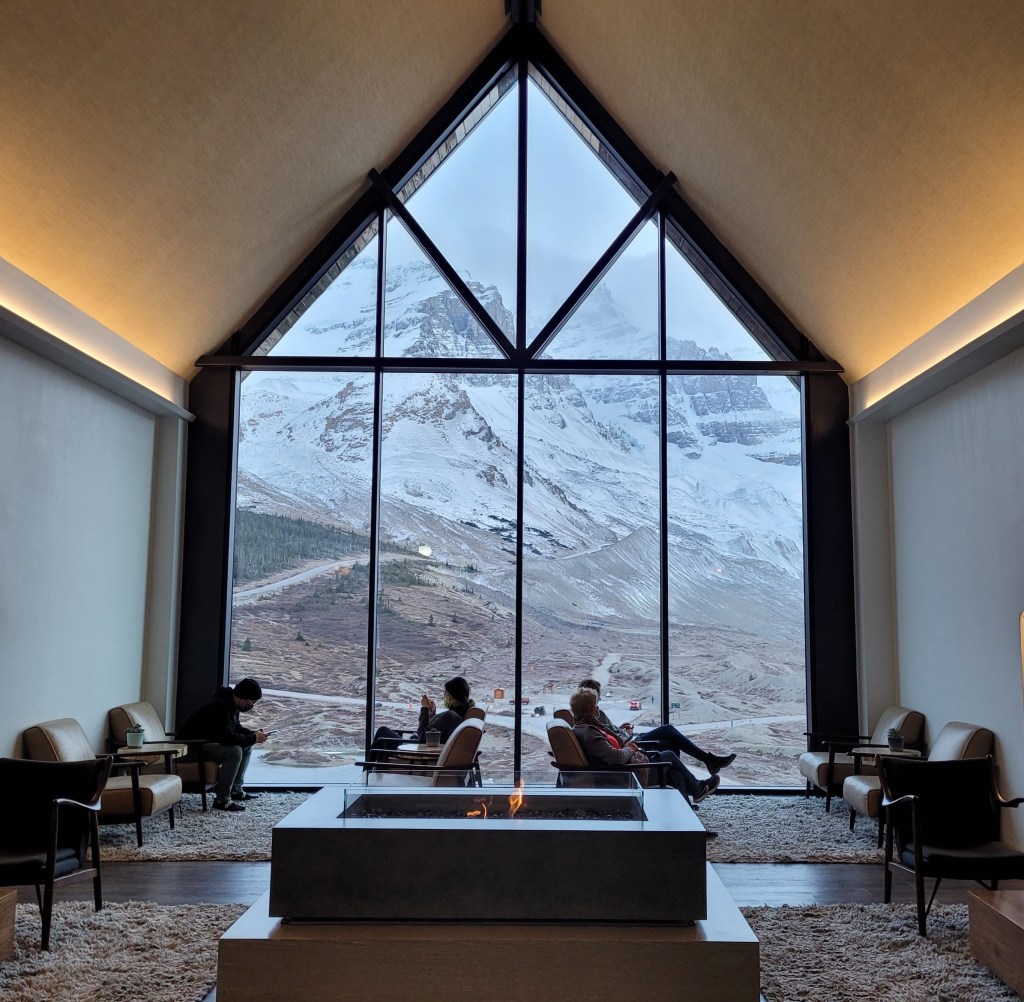
The lobby is actually located on the second floor, with the Discovery Centre, gift shop and tours on the ground level. The restaurant is on the third floor. The lobby has a huge fire table with couches and lounge chairs against the walls and in the centre. One entire wall is actually a window that overlooks the glacier. It was stunning!
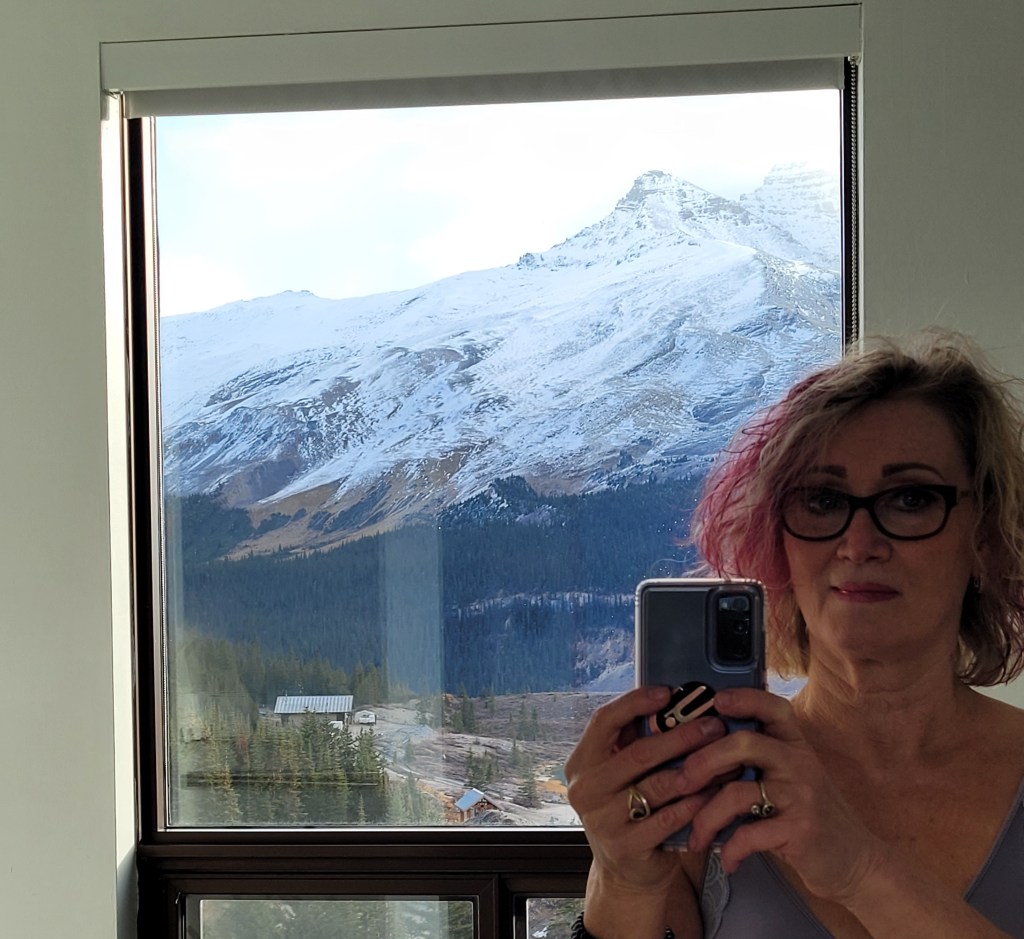
When we checked in the manager said that our room was not cleaned yet, however, since it was the last weekend they were open he upgraded us to room 335 – the best room in the hotel. The room was massive. WOWZA! What a view! The room was on the corner of the building so no matter which massive window we looked out, there was the glacier. Even the bathroom had a huge window. The only thing missing was a Jacuzzi in the bathroom so one could soak and look out at the same time. When the manager asked if the room was okay, I told him I could kiss him – it was perfect. He agreed with my Jacuzzi idea.
We went back downstairs and booked a 3 event ticket. One for the Ice Explorer bus, one for Columbia Icefield Sky Walk, and one for Maligne Lake boat ride. We were just on time to catch the bus that took us to the Ice Explorer – a huge buggy/bus that took us across the moraine (the huge rocky hills on either side of the glacier that is formed as the glacier moves and rips the rock). It is a slow and bumpy ride. The previous year one of these huge buggies flipped over and killed a few people. Then onto the glacier itself.
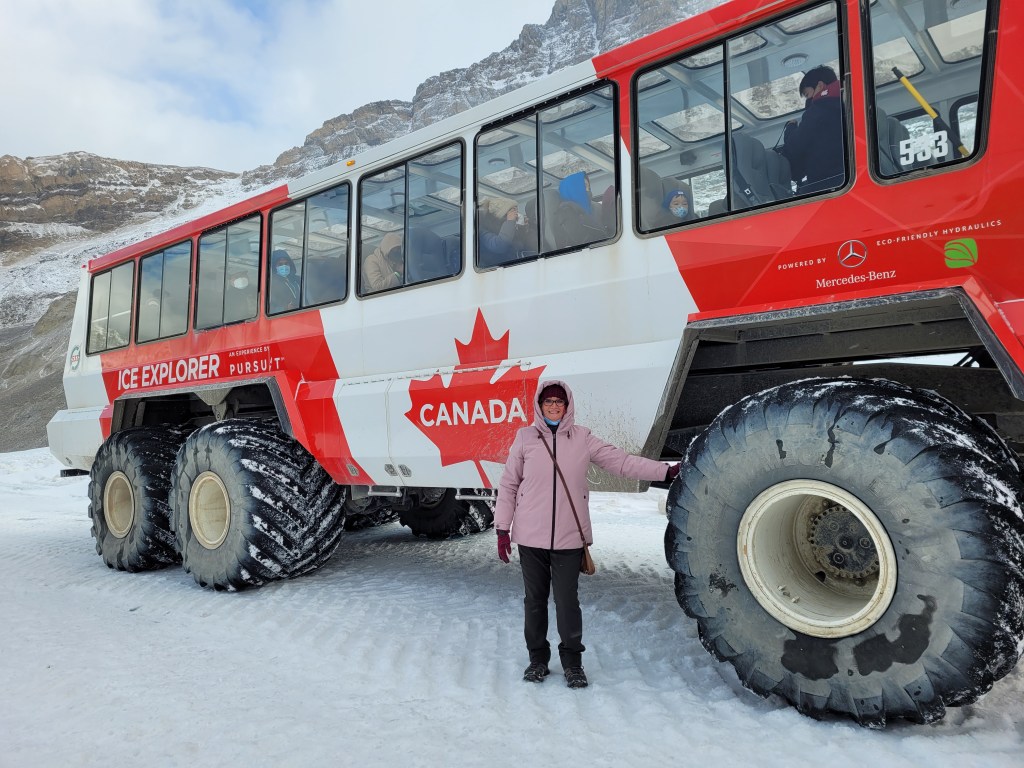
Even on a good day, the temperature on the glacier is 15 degrees C colder than at the Discovery Centre. It is windy, too. The day was already cloudy and cold. I’m not sure if it was actually snowing on the glacier or if it was just existing snow blowing. It gave me a sense of being in the Arctic. I have always loved the mountains as I feel small in the grand scheme of life. This just added to it. Surrounded by snow-covered mountains, on a huge slab of ice, the snow obscuring everything gave it a mystical feel. It doesn’t get much better than that!
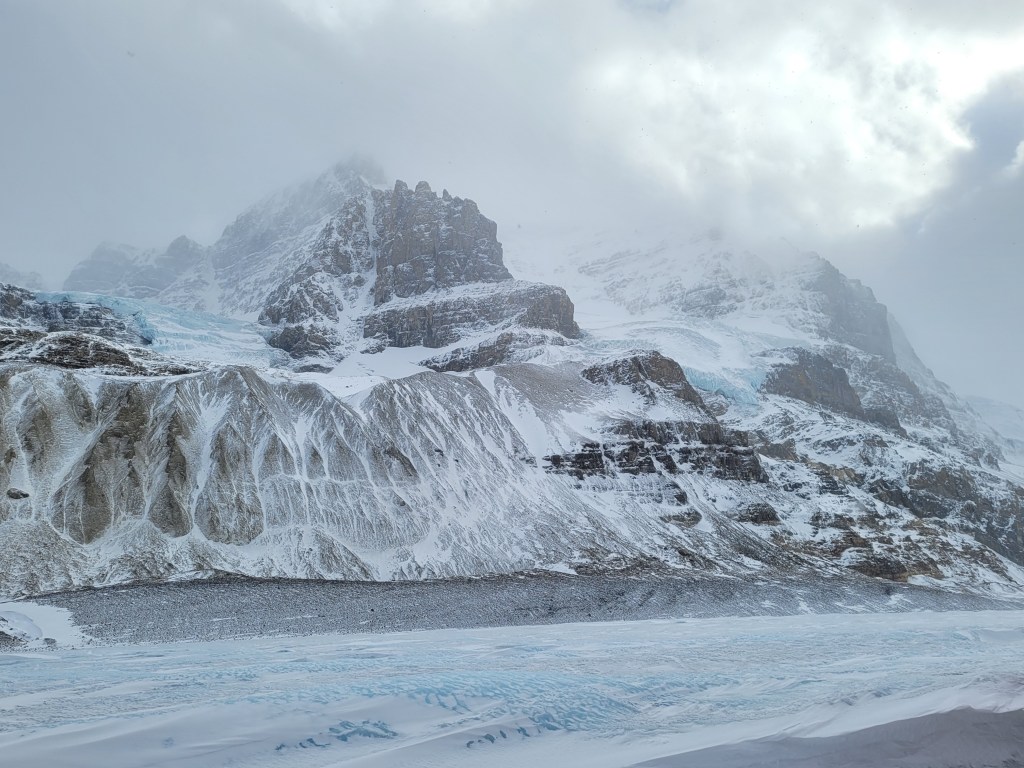
There is a safe, designated area to walk around. Glaciers are notorious for crevasses, open and hidden. If one was to fall into one of these seemingly bottomless sinkholes, it would almost surely mean death. Remember, it is ice. It is slippery. It is windy. One can stand still and be pushed along by the wind. We took a few pictures, then headed back to the buggy for the return trip. The tour is actually not that long – being on a huge sheet of ice is not that interesting, but still a once-in-a-lifetime opportunity. The Columbia icefield is the largest ice field in North America. It is 25,000 years old, about 325 square kilometres (125 sq mi) in area, 100 metres (330 ft) to 365 metres (1,198 ft) in depth, it – and shrinking fast! Markers are showing where the ice edge was in certain years. The last time I was here was about 20 years ago. The ice had moved back several meters since then.
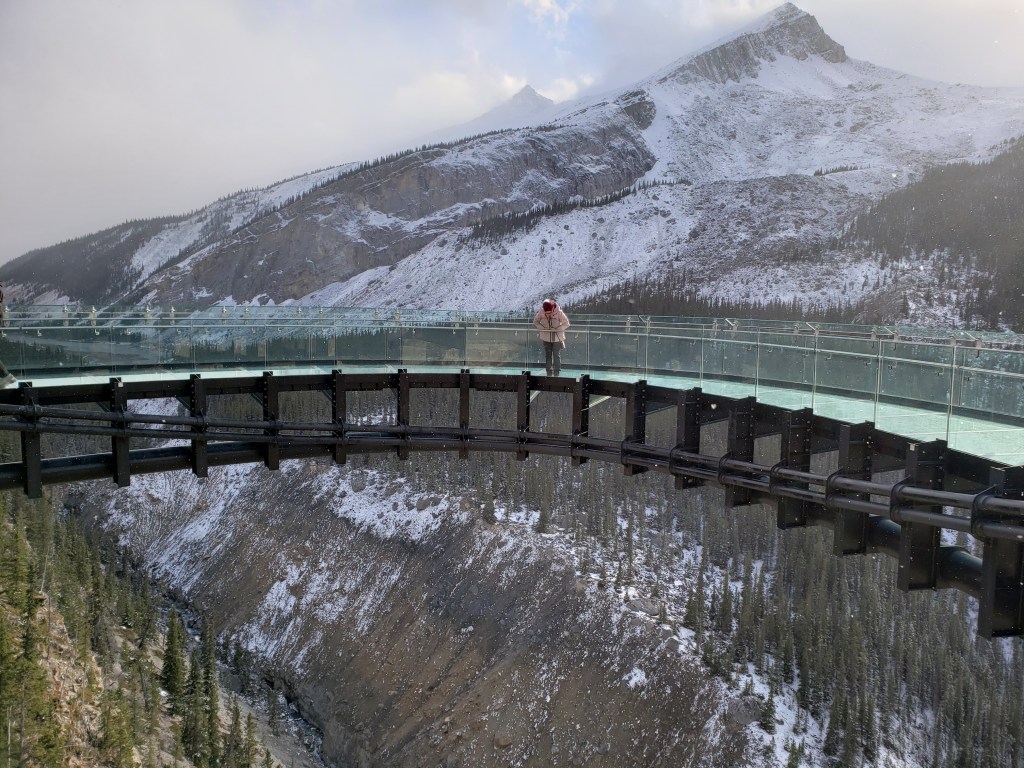
The buggy took us back to our bus. We then went 6 km northwest to the Columbia Icefield Sky Walk. This cliff-edge walkway leads to a glass-floored observation platform 280 m (918 ft) above the Sunwapta Valley. The walkway had posters that explain a bit about the geography and wildlife of the area. The glass platform is not for the faint of heart or those afraid of heights. I found it fascinating. I could see for miles. I felt like I was floating over the valley.
That evening we ate at the Glacier Hotel restaurant, the Grindelwald. The food was some of the best I have ever had. The view of the glacier only added to the ambiance. It was excellent.
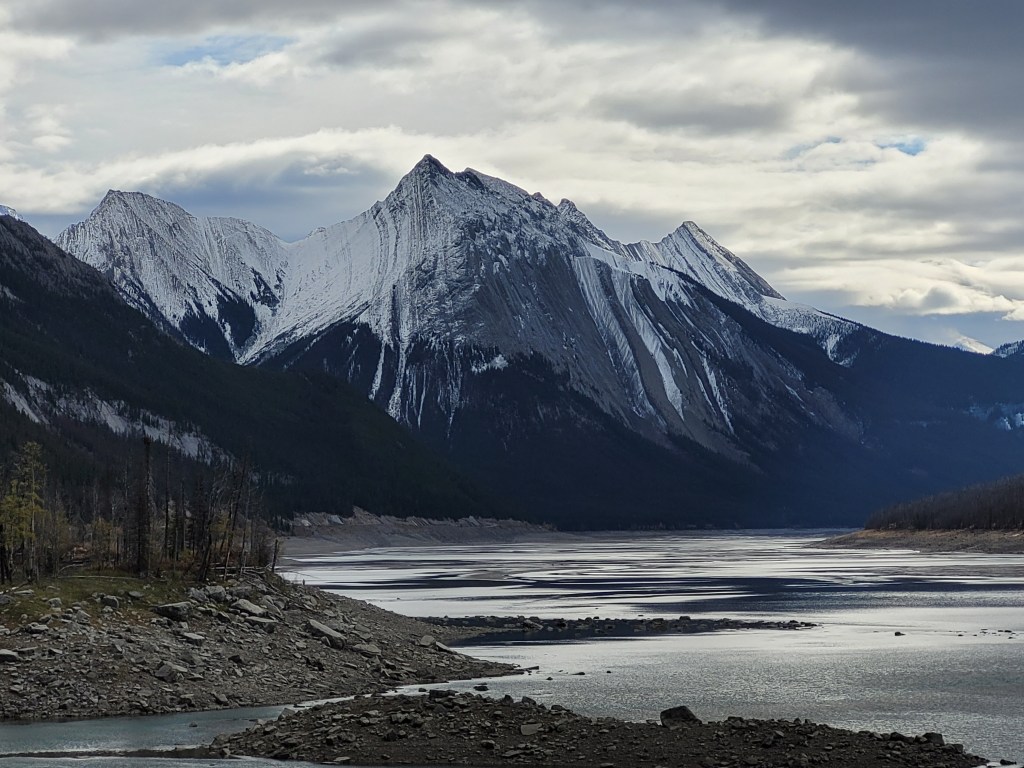
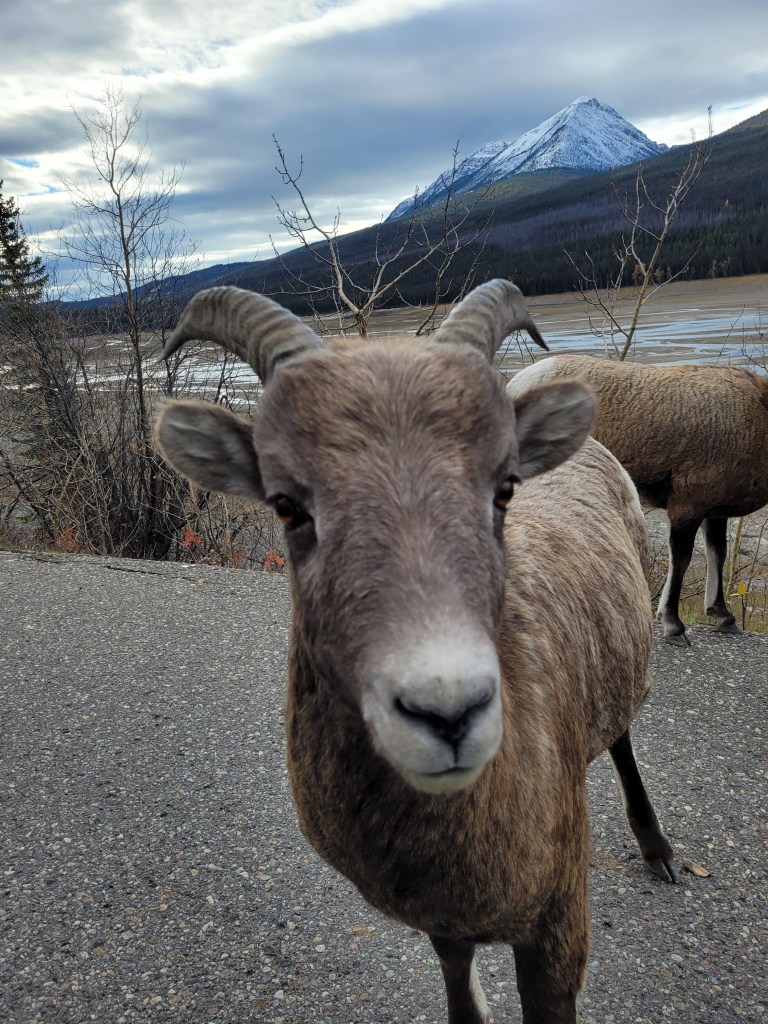
The next morning we headed for Jasper. We stayed in an AirBnB. We drove out to Maligne Lake, stopping briefly at Medicine Lake. Medicine Lake dropped severely since we were here last year. The island was no longer an island but connected to the shore. That being said, it was still a lovely spot to take pictures. We came across a small herd of sheep stopping traffic and spotted a couple of moose in the brush on the side of the road.
We stopped at the gift shop and I bought a new, locally made, wallet. My old one was getting very tattered and I was happy to spot a new one that I actually liked.
The interpretive boat tour is about an hour and a half total. The boat is basically a ferry, with large seating inside and a viewing deck on the back. We learned about the geology, wildlife and history of the area. We went past towering mountains with razor-sharp ridges, alpine draped mountains capped in snow and glaciers while gliding along pristine blue/green water alongside kayaks and canoes. 14 kilometres later we disembarked near Spirit Island.
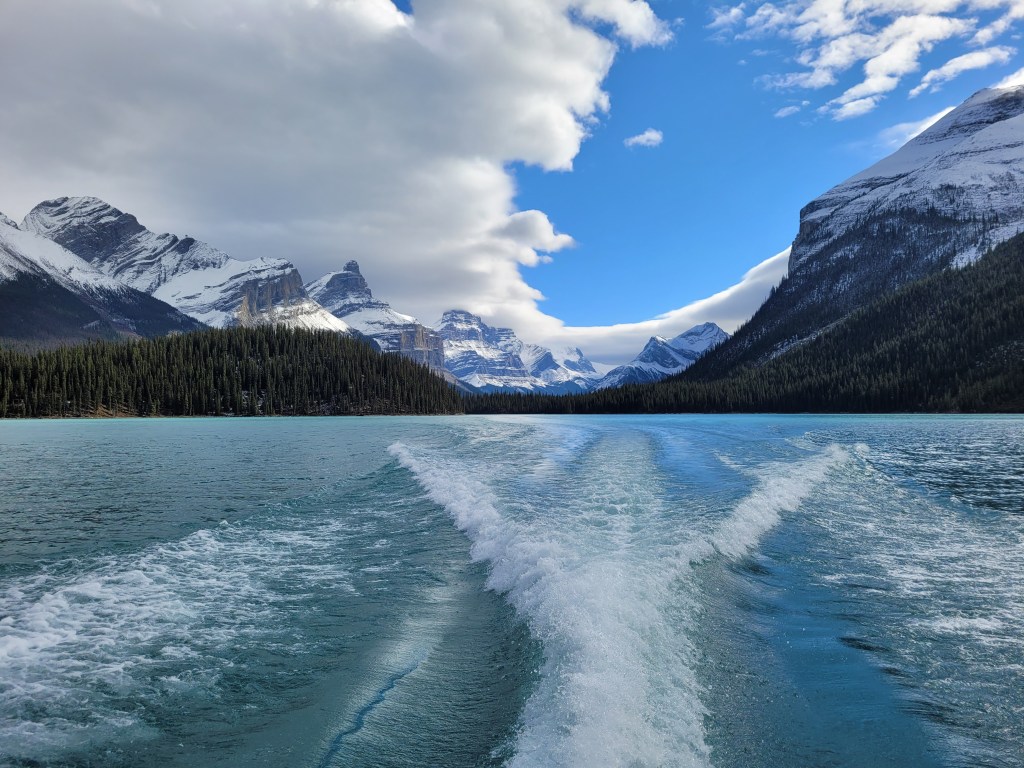
Spirit Island is a tiny island in Maligne Lake. It is one of the most famous and photographed views of the Canadian Rockies. More importantly, it is a spiritual place for the Stoney Nakoda First Nation. They believe mountains are physical manifestations of their ancestors. Spirit Island is surrounded, on three sides by the same mountain range, a very rare occurrence. Therefore the island has special significance.
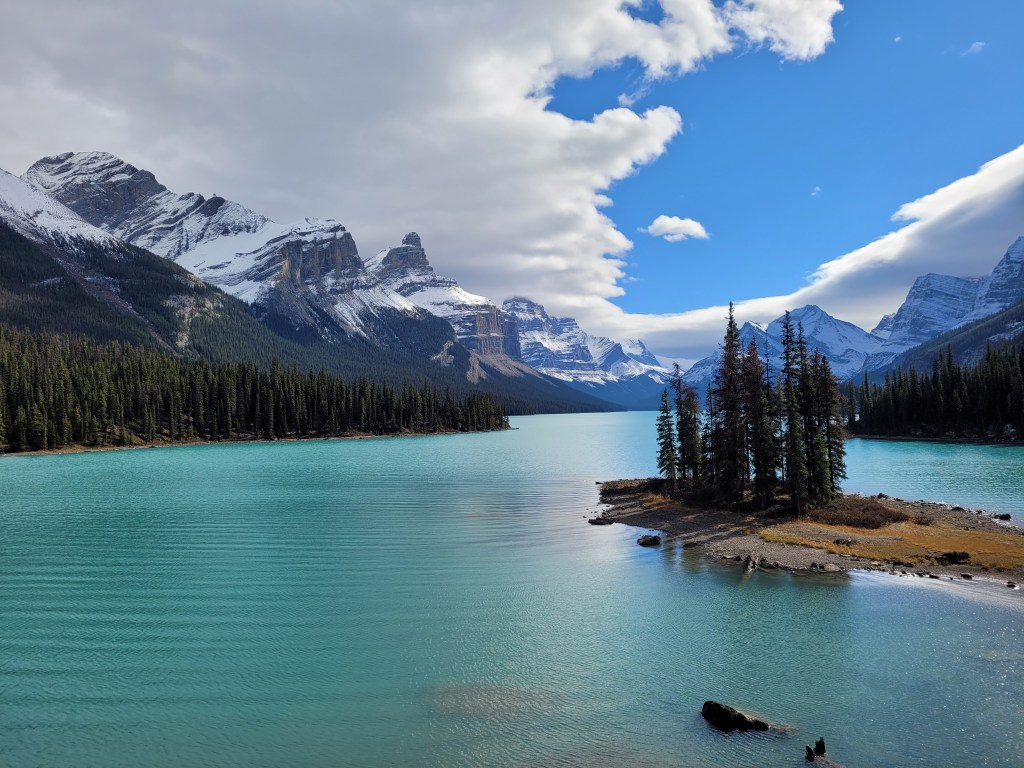
Because it is considered sacred, no one is allowed to walk on it.
Back in Jasper, we ate at Cassio’s Italian Restaurant. It was really good!
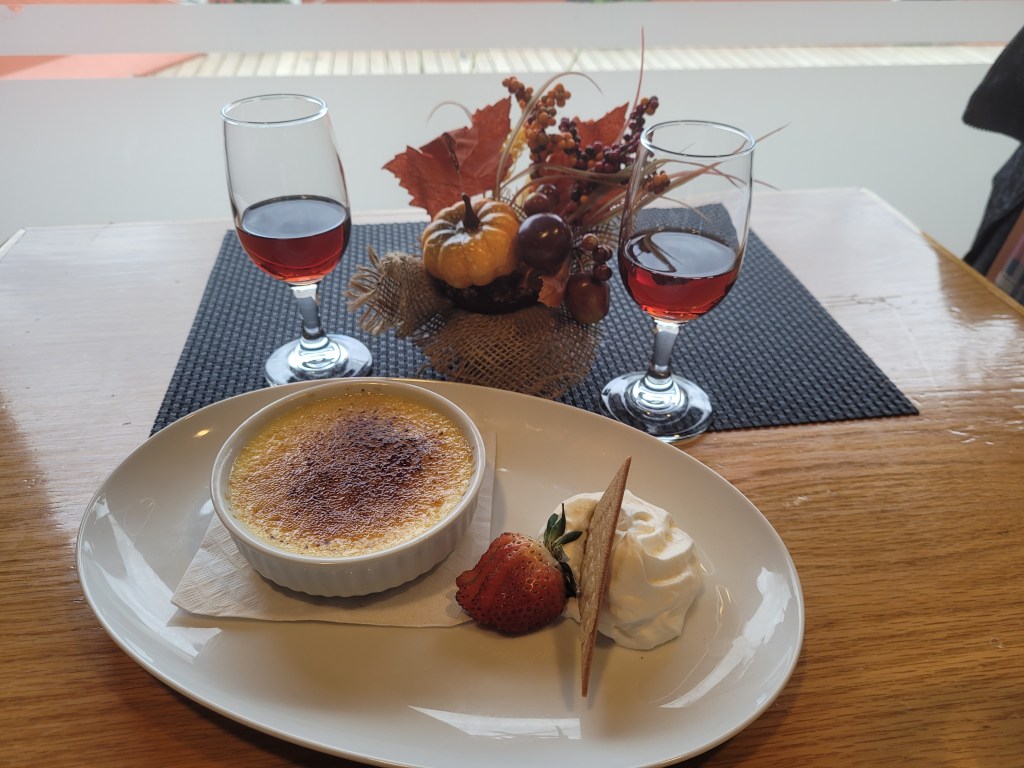
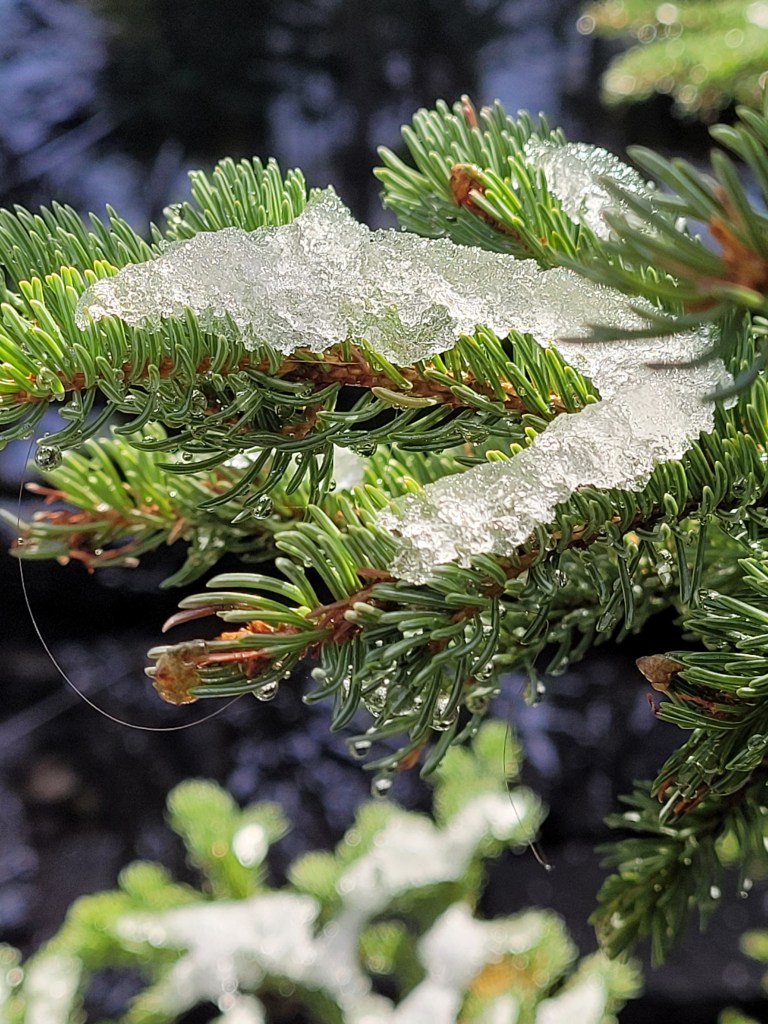
The next day Ed was not feeling well so I went to Maligne Canyon by myself. It had snowed the night before, making the trek muddy and slippery but also beautiful! Snow was still balancing on the spruce boughs and cliff edges, glistening as the occasional ray of sunshine made everything look sparkly.
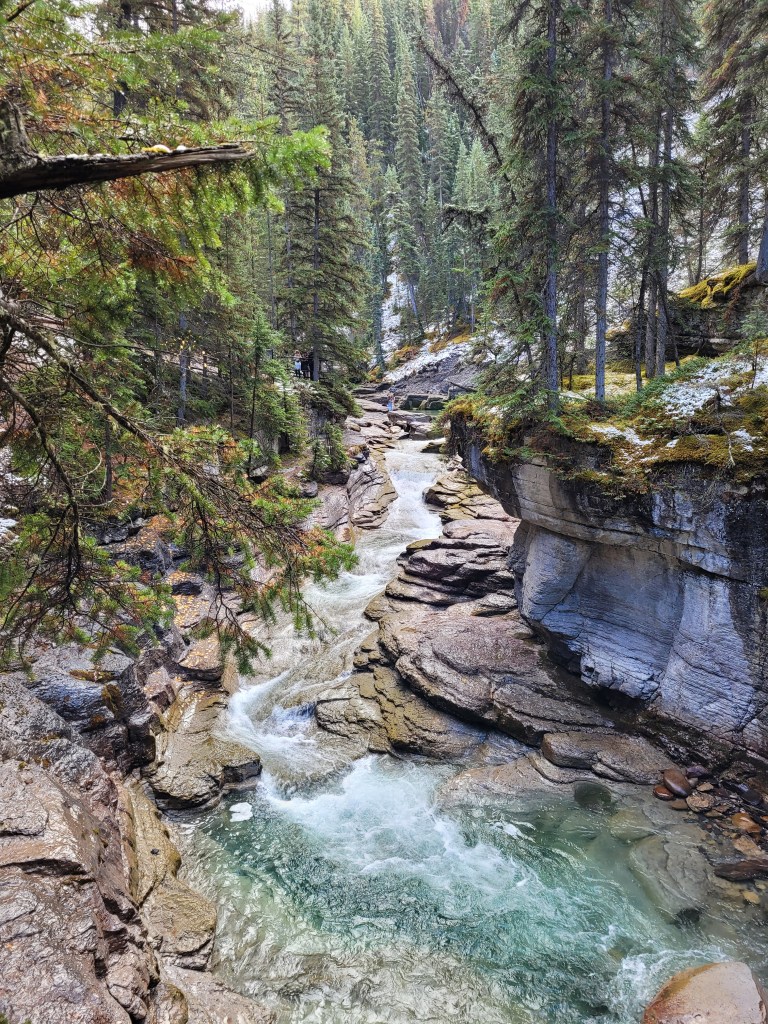
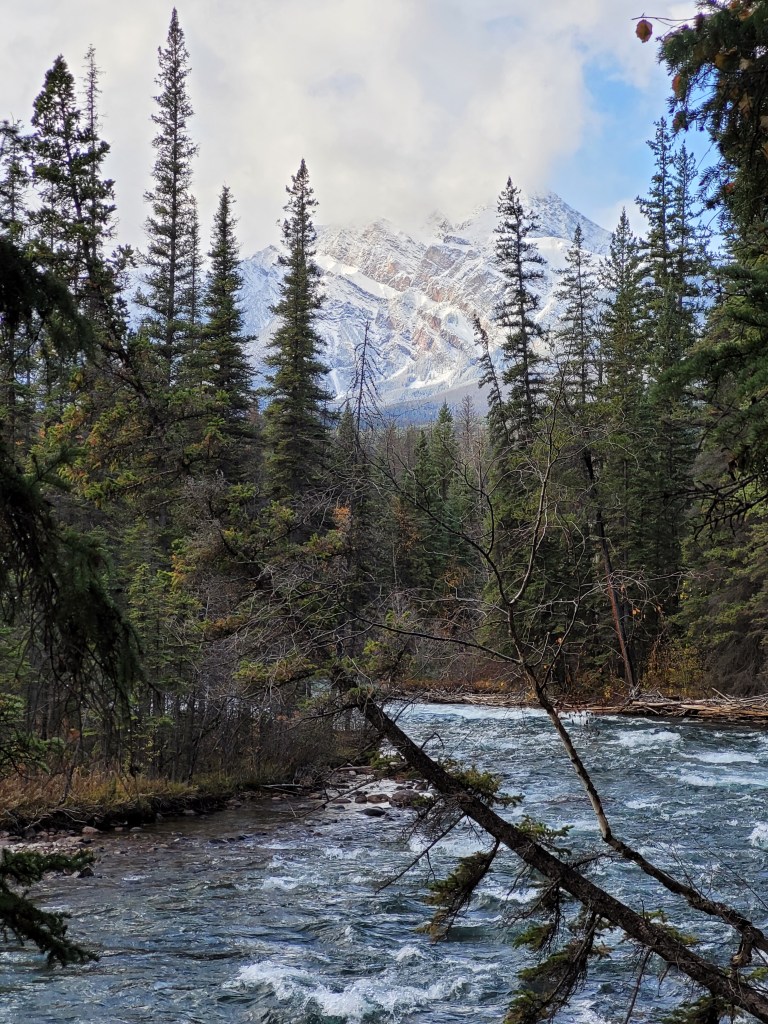
Taking my time I enjoyed my hike completely, stopping often to take pictures of nature’s beauty. One has to marvel at how Mother Nature can dazzle with Her simplicity. The water comes from underground springs and pushes through deep narrow canyons at a ferocious speed. In places, the canyon makes such a u-turn that the water swirls to create a perfectly smooth and round alcove. There are 6 bridges to cross. The first few are the most dramatic. By the time I got to the sixth bridge the river had widened and, although still moving fast, the water was not as violent.
This was October and the weather was cold – remember it snowed the night before. That did not stop a young man from stripping down to his underwear and jumping into the frigid water. I think it must have been a bet because his friends were hooting and laughing on the dry river bank.
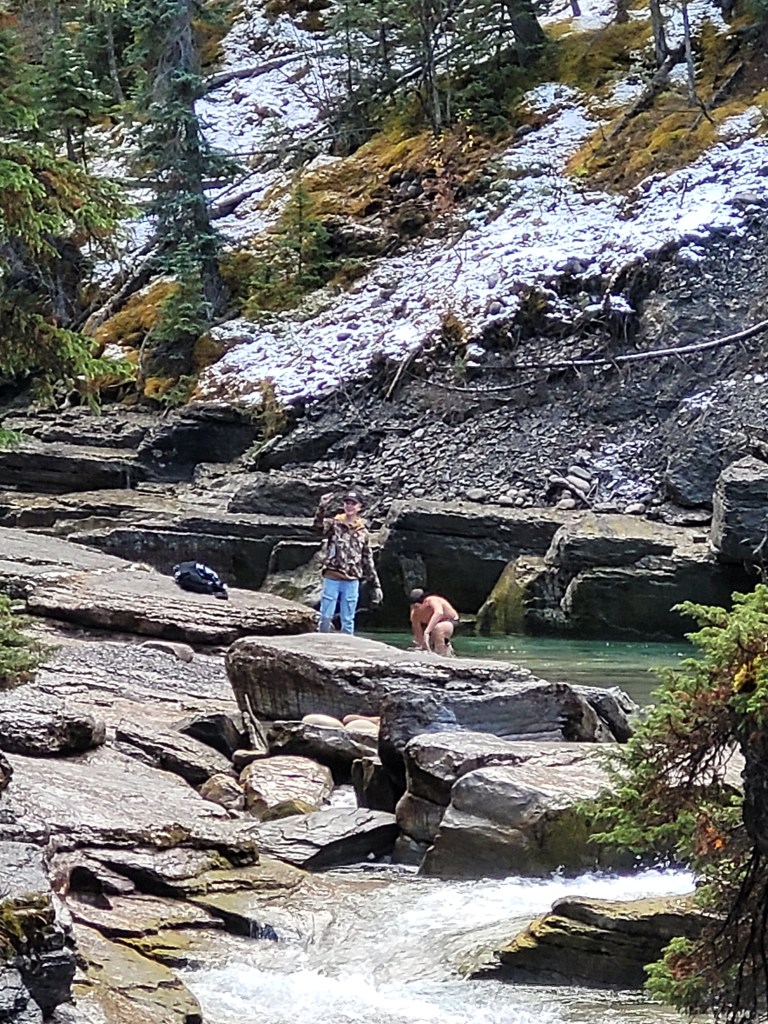
I walked all the way to the 6th bridge then returned, uphill, to the parking lot. A total of about 7 ½ km and about 4-5 hours. It wouldn’t have taken that long if I hadn’t stopped to take so many pictures.
That evening we ate at the 100-year-old Athabasca Hotel. Built in 1921 it has the charm and feel of days gone by. We toured around town a bit but the shops mostly cater to tourists with trinkets and stuffed animal toys.
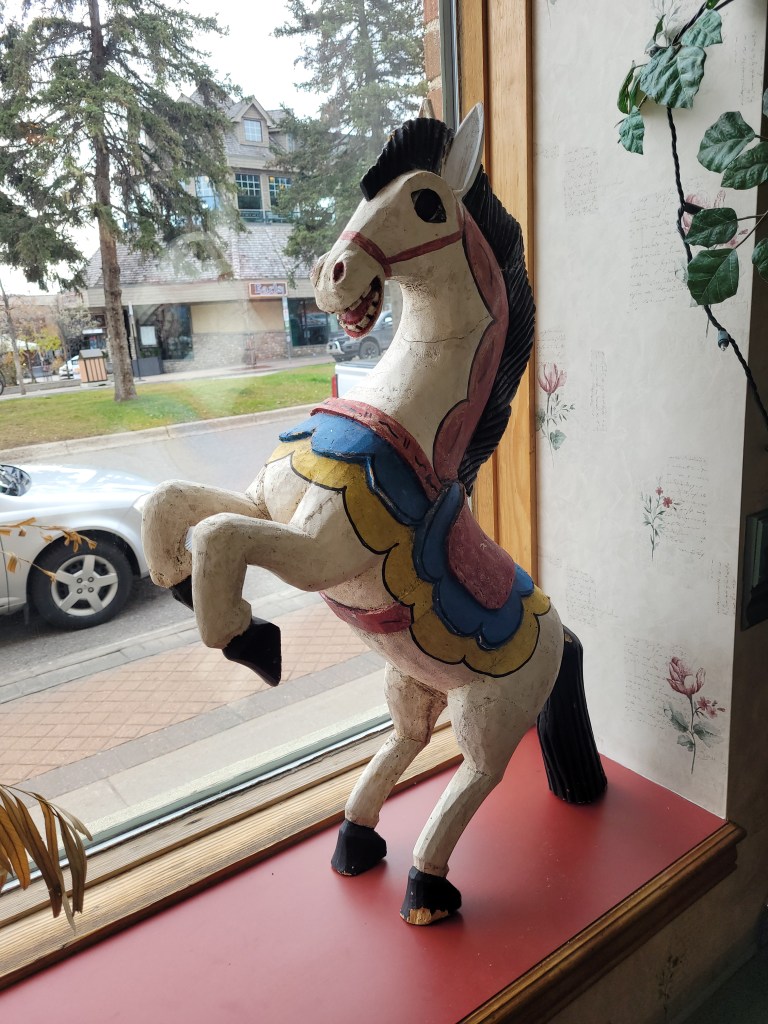
It was still cold and raining so we ended up at the Jasper Museum. They have exhibits on the fur trade, railroad and early exploration. There are historic photographs, books and newspapers. Another gallery features modern photographs and artisans. It was a small museum, but well worth the time to visit.
Our last night in Jasper was at the Jasper Park Lodge. I never realized it is a small town in itself and covers 700 acres. The 442-room resort encompasses Lac Beauvert and a golf course. The cabins and chalets are cedar and fit right in with the ambiance of the mountains and lake. The location and atmosphere may appear rustic, but the amenities are state of the art! The main building has the check-in, banquet rooms (still closed due to Covid), restaurant /lounge with a fireplace big enough to roast a whole cow, bar, heated outdoor swimming pool, hot tub, spas, massages, fitness centre and high-end shops.
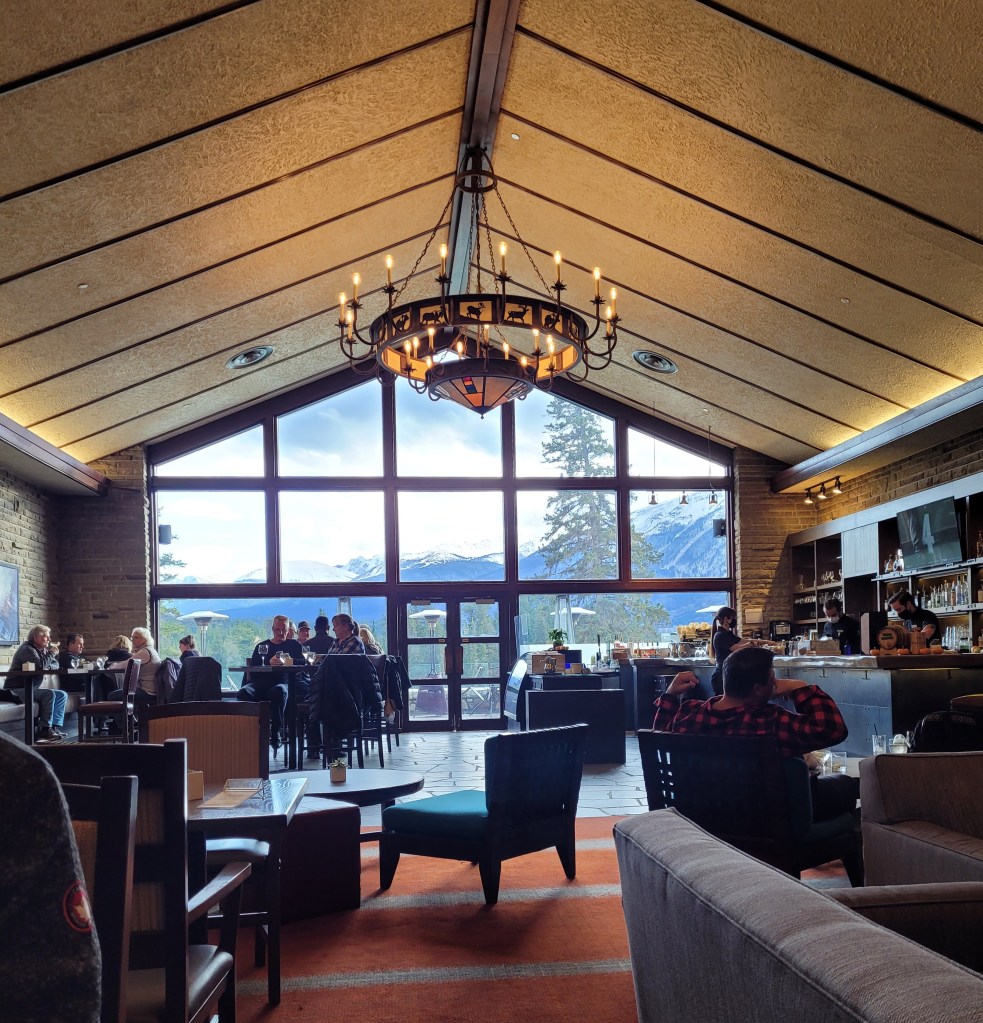
We strolled around the lake, enjoying the quiet of the forest and the smell of clean outdoors, then soaked in the hot tub for a while. We ate in front of the gigantic fireplace, then relaxed back in our room. Unfortunately, the shower would not drain. Only Ed got to shower in the morning. When we checked out, I brought this up with the front desk. They gave us a complimentary breakfast as an apology. So maybe it was not so bad, after all. The breakfast (normal eggs, bacon, toast and coffee – we added an orange juice only because it was free) totalled $80. The same breakfast at the Smitties in Jasper was $30.
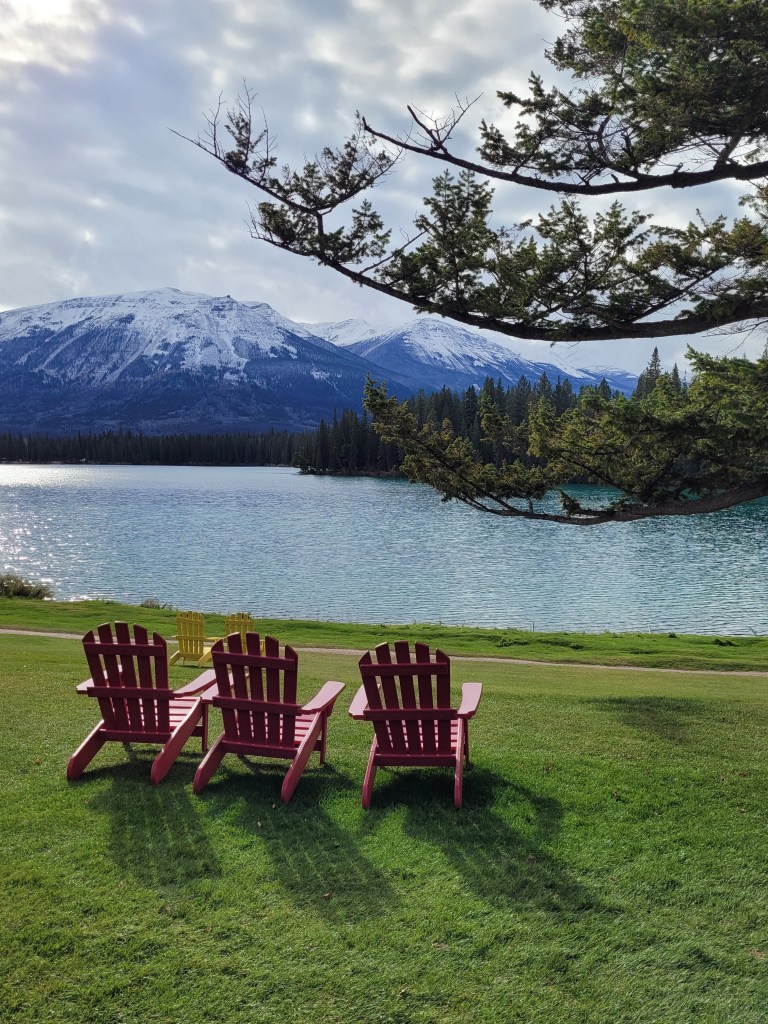
From Jasper, we headed to Lake Louise. That particular stretch of road (the Icefields Parkway) is always beautiful. We drove through some of the most spectacular mountains the world has to offer. There is a reason millions of people from all over the world come to our National Parks. I like to tell people that ask if the Rocky Mountains are as beautiful as purported that I have been to the Rocky Mountains more times than I can remember and I am gobsmacked EVERY time!
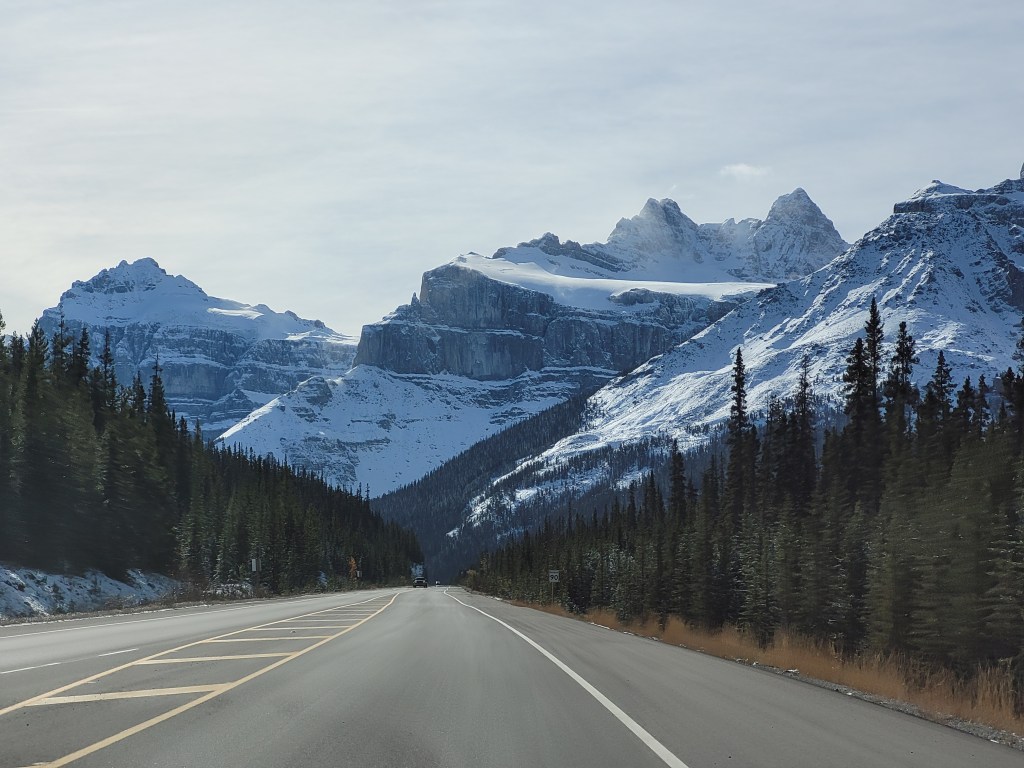
We stopped at Stutfield Glacier to stretch our legs and take some pictures.
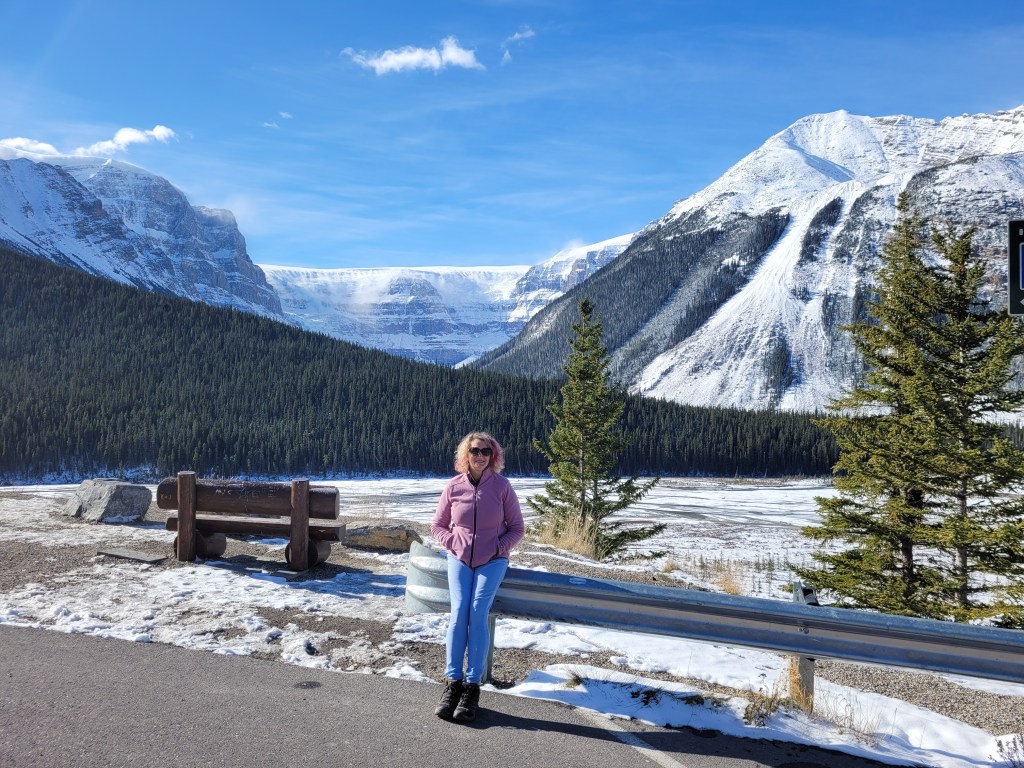
Parked next to us was a young couple from Florida, in a rented camper van. I walked over and asked if I could see the inside. They graciously let me have a look. It looked really cozy and was kitted out with all the basics anyone would need. It had everything from a small cooking area, a bed with storage underneath, and a chemical toilet. They said they got a real good deal on the rental because it had a lot of hail damage. Who cares? The rental company was out of Calgary and called Karma Campervans.
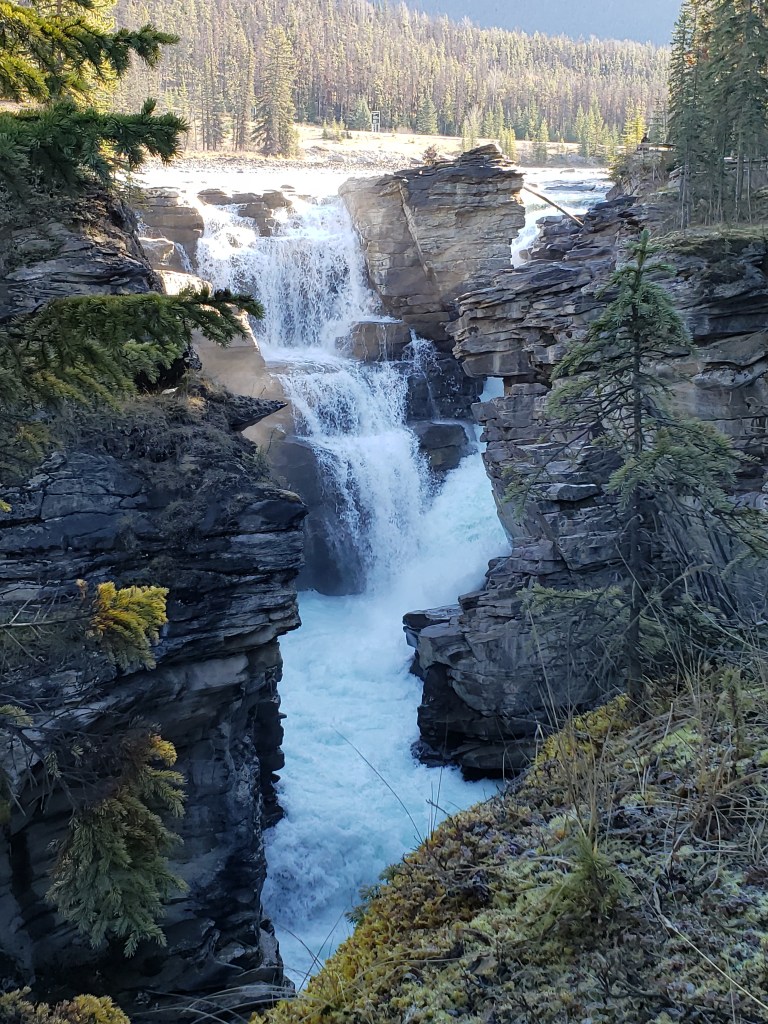
Meaning to stop for a bathroom break, we pulled into the Athabasca Falls rest area. It was more than a rest stop. We ended up following some people down a beautiful path to a most spectacular set of falls. They aren’t high, only 23 metres, but very powerful. They cut through the rocks leaving crazy formations and whirlpools. There were lots of signs cautioning people NOT to cross the barrier. It was a happy detour on our journey.
We finally arrived at Chateau Lake Louise. Built in 1913 by the Canadian Pacific Railway, it is a sister to the Banff Springs Hotel and Chateau Frontenac in Quebec. It does not have the castle look that the other two have. I had stayed there years ago while at a Mary Kay convention. This time I did not have to share the room with 5 other women. Because both of us had been there on numerous occasions, we did not spend a lot of time taking the typical pictures from the hotel side looking across the lake to Victoria Glacier. The weather was half decent so we walked the 4.5 km (round trip) Lake Louise Shoreline trail to the back of the lake. It was an easy walk. The terrain got a bit rugged at the end, but nothing we couldn’t handle. We took some pictures of the Chateau across the lake. There was nothing more to do than head back.
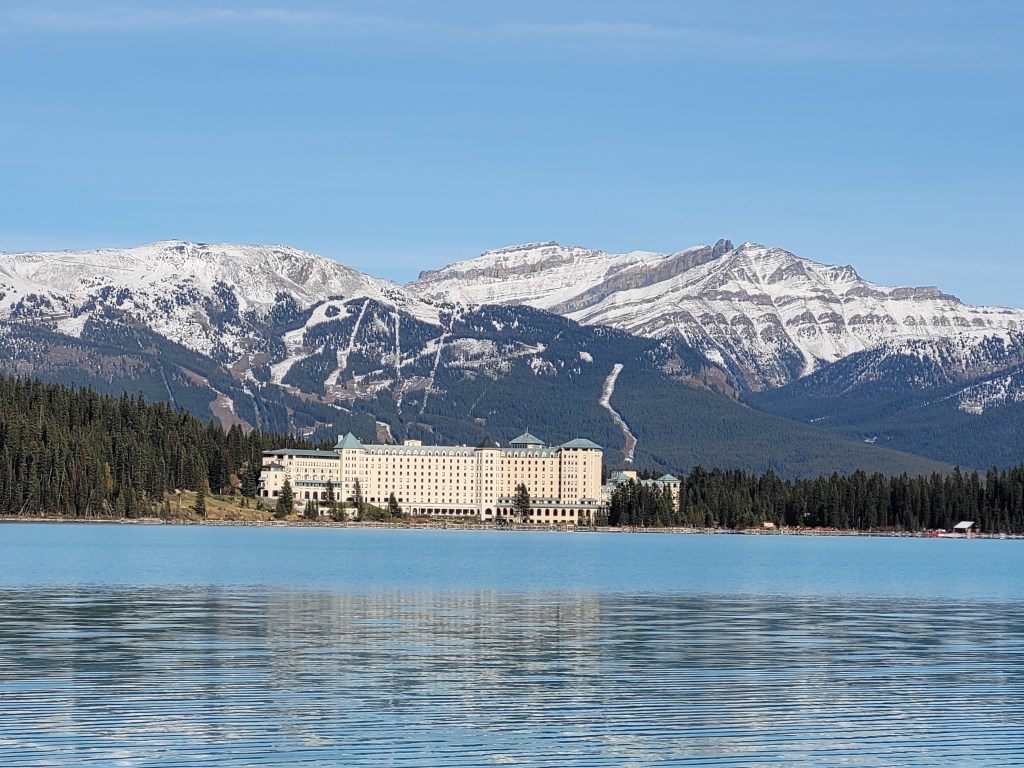
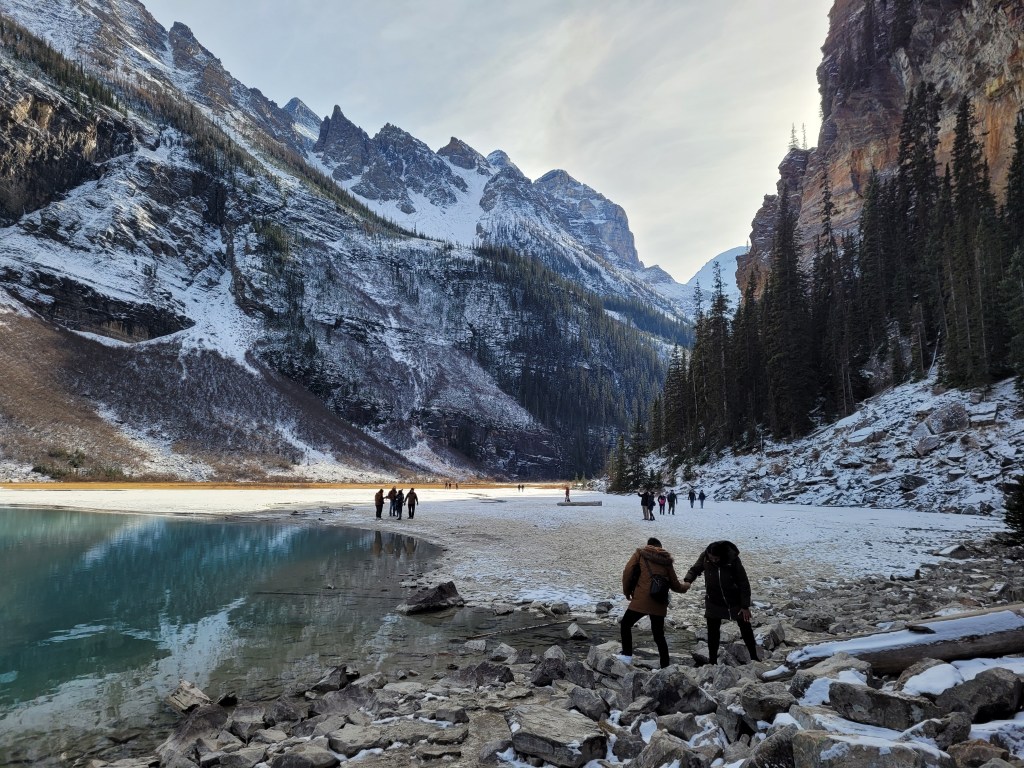
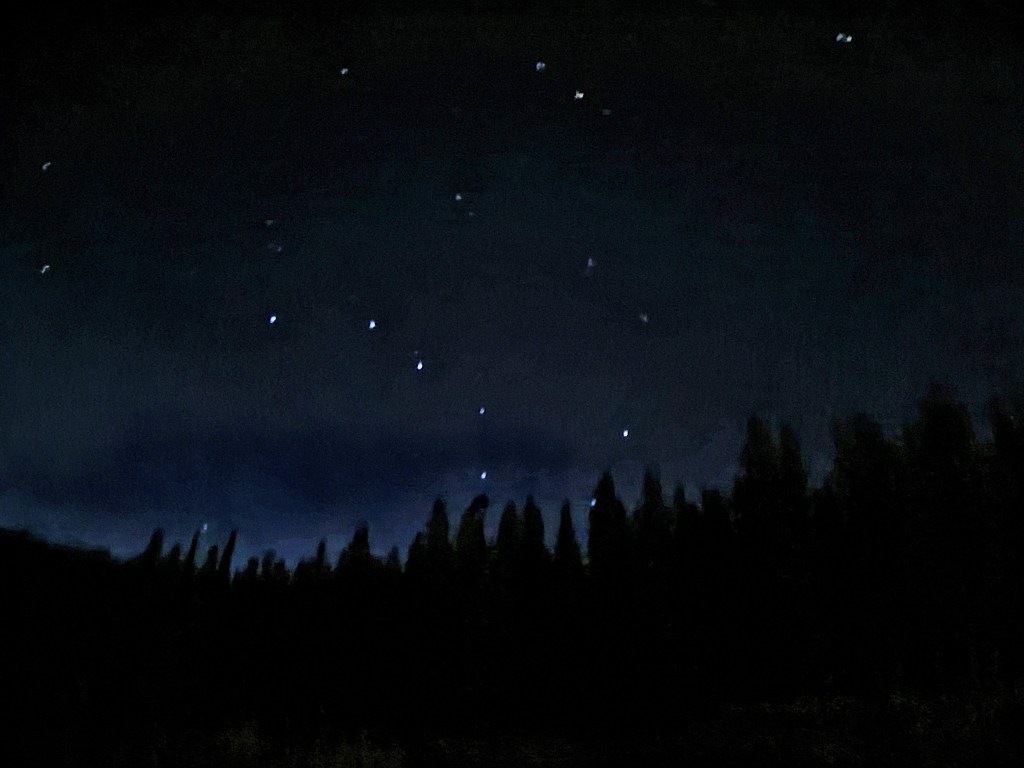
Ed went to the room while I lingered outside, hoping to catch a nice sunset picture. No such luck. However, I did meet a tour guide that pointed out the tea houses up the mountain. He said they are a challenging but not impossible hike. But definitely a summer project. He also said it was possible to hike up the east mountain, from the back. A lot more difficult and longer, but once on top one can look down on the lake and chateau. I may not have gotten my sunset picture, but after dinner, I did get the most incredible (and fluke) picture of the Big Dipper.
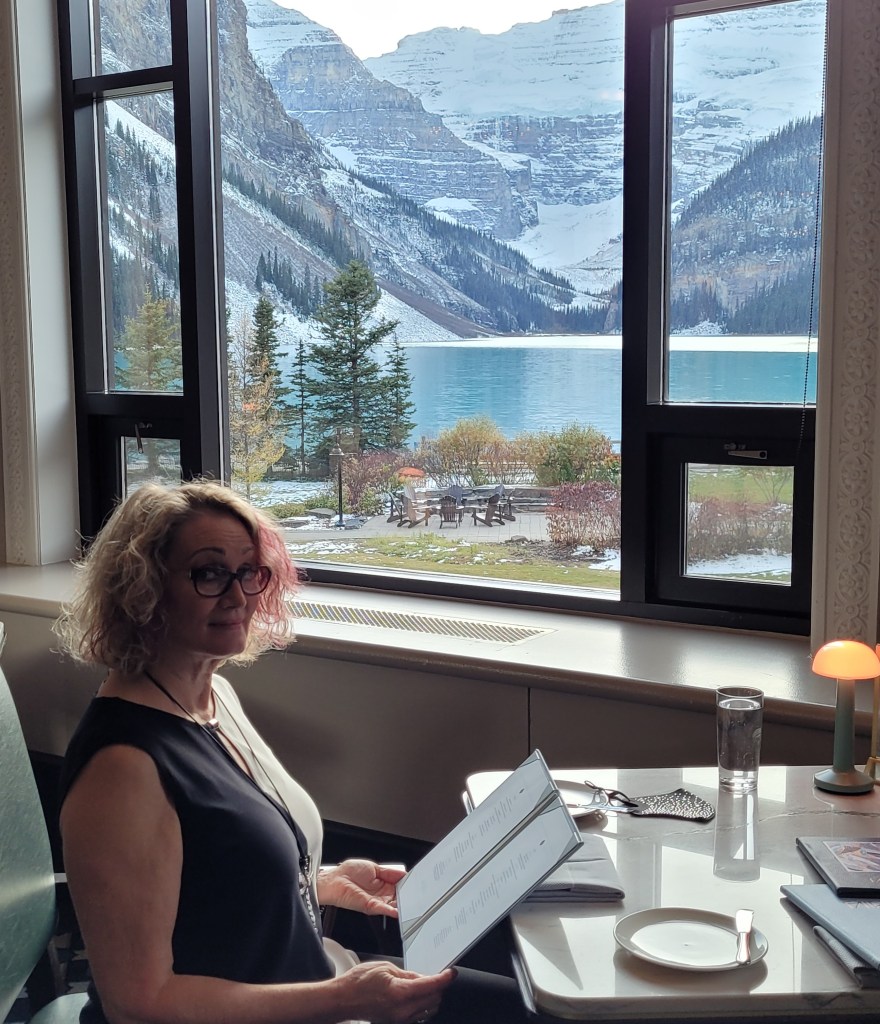
We ate in the Lakeview Lounge, next to the big windows – overlooking the lake. It was magical! The food was incredible. The ambiance was perfect. The prices were expensive.
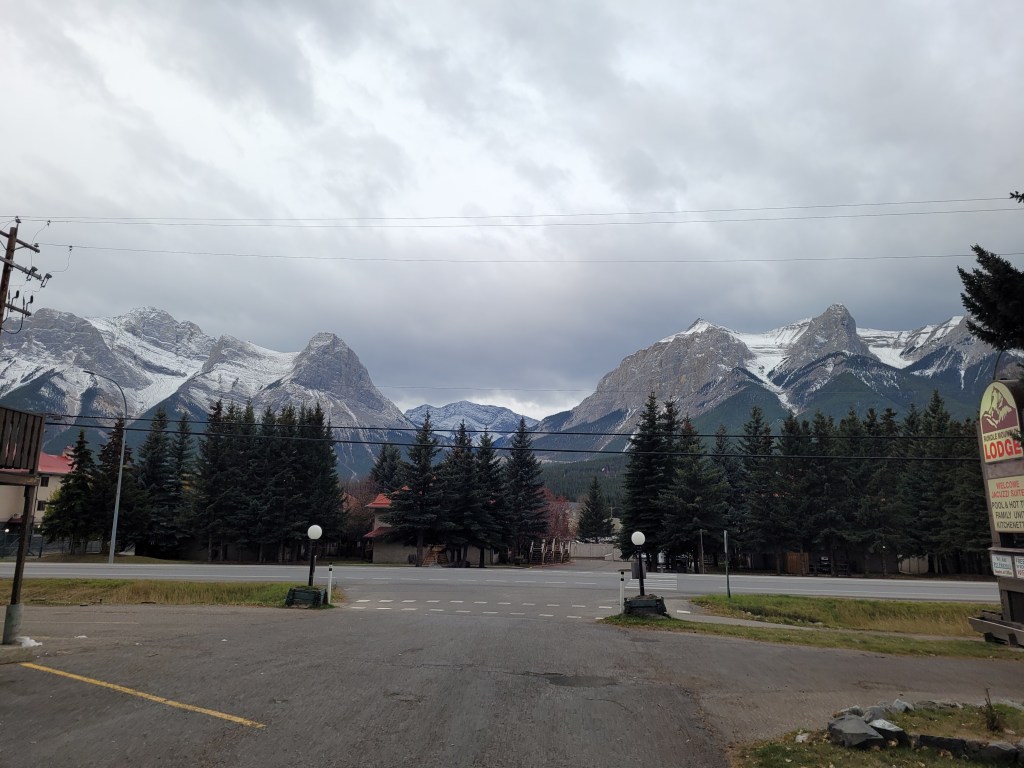
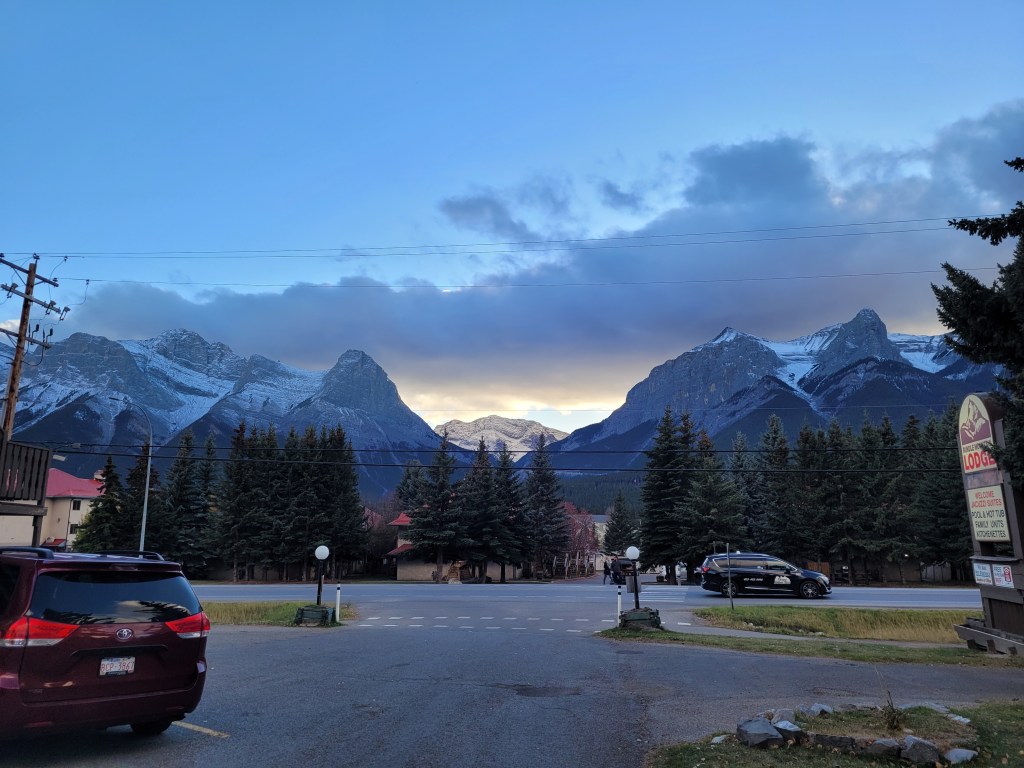
The next day we headed to Canmore, where we stayed at the Rundle Mountain Lodge. It is a rustic motel that looks like it is built out of logs, but is quite modern. The room was cheap and the location was good. How can you get a bad location in Canmore? Everywhere you turn has an awesome view!
Our first order of business was to find a laundromat.
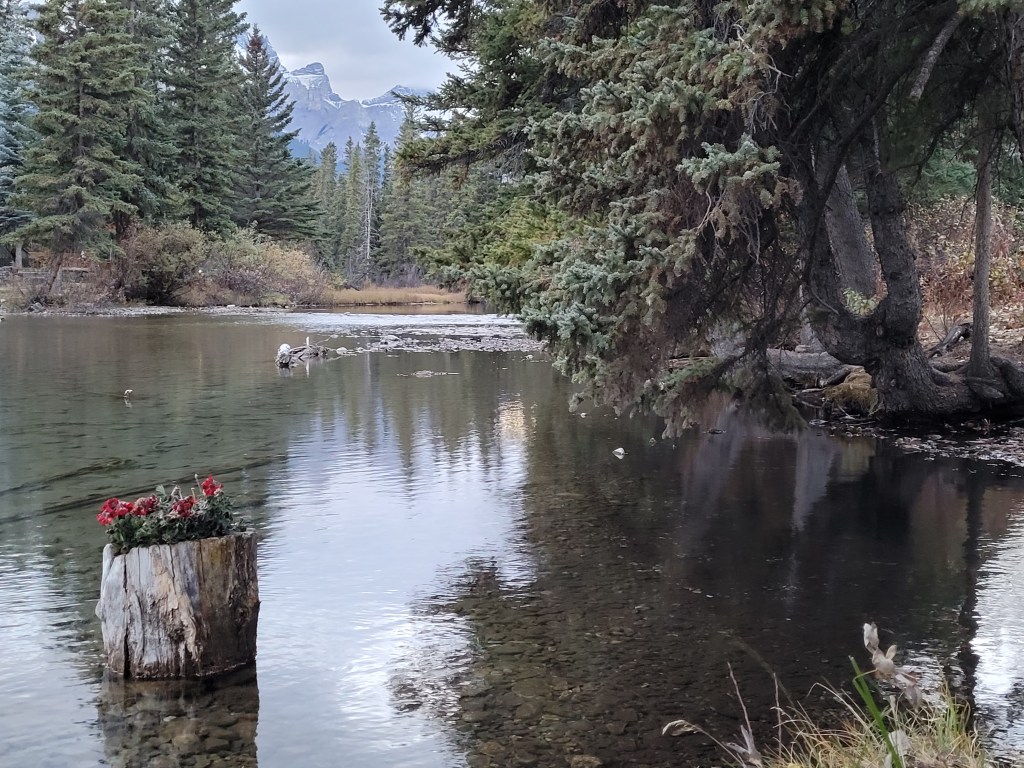
Part of the downtown is closed to motorized traffic every summer, which makes for a lovely browsing experience through the numerous galleries and coffee shops. Canmore has lots of hiking trails in and around the town. We took advantage of them and did some fairly long hikes along the river and one partway up to Three Sisters. I could never get enough of the beauty of the mountains, so every evening I would take another walk in the town while Ed retired with a book. The same mountains look entirely different at various times of day and in varying weather. I continued to be gobsmacked!
Our last day was to be spent around Banff. We drove up to Lake Minniwanka and to Norquay. Lake Minnewanka is a glacial lake located about five kilometres northeast of the Banff townsite. The lake is 21 km long and 142 m deep, making it the 2nd longest lake in the mountain parks of the Canadian Rockies. For more than 100,000 years the Native people hunted and camped along the shores. They believed there were spirits that lived in the lake, thereby making it respected and feared. In 1886 a summer village sprang up with hotels, wharves, restaurants, summer homes and sailing cruises (which still exist). In 1895 a dam was built on Devil’s Creek to “improve the shoreline”. In 1912 another dam was built in Devils Canyon to store water for a downstream hydro-electric plant on the Cascade River. This second dam raised the water level by 3.5 metres (12 ft) which lead to Devils Creek flooding. At the beginning of WWII, there was a need for more hydroelectric power. Under the War Measures Act, a third dam was built, raising the water 30 metres (98 ft). The entire town was flooded. The coal needed for the power plant proved to be inferior and the plant was closed a few years later. The dam stayed and so did the sunken town. The water is so cold in Lake Minniwanka that the town is completely preserved. Cold water scuba divers can see all the buildings, exactly how they were back in the day. There are also lots of hiking trails in the area. When we were there, everything was closed for the season.
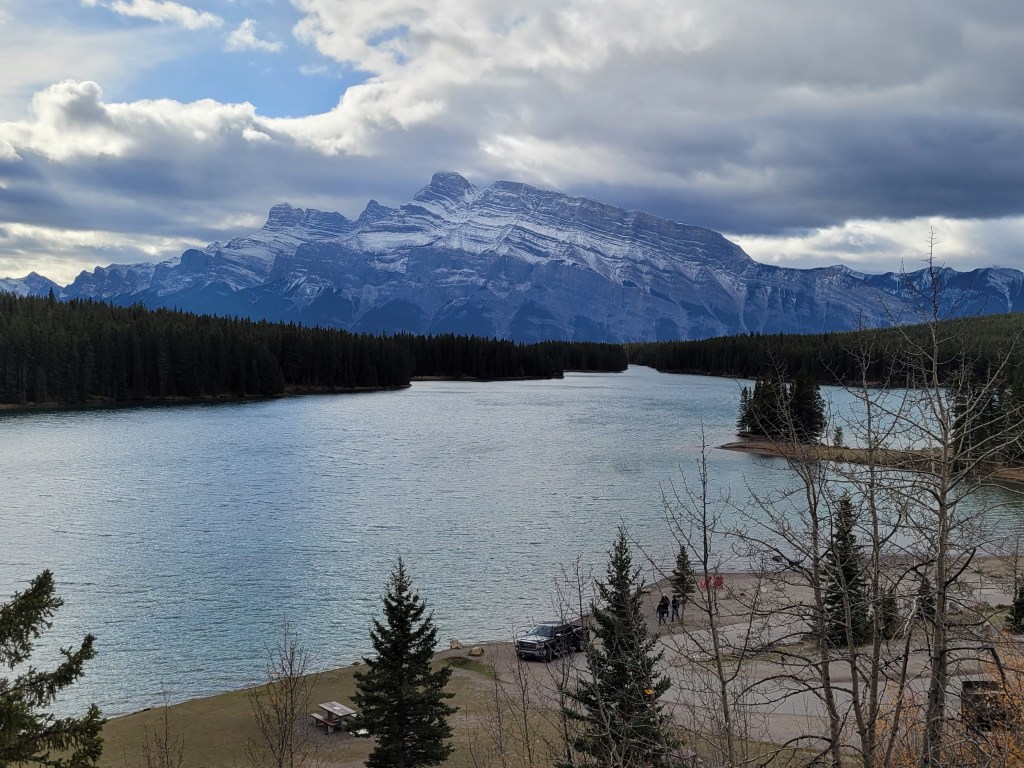
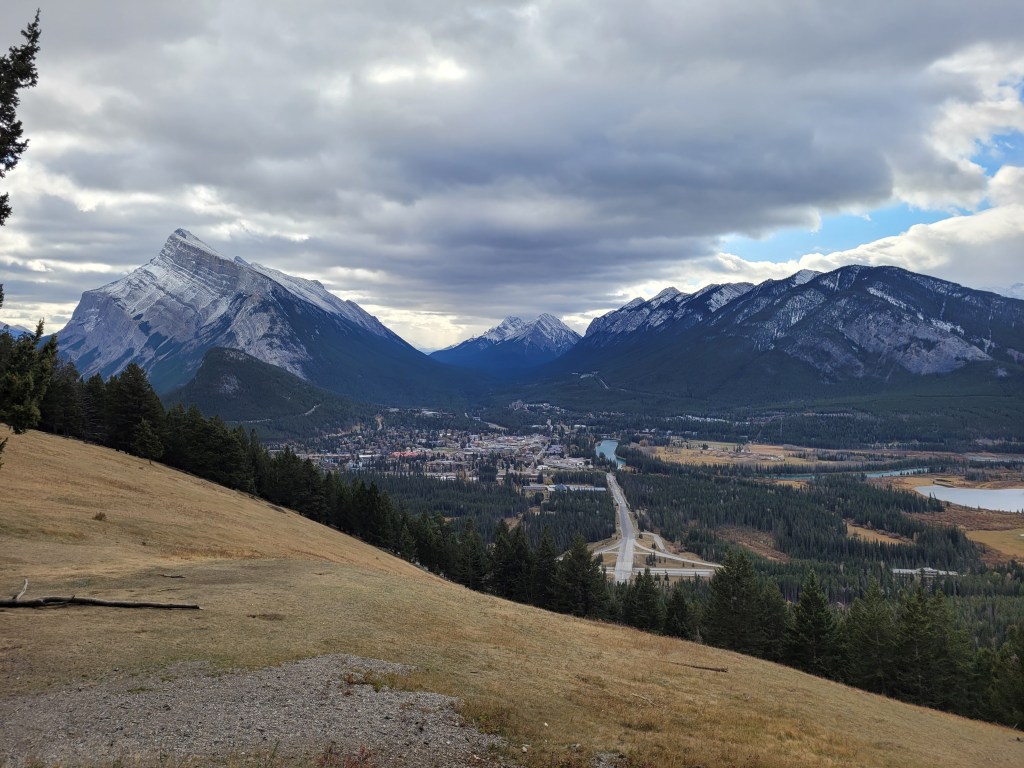
The road up to Norquay is steep and winding. The ski hill at the top offers rides year round up to a restaurant. We didn’t go up. However, there is a viewpoint near the ski hill where we did stop and take some pictures of Banff from a birds-eye view. There are always animals on the road, so be careful.
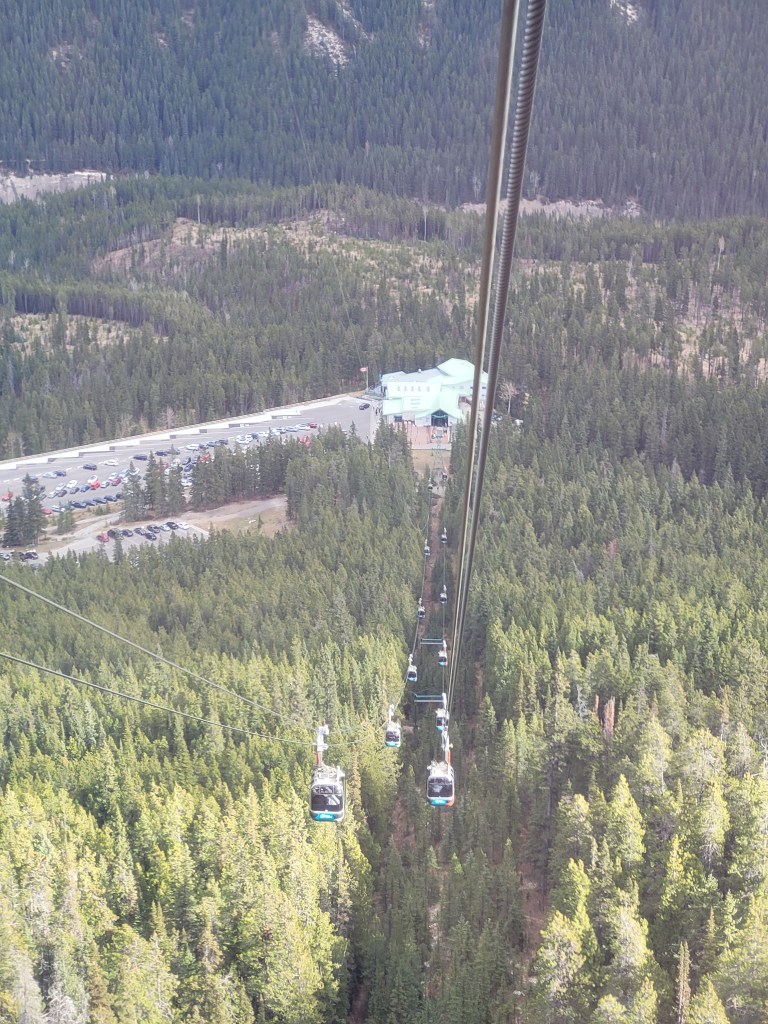
We used our last event ticket to take the Banff gondola up to Sulphur Mountain. The 8-minute ride climbs 698 metres (2292 ft) to the summit. This is not for the faint of heart or those scared of heights. The gondola carriage dangles way, way, way above the trees!
When you get off the gondola you go through an interpretive centre that covers three levels. It explains how the mountains were formed, local wildlife, history and conservation measures. It is very family-friendly. There is a gift shop. The Sky View and Northern Lights restaurants offer fine dining with spectacular views. The Peak Patio offers bistro-style foods which can be taken away and eaten on the tiered patio. Little birds and squirrels came very close to us in hopes of any scraps of food we “accidentally” dropped. The wooden boardwalk leads to the remnants of a century-old weather station on Sanson’s Peak (2256 m or 7402 ft). It is one kilometre (0.6 miles) and gains about 37 metres (121 ft). We didn’t go that far.
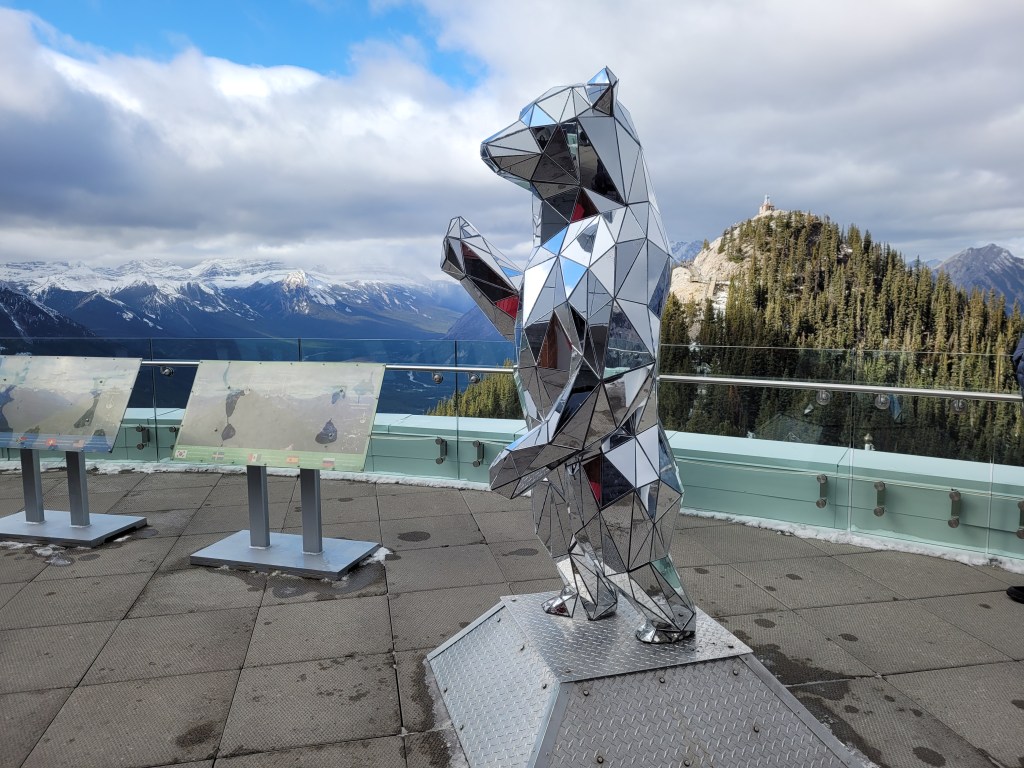
The very top level of the interpretive centre takes you to an observation deck where you can see 360 degrees and marvel at the beauty of the surrounding mountain ranges. There is a life-size mirrored grizzly bear statue that seems to greet you as you enter the open space. There are Adirondack chairs and wooden tables to sit and enjoy a lunch or to just sit back and take in the views and fresh air.
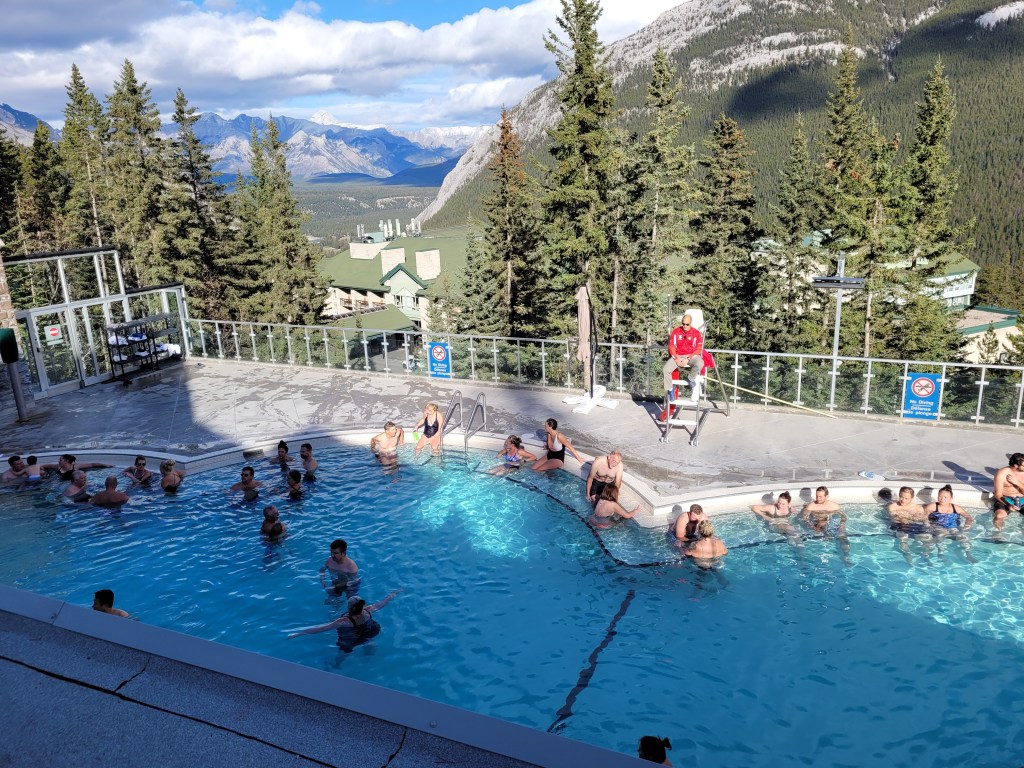
Back down the gondola, we then went to the Banff Hot Springs to soak in the steamy hot mineral water. The springs were discovered in 1883 by three railway workers. The sulphurous hot springs were thought to have healing properties and before you knew it people were coming from far and wide to “take the waters”. I have been there in every season, and I must say, my favourite time of year is the winter. There is something magical about soaking in 33 degrees Celsius water while it is snowing and your elbow rests in the snow on the edge of the pool. Bathing suits are available for rent.
Our last evening was spent at the Banff Springs Hotel – recently voted the best hotel in the world! The hotel opened in 1888 by the Canadian Pacific Railway and is designated as a National Historic Site of Canada. It has 15 floors, 757 guest rooms and 12 restaurants. It was built in the Scottish baronial architectural style. It looks like a castle and was built for the rich and famous who would travel by train to spend the summer here. It is rumoured that the guest had to have a $10,000 line of credit in order to secure their summer stay.
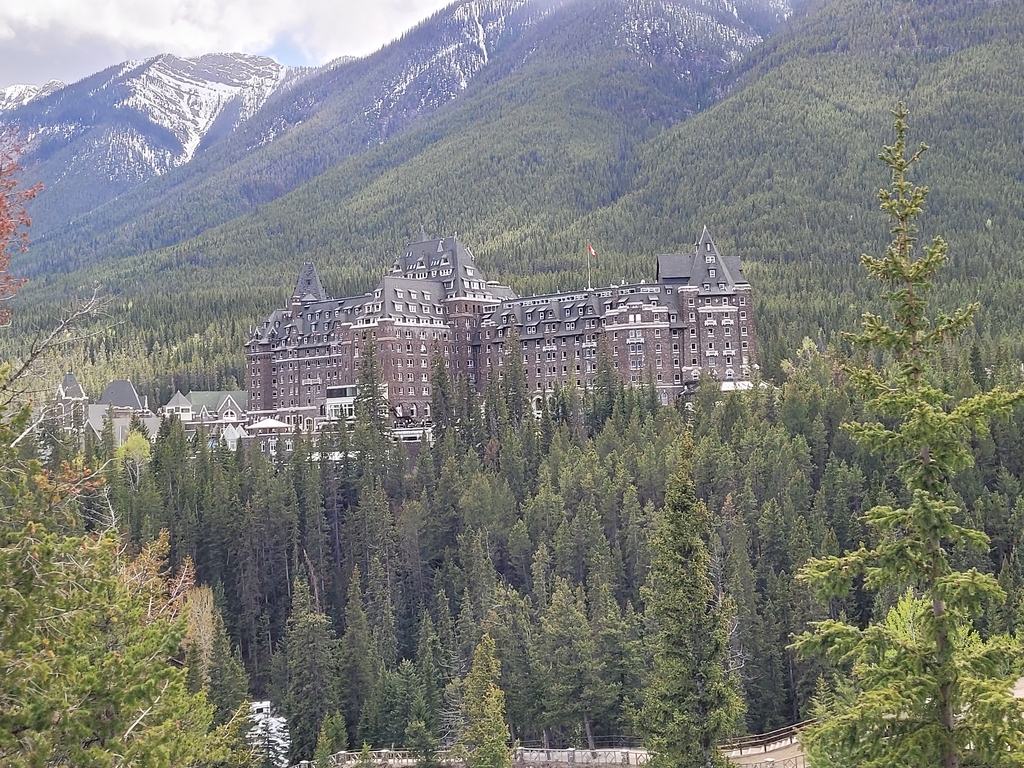
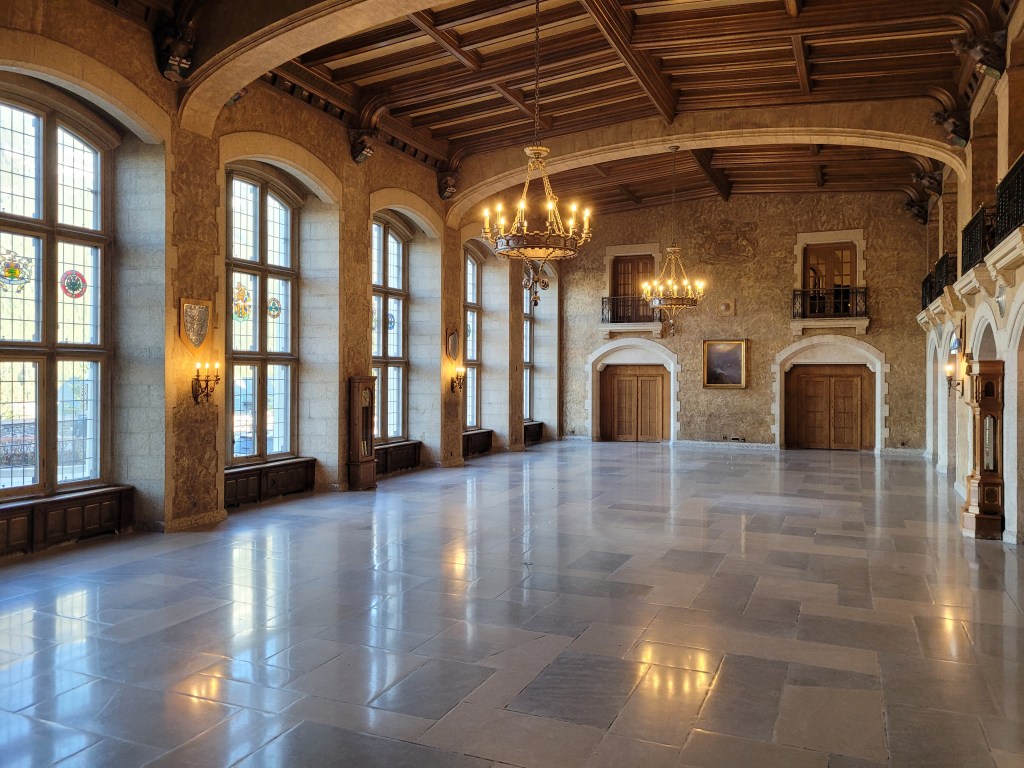
Well, we didn’t have $10,000 but we did spend about $513 for a one-night stay. The building itself is grandiose, with high vaulted ceilings, limestone staircases (look for fossils still embedded), chandeliers, extravagant high-end shops, animal carvings and taxidermy, oak beams and panelling, stained-glass work, plaster work on the ceilings and magnificent ballrooms.
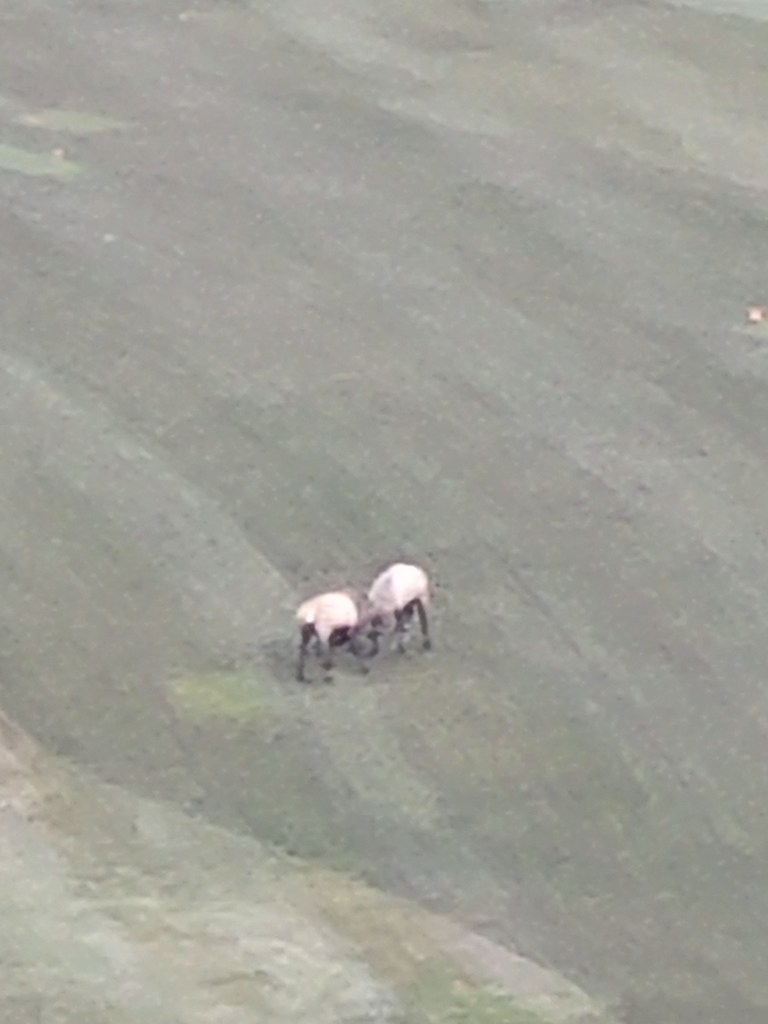
There is a terrace garden, tennis courts, swimming pool, golf course and bowling alley. Everything you could want to enjoy your stay, but here’s the kicker – none of it is included in your room fee. Whereas we had access to the hot tub and pool at Jasper Park Lodge (a sister hotel) we would have had to pay $50 each to use the hot tub here. No, thank you! The rooms are modern, but the original construction does not allow for the size of modern facilities. The bathroom door could not open entirely because it hit the sink. The toilet was wedged between the sink and the shower. We did have a room with a nice view of the golf course and were quite entertained by two buck elk head-butting on the greens.
Again, I am glad to say that I did spend one night in the world’s best hotel, but it was not worth the price to me.
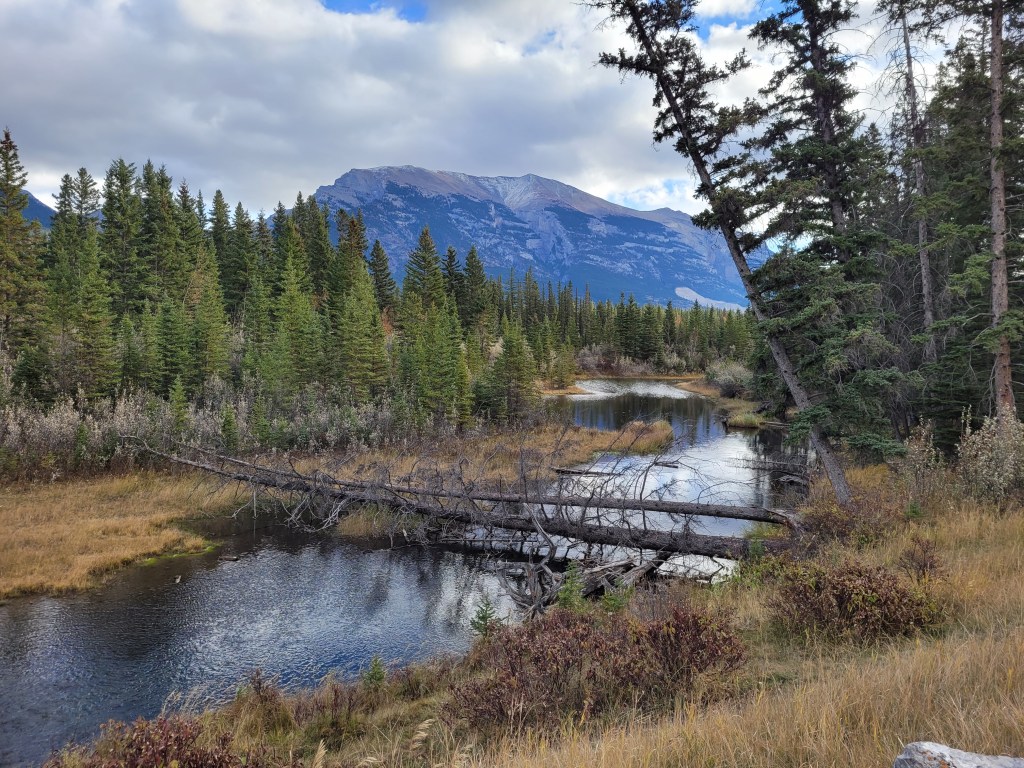
Overall, it was a good trip. We stayed in some fancy hotels and we ate at some fine restaurants. But at the end of the day, it is the scenery that draws me to the Rocky Mountains. I would rather eat my takeaway sandwich on a park bench and smell the wilderness around me while gazing at the majestic beauty all around. The $500 bed was no more comfortable than the $80 AirBnB bed. I preferred the little restaurant (Chez Francois Restaurant at the Quality Inn in Canmore) where the breakfast waiter asked us, every morning if we would like a gin and tonic with our coffee. (He had a bet with the other servers that someone would eventually order one) The food was reasonably priced with no pricey pretense of grandeur. A fried egg is a fried egg! I was once told that most people drive through Banff and Jasper but never really stop to experience what the outlying areas have to offer. Lots of money is spent in the shops, restaurants and hotels. Walking in nature is free, and so much more peaceful and enjoyable.
 An Old Lady with a Backpack
Leave a comment