
Sept. 29 – Oct 15, 2022
The beginning of a new chapter in my life. Ed and I mutually decided that our marriage was not working and we decided to part ways. Everything is very amicable. It came at a perfect time. I had a trip already planned for London, UK. Distance is precisely what I need right now.
My original flight through Montreal got cancelled and I got put on a flight through Toronto. Good news and bad news! Good news because it’s an earlier flight, giving me more layover time. Bad news because Toronto has been notorious for losing baggage lately. Although I had breezed through UK security ahead of most other passengers, my backpack seemed to be one of the last ones on the carousel. All’s well that ends well…
Len greeted me at the airport and was literally in tears, hugging me and hugging me. It makes a Mother’s heart burst with love when I get a greeting like that! Sara came by later that evening.
My days were filled with making pancakes nearly every morning, walking Freya to and from school, sometimes gymnastics and ballet, playing football in the back garden, running errands for the family and general cleaning, laundry, cooking and cooking helping to earn my keep.

I went to a few of Julian’s Saturday morning football matches. He is the goalkeeper. He made some spectacular saves as well as some disappointing misses. Overall, he is an enthusiastic player, which is the whole point when you are 10 years old. They all play their little hearts out! It doesn’t matter what the weather is like, they play like the World Cup is on the line. Some of the kids are really talented. One little guy had a corner shot and he managed to bend the ball up and over the opposing goalkeeper’s head. One time a little guy scored a spectacular tight angle goal. Even the opposing team had to admit it was a fantastic shot. He run up the pitch, went down on his knees and did the celebratory slide – just like a pro. Another little guy scored an excellent goal and ran past the parents with his hand to his ear like he was encouraging the cheers. Cheeky little fellow!!

Len and I went to a football match between the European Ladies Champions and the USA Ladies Champions. England won 2-1. 78,000 people were in attendance and it was deafening! We had excellent seats (15th row)

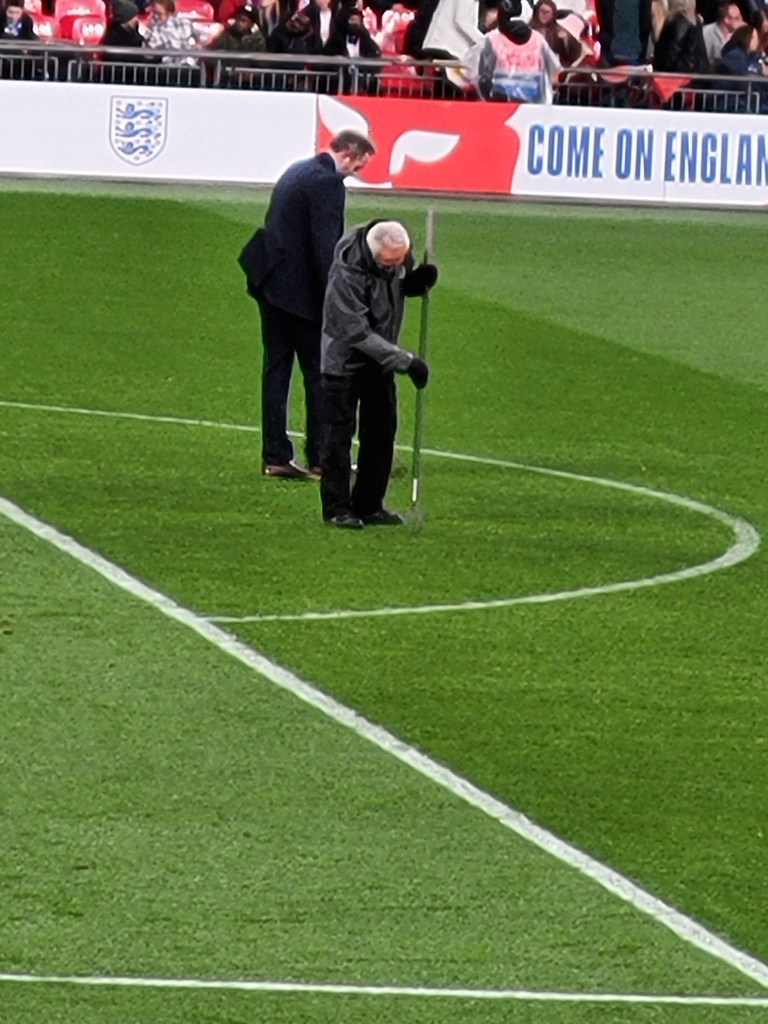
Ladies football has been around since the 1880s and was VERY popular. So popular that it was banned in 1921, partly due to jealousy that the games were more popular than men’s (one match saw 53,000 fans), partly because the football association had no control over the money made from the women’s games (a lot of gate sales went to charity), but mostly because “the game of football is quite unsuitable for females and ought not to be encouraged”. The ban continued for 50 years. Women continued to play but were not allowed on the football grounds used by member clubs. A group of women rebelled in 1970. That group of women was honoured during half-time of this friendly world championship-level match. They walked (some pushed in wheelchairs) around Wembley Stadium to the cheers and standing ovations of the fans. During their parade around the perimeter, about 20 men, with long-handled mini-forks, fixed the divots on the pitch. I never even thought that such a thing would be necessary. Kind of like the Zamboni at a hockey game.
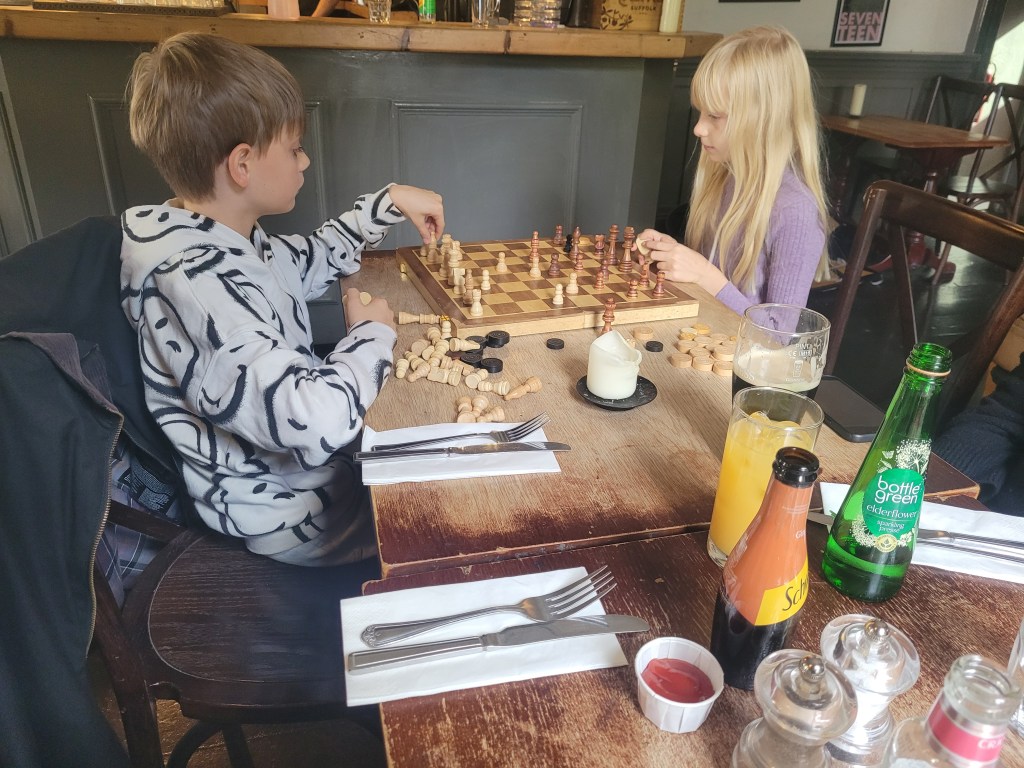
London culture can be so different than what we experience in Canada. For example, we went for lunch one day to a local pub/restaurant and while waiting for the food to arrive, the kids brought out a chess board and were having a little game.
Another quirk of culture is instead of saying “How are you?” when greeting someone, they say “You alright?” It has a hint of things being not alright. A hint of negative. I’m not sure I like it.
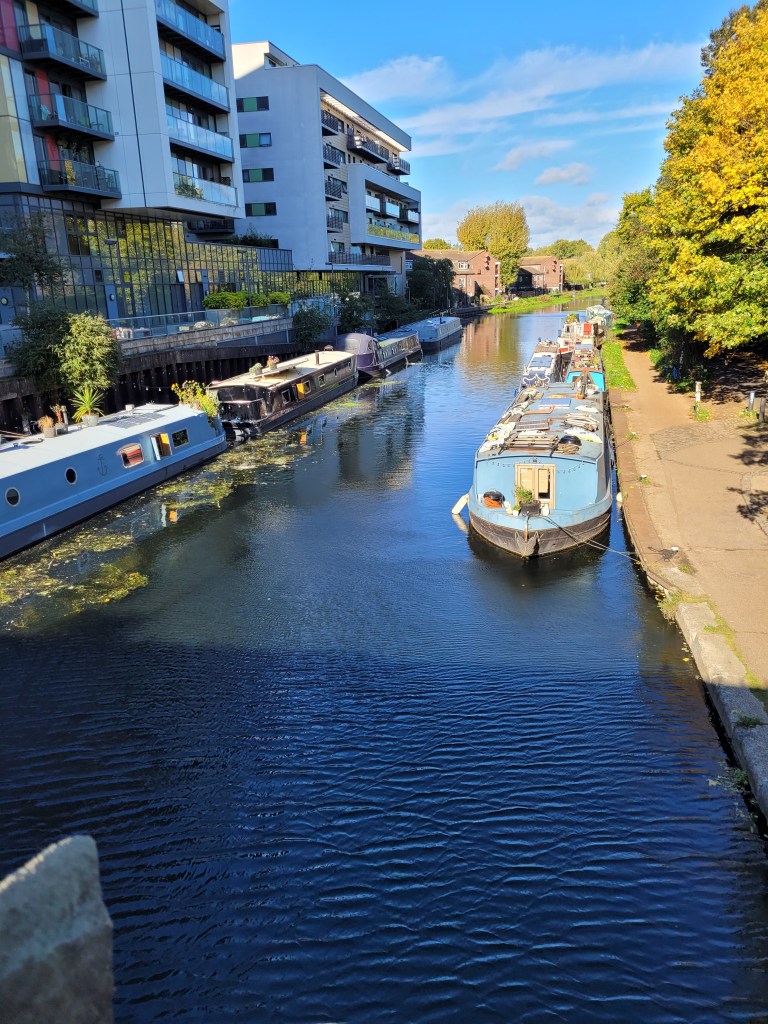
Walks along the various canals add another aspect to London. People live in houseboats year round. Some are so tiny, yet they seem to have everything one needs to live. Many have solar panels and even small gardens on the roof.
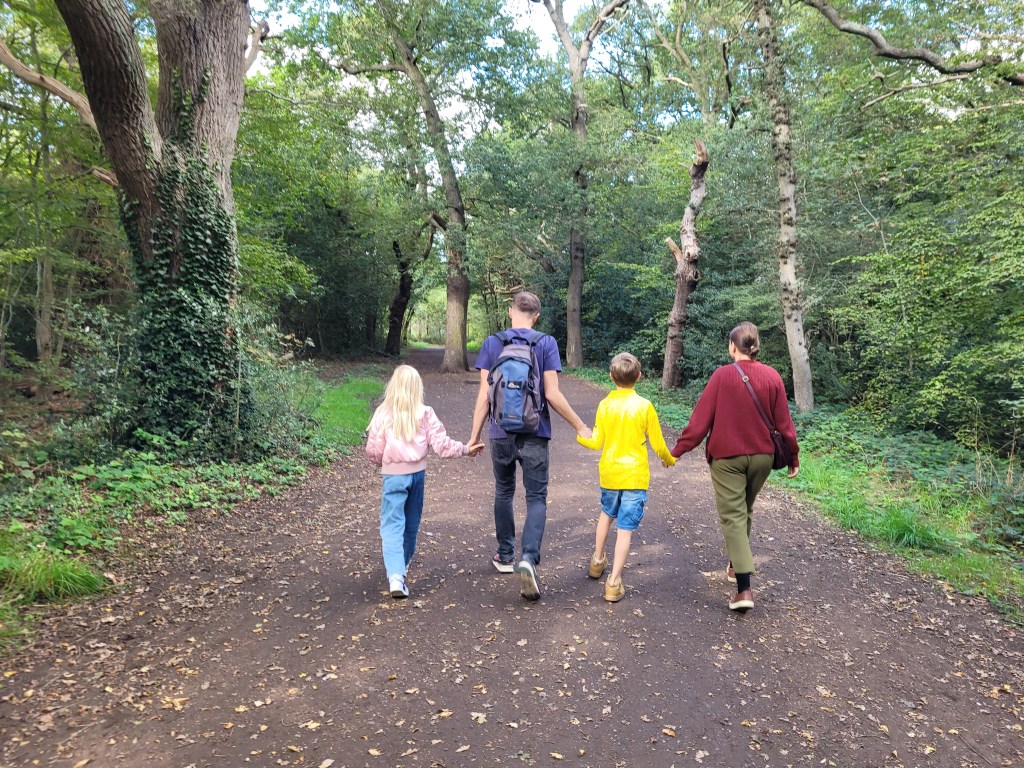
We took a nature walk to Epping Forest. It is a massive 2,400-hectare (5,900-acre) forest and one of the oldest forests in the UK with beautiful old trees. It is thought to have been given legal status as a Royal Forest by Henry II in the 12th century, meaning the commoners could utilize the forest for gathering and grazing, but only the King could hunt there.
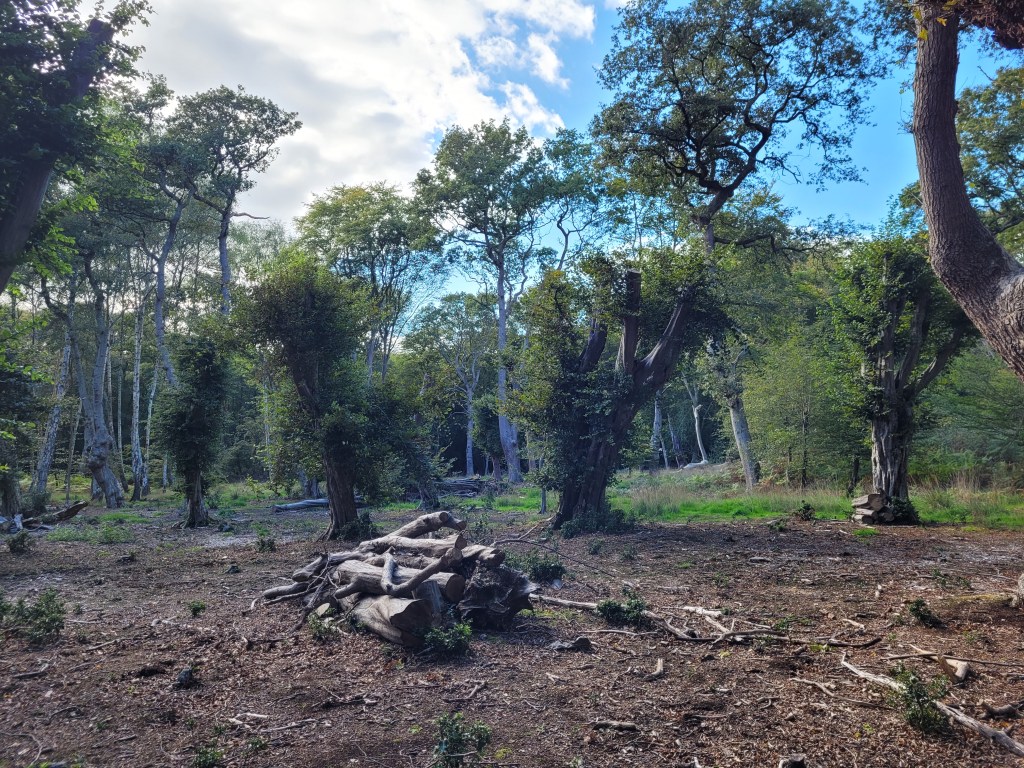
The system of pollarding the trees is still used. Pollarding is where they remove the upper branches of a tree, which promotes a dense head of new growth. The system helps make the trees live longer by keeping them in a semi-juvenile state and reducing the weight and windage of the top part of the tree. Pollarding happens every 8-15 years. The new growth tends to be more upright, which was favoured for fencing and boat construction. The system was abandoned for many years but was brought back into favour once the benefits became obvious as the biodiversity damage began to take place.
We spent several hours walking along. The kids played hide and seek among the trees, raced up and down, and generally had fun in the natural environment. Toward the end of our walk, we met a fellow who had built a remote control helicopter. We stood back and watched him play with his expensive toy and were amazed at its speed and agility.
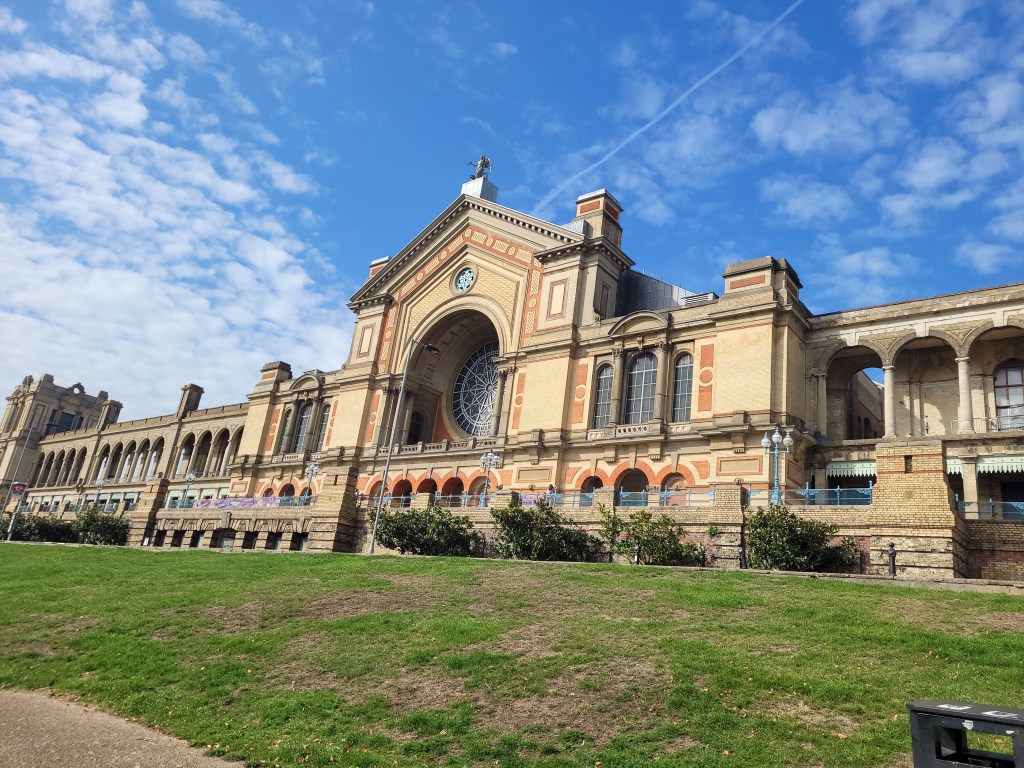
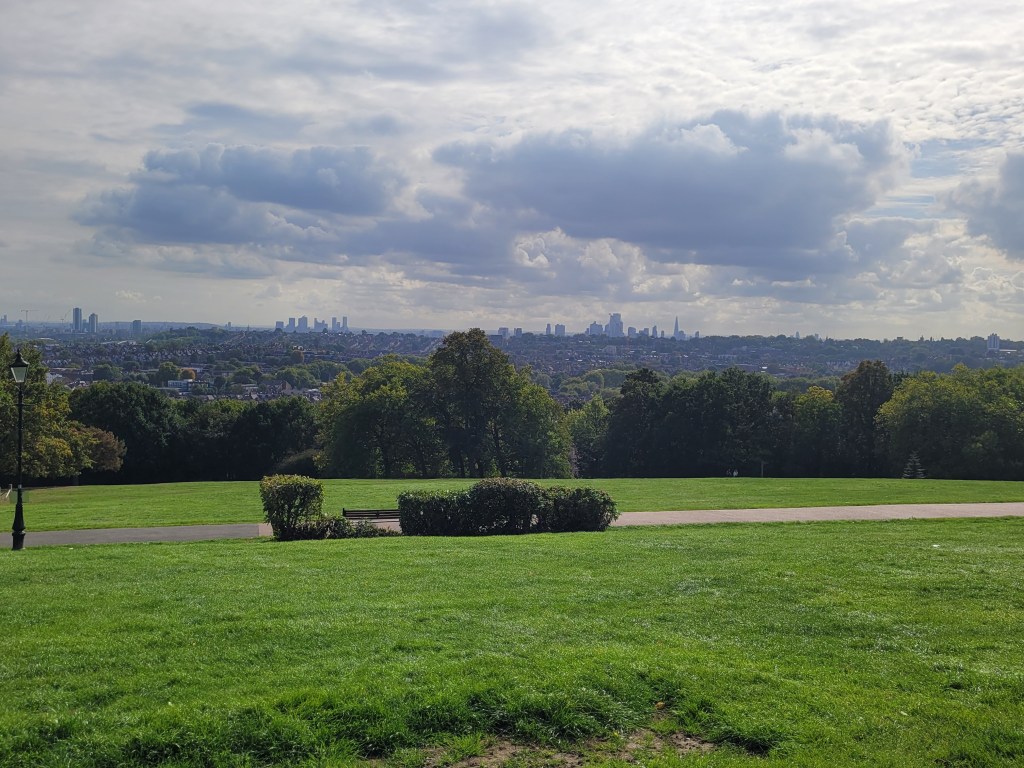
Pre-Covid Len had bought me a book of 33 interesting walks in London. I took advantage of my time to explore a few of these walks. The first one started at Alexandra Palace (Ally Pally). The view of the city was incredible from this location.
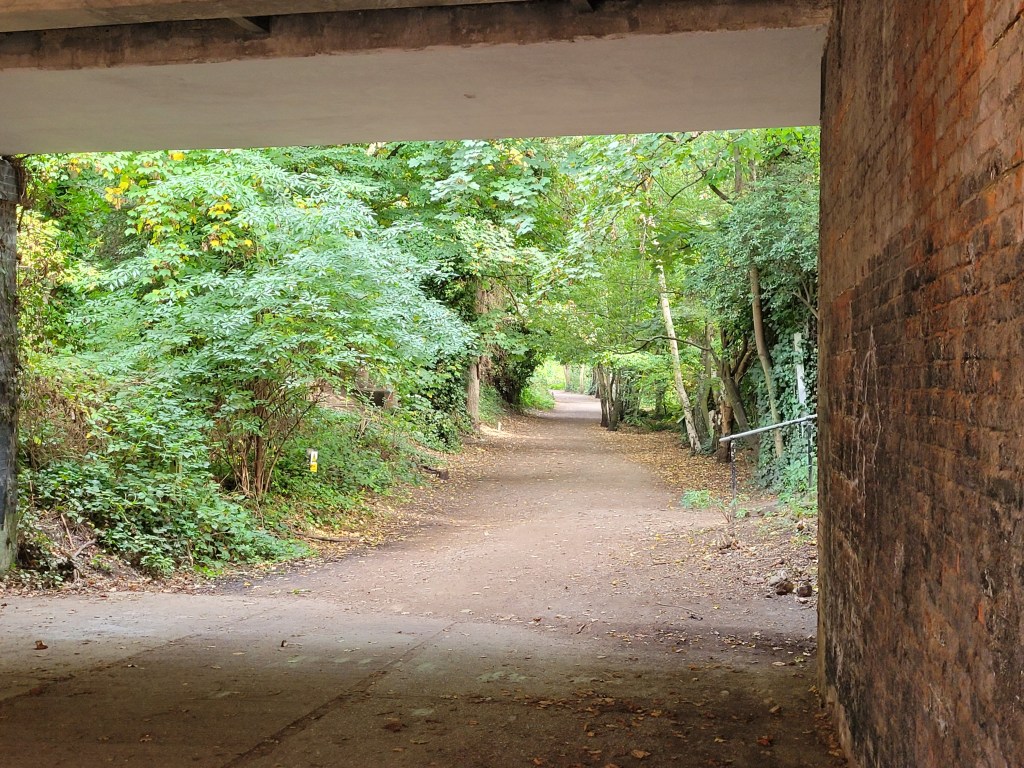
It took me along Parkland Walk, an old abandoned rail line through some dense forest.
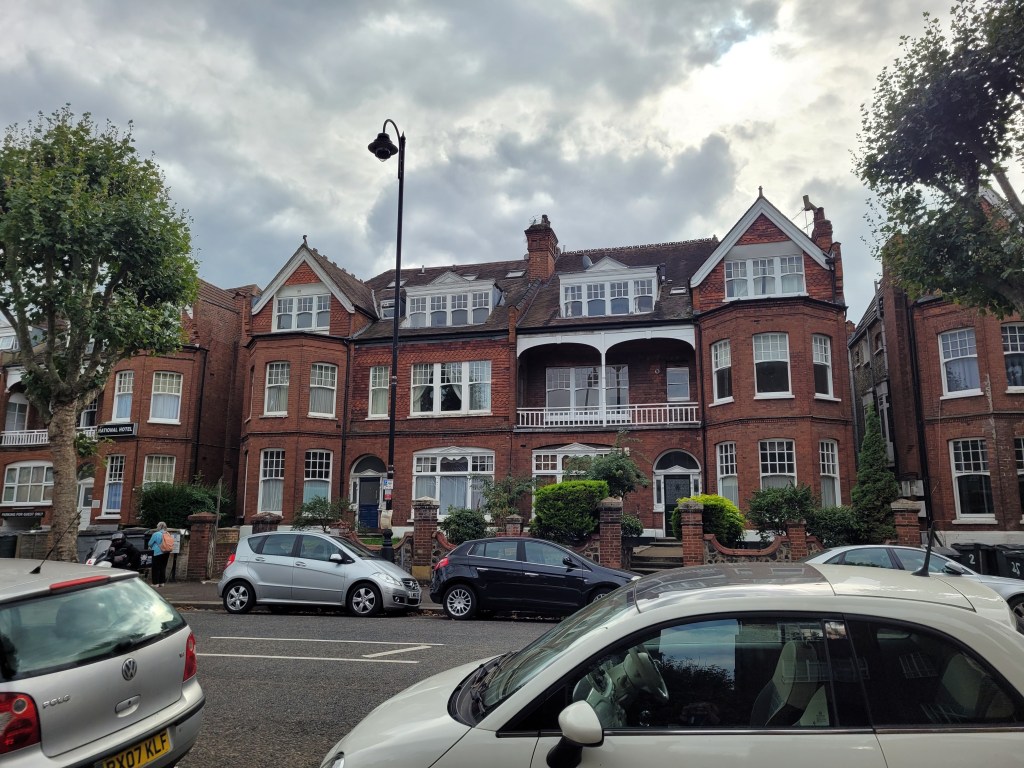
From there I went through Queen’s Avenue, an area filled with beautiful Edwardian homes.
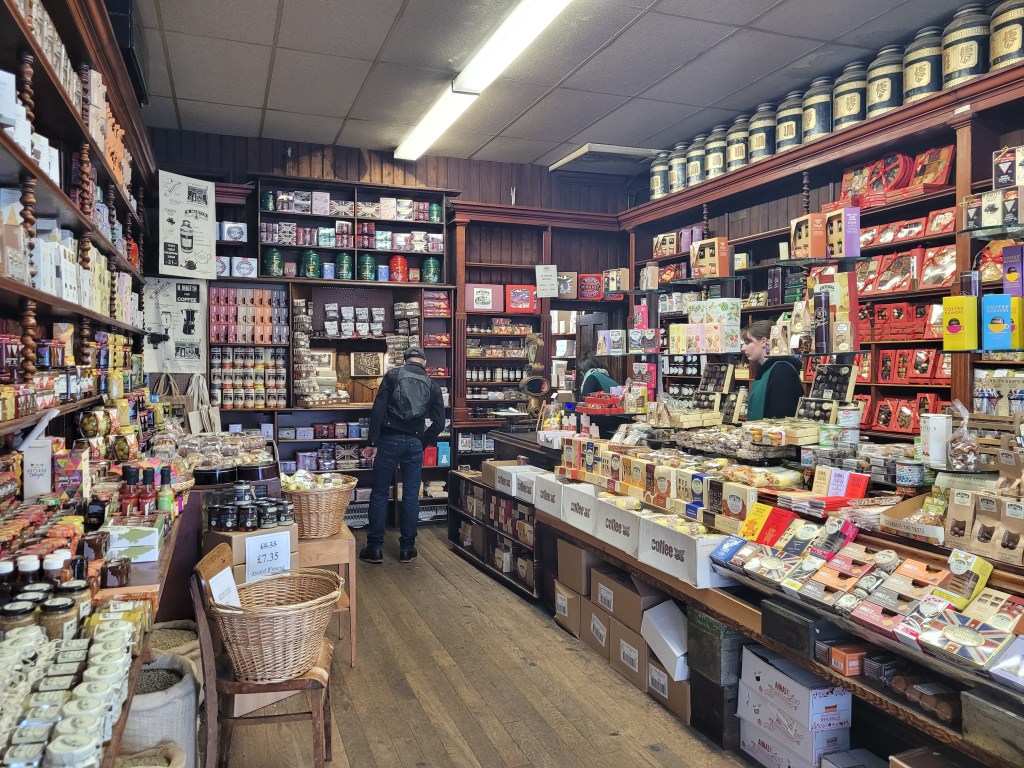
I stopped in at W Martyn – a specialty tea and coffee shop that has been open since 1897. They also sell other fine foods – like cookies, which I bought.
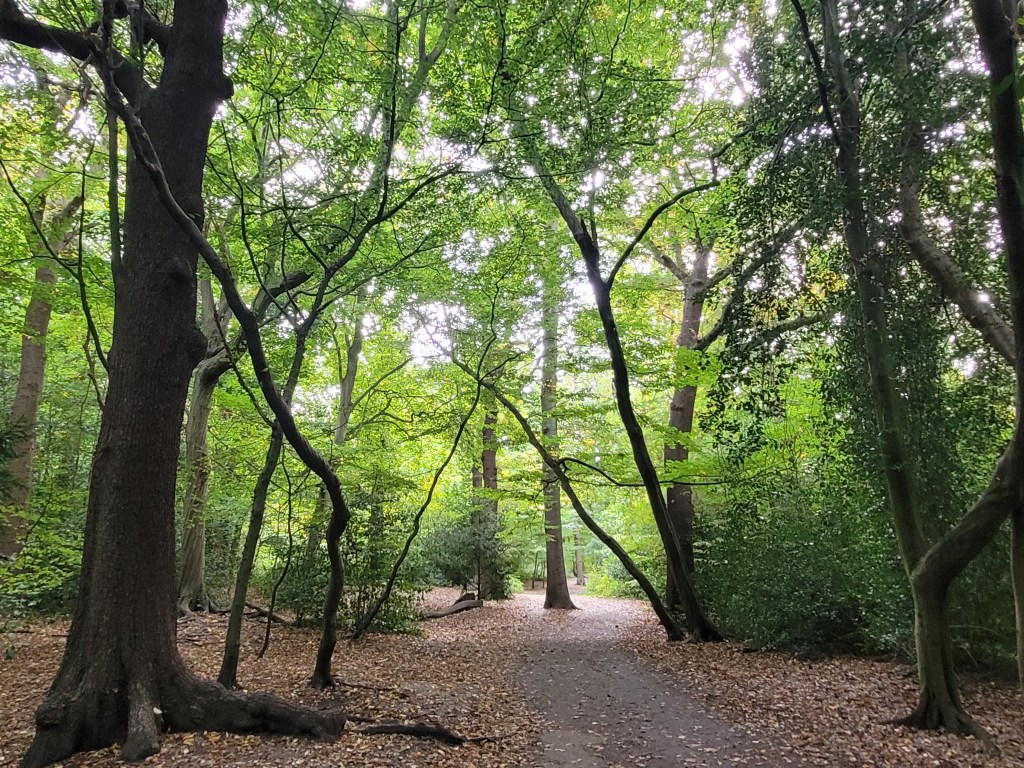
Then through Highgate Wood. Even though it was a bright sunny day, the ancient forests are so dense it is nearly dark in them.
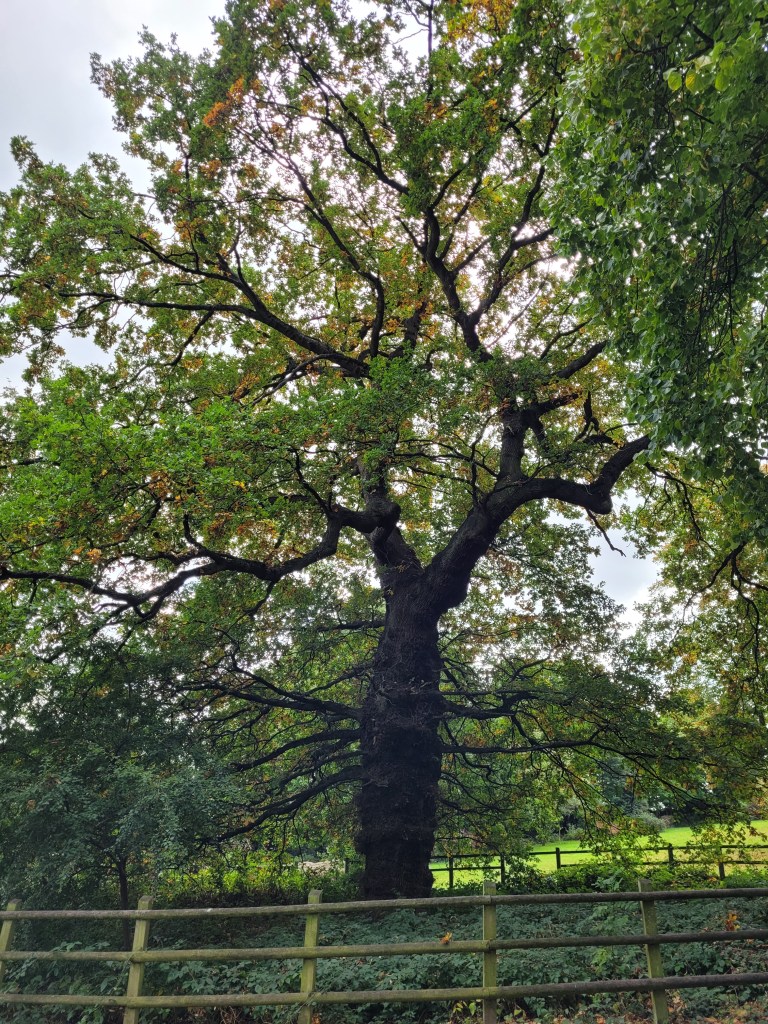
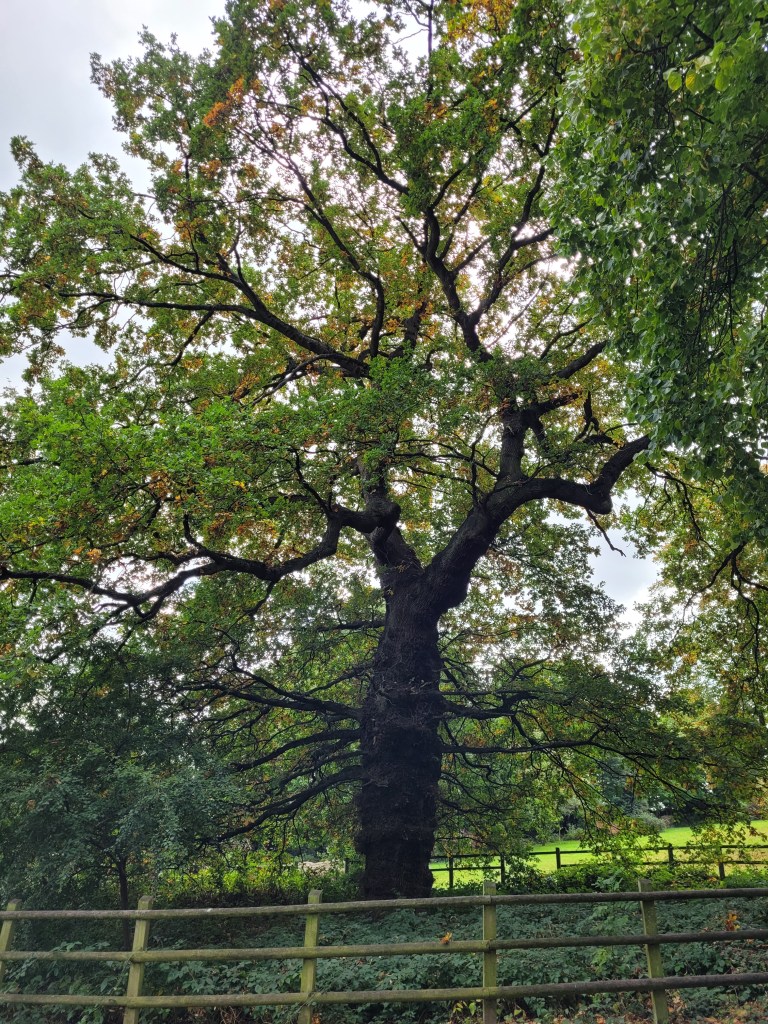
In this forest I saw a Veteran Tree. There was a fence around this magnificent specimen and a little sign that said it was estimated that the tree was planted in 1770.
Another day I went to Hampstead Heath. It is 790 acres (320 hectares). On the southeast part of the heath is Parliament Hill. It is one of the highest points in London and the view is protected by law.
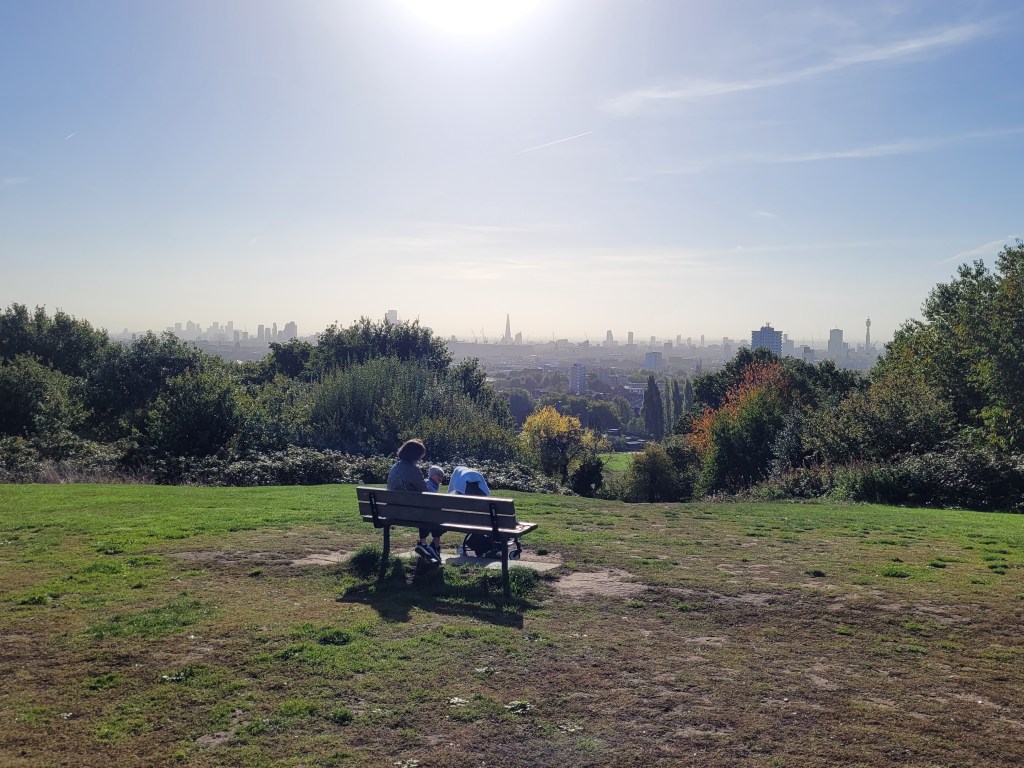
Parliament Hill is also where Guy Fawkes told his buddies to sit and watch the greatest fireworks display (that never happened) on November 5, 1605.
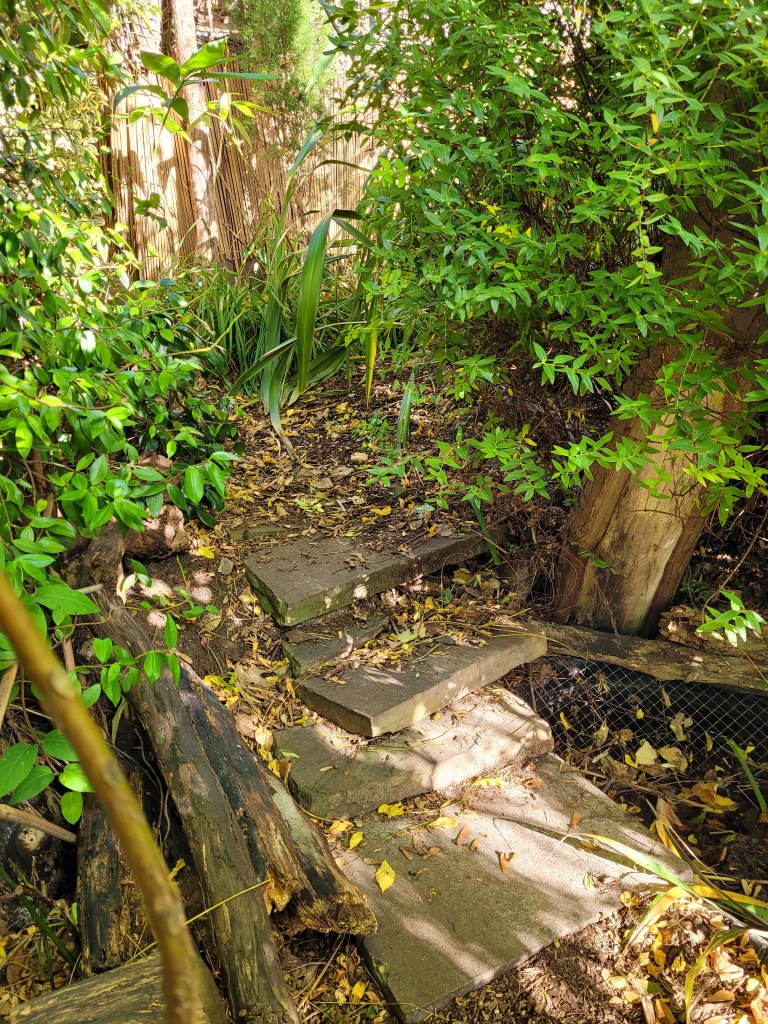
As I left the tube station, I walked past Belsize Park. Then I turned to go back into it. It is a tiny little park squashed in between the sidewalk and the street. It covers about 2 Canadian lots. What caught my eye was a sign that read “Leave nothing but footprints. Take nothing but pictures, Kill nothing but time” It was the tiniest and most overgrown park I had ever seen. There were narrow footpaths that lead from one gate to another, with other tiny paths that lead to little resting spots with a bench, a birdhouse, or a tiny brook. It was wonderful and I am so glad I didn’t just walk past it.
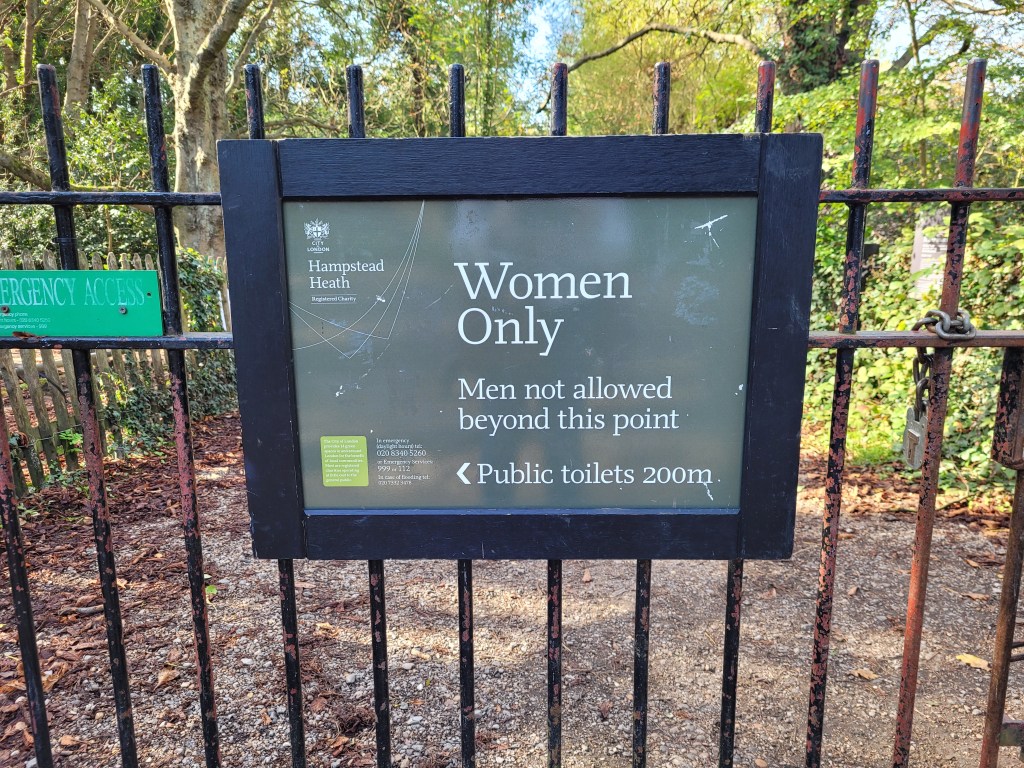
The walk through Hampstead Heath took me past the Men’s, Ladies, and Mixed bathing ponds. The ponds were originally dug in the 17th and 18th centuries as reservoirs to meet London’s growing water demand and were fed by headwater springs of the River Fleet. Eventually, they were repurposed to single-sex bathing/swimming ponds. Don’t you love Victorian modesty? The City of London tried to close them in 2004, but they were challenged at the High Court. The City still won by implementing fees to use the ponds.
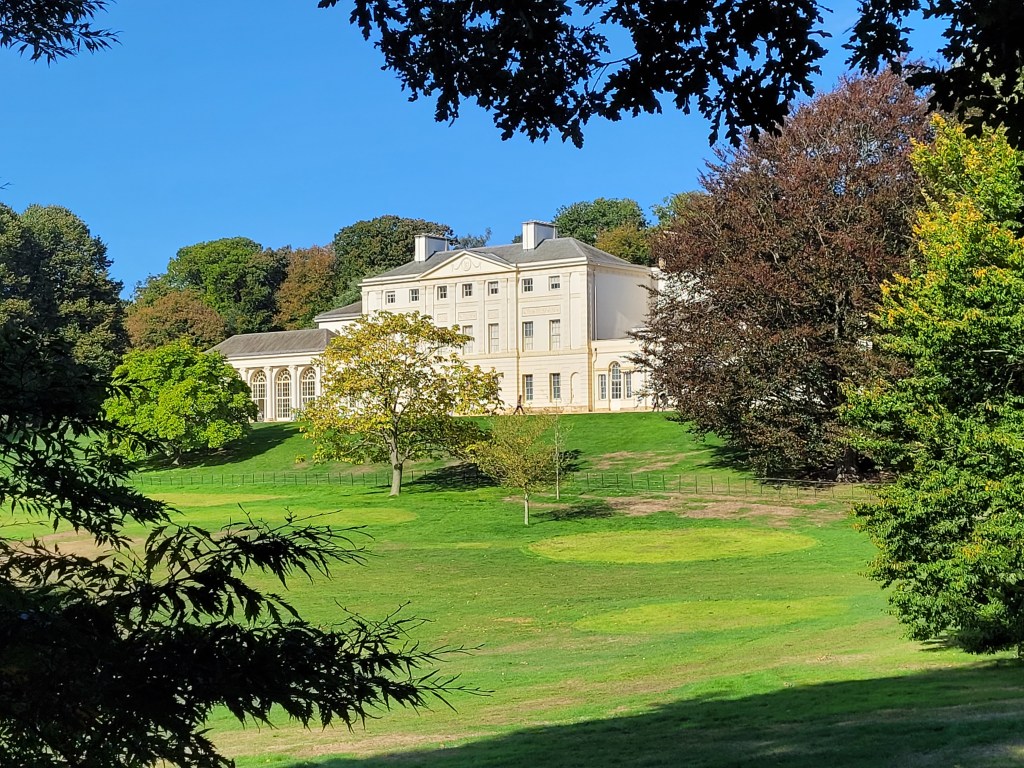
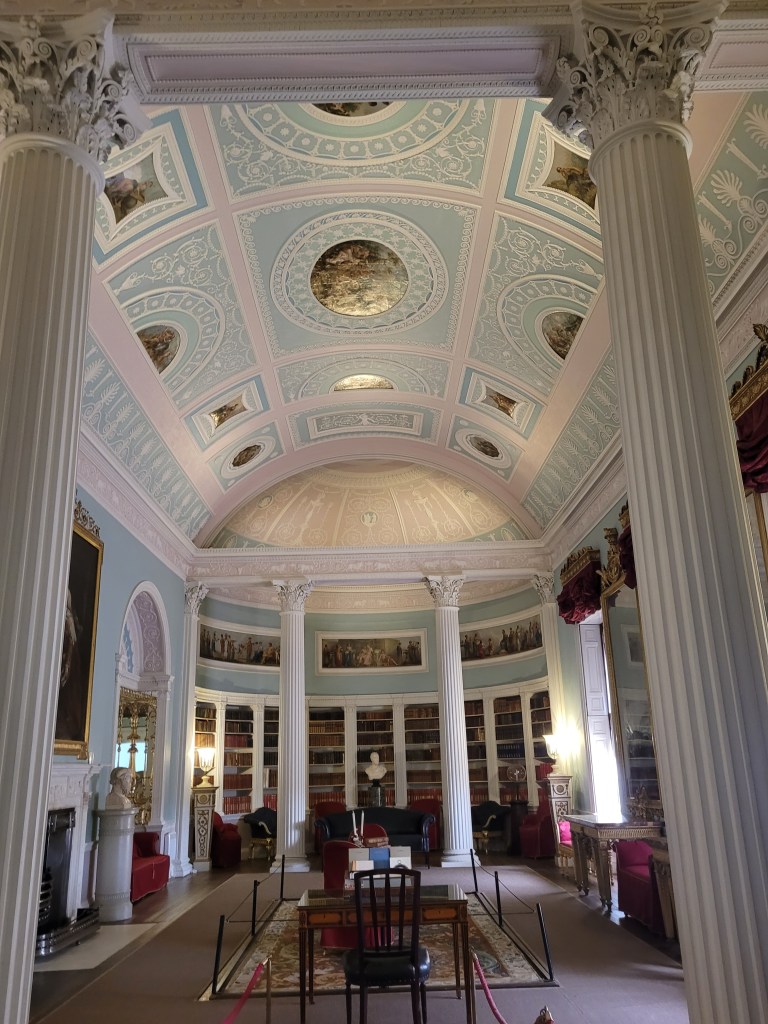
At the north end of the heath is Kenwood House. Built during the 17th century it served as a residence for the Earls of Mansfield during the following 2 centuries as a Gentleman’s Country House, where men could hunt and fish, and probably, other things away from prying eyes. Edward Guinness bought the house in 1925 and donated it to the nation in 1927. Today it is a popular tourist attraction housing numerous works of art and furniture that were left over from previous owners.
I talked at length to one of the guides about the styles and functions of dress in some of the paintings. The fancy lace collars and cuffs seen in old paintings were a real thing to protect the clothing from sweat and stains from rubbing off the skin and onto the clothing. The clothes were so elaborately made they were never washed! They were worn for fancy / show-off occasions only. The lacey collar could at least be laundered. The ruffly collars that loop up and down would have to be unstitched, washed, then stitched back to the ruffle – by specialized servants. The length of such a lace could be 20 feet long. The stiff collar in this painting has been “photo shopped” to stick out. In reality, the collar rested on the shoulders.
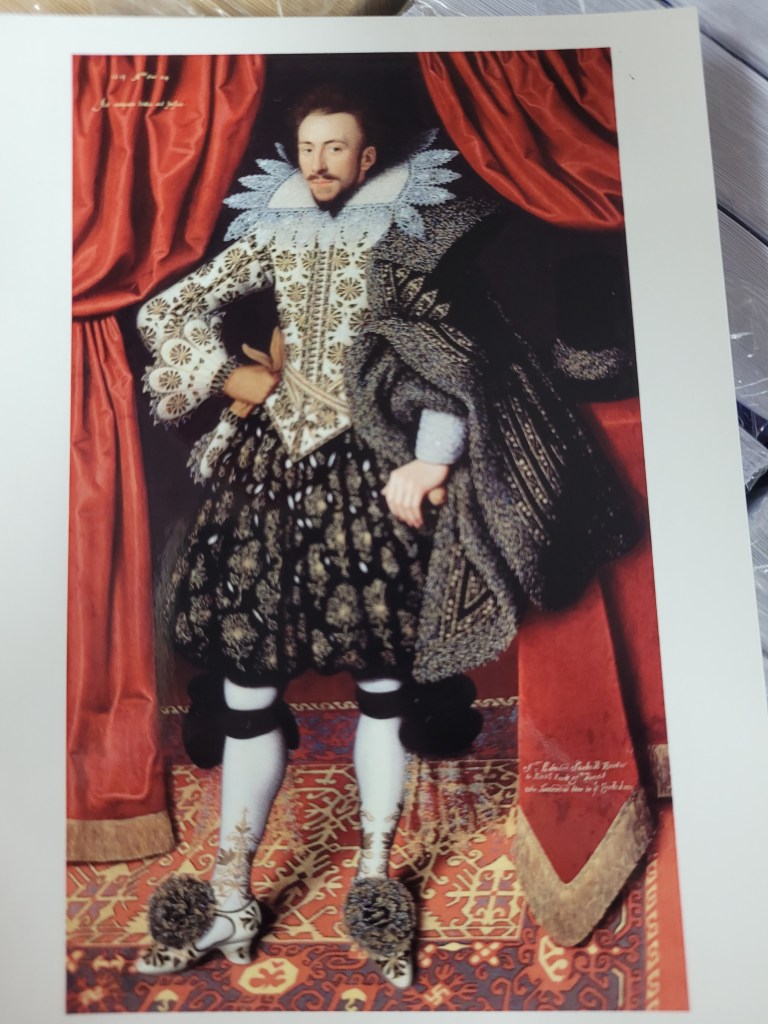
The rips in dresses and men’s sleeves were a status symbol. Every rip was delicately stitched so as not to fray. The more rips, the more expensive the dress. Also, the rips allowed the expensive, and usually colourful, fabric beneath to be seen. “See, I can afford an expensive layer beneath this one.”
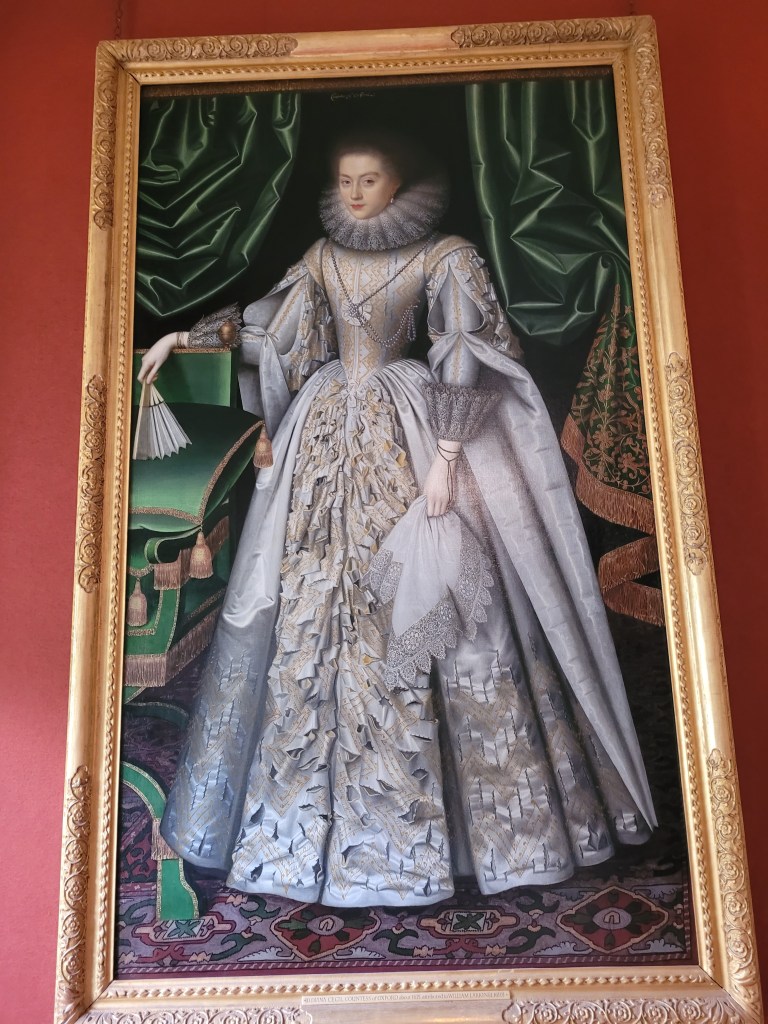
As I was about to leave, the guide at the door suggested I stay a few minutes longer as there was going to be a talk on one of the paintings in a few minutes. OK, I’ll stay. As it turned out, the speaker was the same guide I had chatted with before. He asked me if I could help him during his talk and to read the part of Mrs. Musters to give more character to his talk. No Problem! My Pleasure! It was great fun and I put as much character as I could into it.
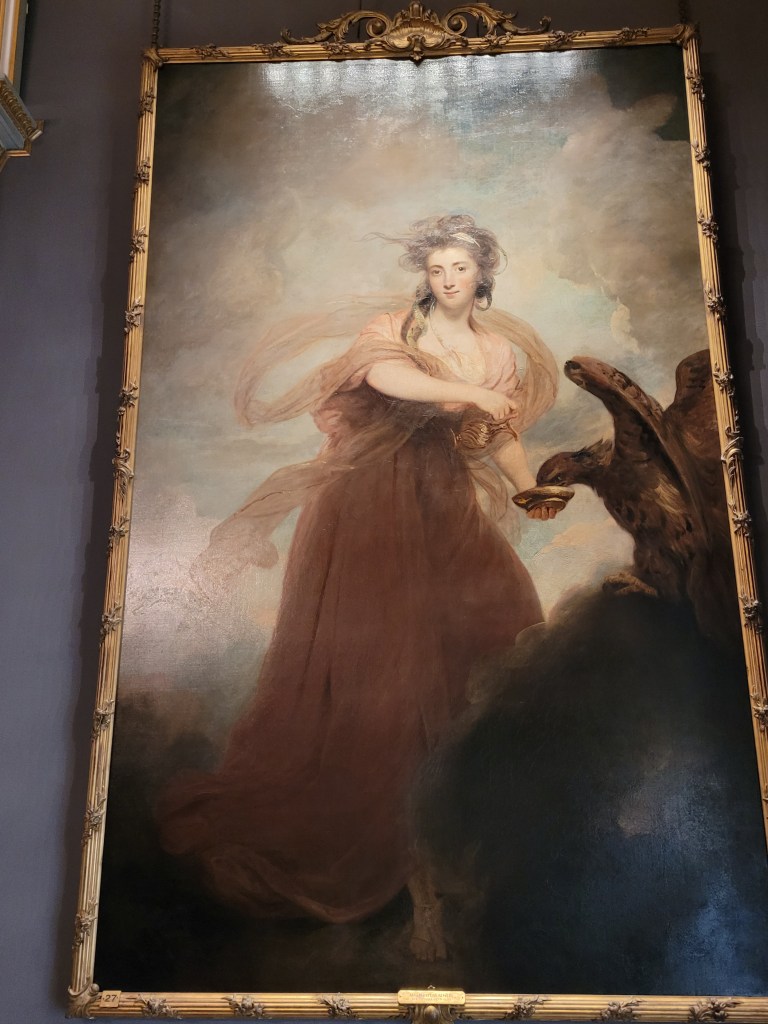
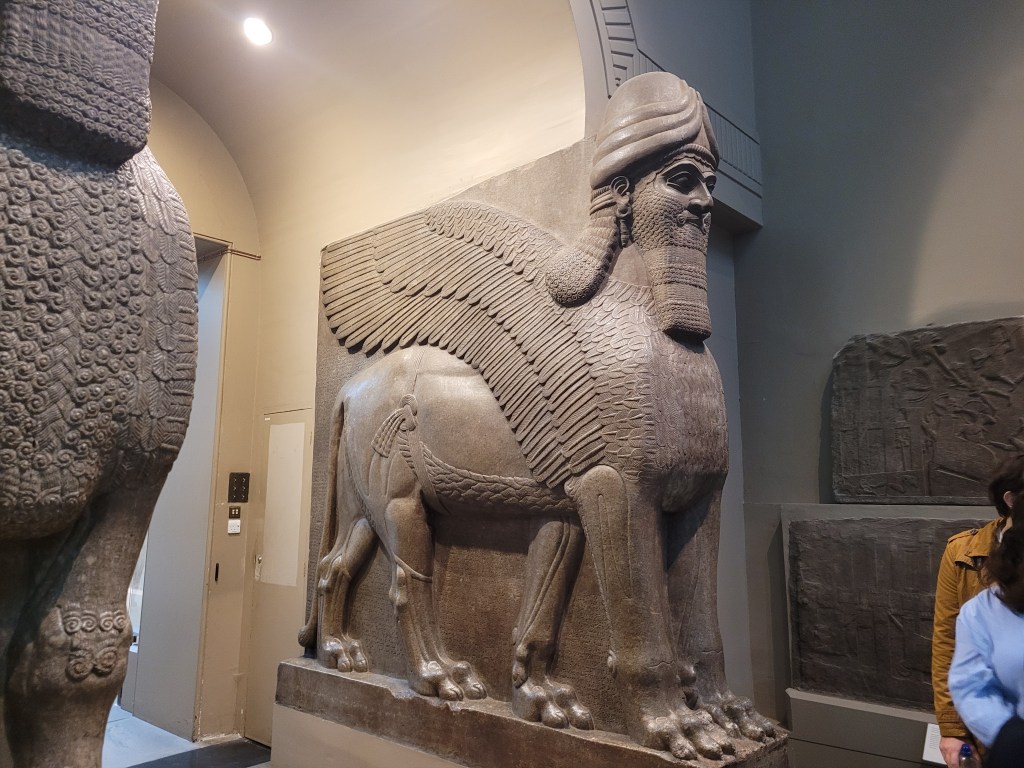
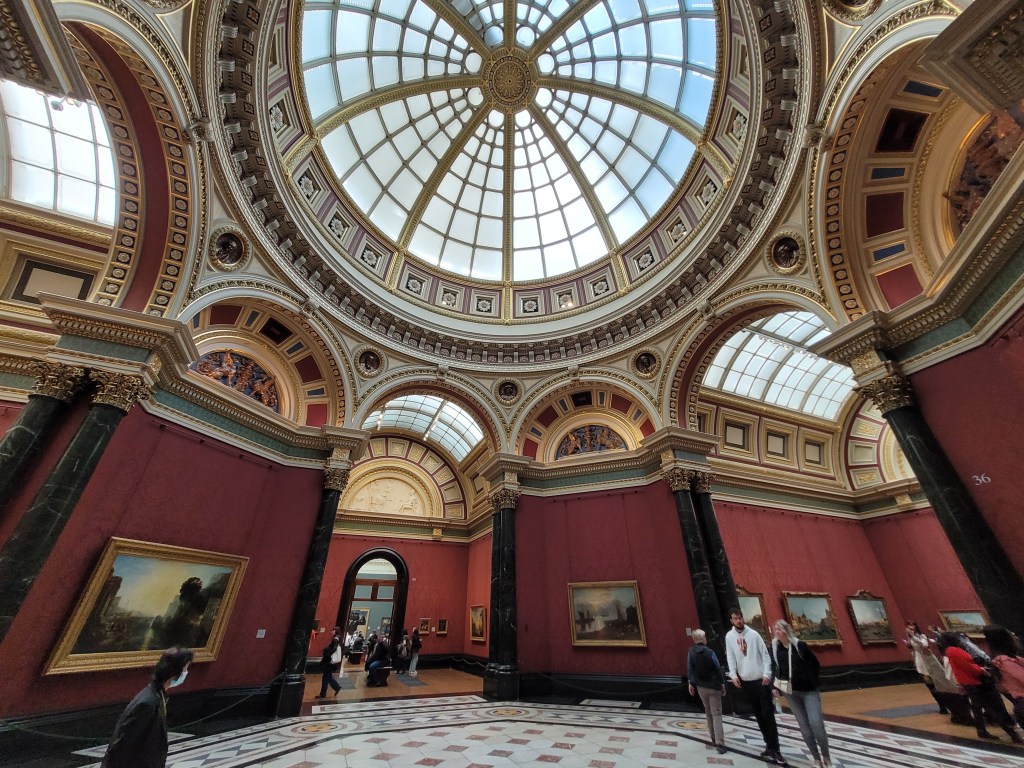
I took a half day to visit the British Museum and the National Gallery. I had been to both many times in the past, but it is always a nice way to kill a day.
Before heading off to Africa with Sara, she needed some laundry done but was working up to and including the day we left. I went to her place and took her laundry to a nearby launderette / dry cleaning shop. The owner was telling me that they used to be solely a dry cleaner, but when Covid hit business dropped to nothing. People were working from home, wearing pyjamas and sweatpants all day, and no longer required dry cleaning services. Rather than close their doors, they reinvented themselves by putting in high-tech washers and dryers. One can download their app to see if machines are available before you leave home and even pay on the app. The washers automatically dispense detergent and fabric softener. The dry cleaning has picked up again but to only a fraction of what it used to be. Note the prices above the machines – not cheap!

I went with Len and family to two separate school open houses. Julian will be going to secondary school next year – what Canadians would call junior high. Parents are encouraged to scout out different schools and put their first, second and third preferences. The first school was very new and had lots of extra classes and clubs. Leytonstone Secondary is a 5 minute walk, and although an old school, it has new and modern annexes. They seemed to offer similar classes. At the end of the day, it is the school board who decides where your child goes; but they do give preference to the nearest school.

AFRICAN BLOG TO FOLLOW
 An Old Lady with a Backpack
Leave a comment