
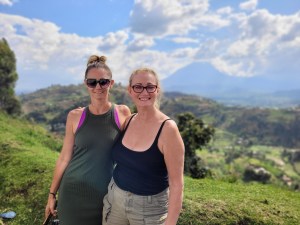
Our dream holiday!
This was a milestone birthday year for my daughter Sara and me. She turned 40 and I turned 65. Sara had the brilliant idea that we should do a monumental mother-daughter trip. Several years ago we discovered that both of us thought seeing the mountain gorillas was the ultimate trip of a lifetime. It was a no-brainer. We were going to Africa! We booked the trip 18 months in advance and still in the middle of Covid lockdowns and travel restrictions. We could only hope that it would all end before we had to leave. It did. Travel restrictions were lifted, and even mandatory mask-wearing became an option.
I came to London 16 days before our departure date just in case there were still Covid quarantine restrictions in place. I did NOT want to miss out on this trip! There were no quarantine restrictions. I stayed at my son’s house and you can read about it in my previous blog.
DAY 1
SUNDAY 16 OCTOBER
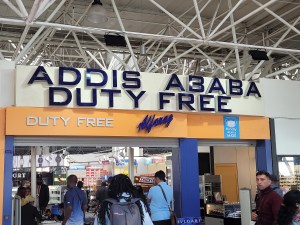
Our night flight began at Heathrow. We had a 5-hour layover in Addis Ababa, Ethiopia. They scanned our luggage even though we were only transferring flights.
When we got to Nairobi, Kenya we had to queue for over an hour to get through immigration. For 18 months we were told we could get an East African visa at the airport. 2 days before we left we got an email saying we had to apply online, and it can take up to 2 days to get. Yikes. It took me 2 hours to fill in the application. Not that it was difficult, it was the picture of my passport and another passport photo of myself that was the problem. It could only be sent in such a small megabyte format it was nearly impossible to shrink that small. Then we had to print it off, complete with QR code. BUT at the airport, they didn’t even ask to see the document. They wrote the visa off by hand and placed the sticker in our passports. It slowed the queue down to a crawl. What was the purpose of the online QR code?
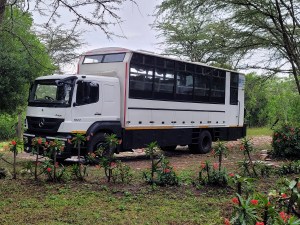
We were so long getting through we thought we must have missed our transfer to the hotel. However, there were a bunch of us on the same flight and we were all delayed. Our Exodus guide, Patrick, was patiently waiting outside the terminal. I think he knew the process. He called for our truck, which was waiting outside of the airport grounds. We were told many times it is a truck and NOT a bus. Why? #1 a bus driver wears a uniform Boniface (Stoney) does not. #2 a bus could never go where our truck will have to go. Within a day or two, we knew exactly what he meant. One of the girls commented that it looked like a cattle lorry. OK, so maybe it was a truck after all.
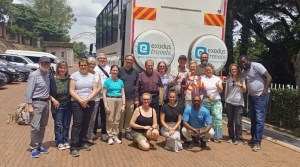
Once on board, Patrick said that although we were all strangers while on this trip we are family. His words proved to be prophetic. By the end, we really did consider ourselves as family, which will be expounded on later.
Off we went to the Kenya Comfort Inn. On the drive, we saw gorgeous purple flowering trees. The overpass support pillars had flower pots up the entire height. It was beautiful and very eco-friendly.

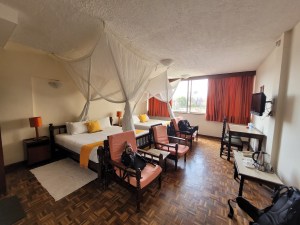
Our room was nice and large. There were mosquito nets over the beds. Everywhere we stayed had mosquito nets, some nicer than others. We were all taking malaria tablets for the entire trip and would have to continue for a week after. Although we barely saw any mozzies and very few of us got bitten, it was nice to have the nests.
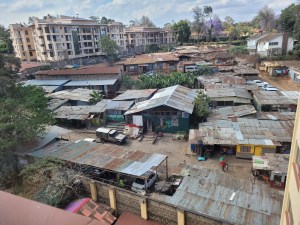
The view from our window had us looking down on a shanty town. An ibis flew by. It had a call that sounded like a person laughing.
We had a short briefing where we introduced ourselves, said where we were from and what we did for a living. Everyone was from somewhere within the UK, except me. Most of the people were in their mid-50s. Sara was 40 and Vicky was 32. This was Vicky’s last hurrah before joining the London Police as a 999 operator. Fred was 75. Kudos to him! Some of the treks we undertook were hard and the road trips were long, bumpy and dusty. Patrick would joke about our African massage – being jostled about in the truck. We were told we would hopefully see the BIG 5 – lion, leopard, black rhinoceros, African bush elephant, and African buffalo, the little 5 – ant lion, leopard tortoise, rhino beetle, elephant shrew, and buffalo weaver. (notice they are mini versions of the big 5) and the ugly 5 – warthog, hyena, marabou stork, vulture, and wildebeest. We saw them all except the rhino beetle, shrew and ant.
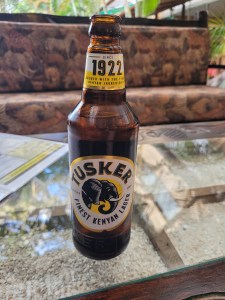
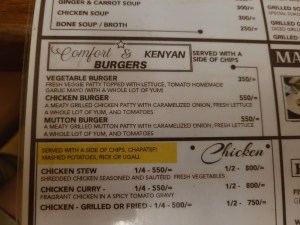
We got to know each other a bit better over a Tusker beer (500 ml for $3.50) and a ¼ grilled chicken with fries, salad and a “whole lot of yum” dinner ($10).
The cats in the restaurant were cute until the male started pissing out his territory on the walls. We aren’t in Canada anymore, Toto!
A quick story about 75-year-old Fred: He came on a different flight, through Amsterdam. No one told him that the flight would stop in Zanzibar before ending in Nairobi. (We also experienced an unannounced stop-over on our way home.) Thinking he somehow got on the wrong flight, he saw people getting off the plane in Zanzibar so he got off too. He went to a ticket counter and explained that he boarded the wrong flight and was supposed to go to Nairobi. “No, sir. This was a stop-over, and your flight just took off again – for Nairobi!” They managed to get him onto the next flight to Nairobi, at no extra cost, but by the time he landed, we were all tucked away into bed. He had to take a taxi to the hotel (Exodus reimbursed him). He wasn’t sure if the hotel was the Kenya Comfort Inn or Kenya Comfort Hotel or Kenya Comfort Suites. The taxi drove him through dodgy parts of town and Fred thought he was going to be mugged and murdered in some dark alley. Finally, they came to a set of closed gates. A shady-looking fellow in jeans and a hoodie opened the gate. Now Fred was really thinking he was done for. Just then he spots the Exodus truck. He went into the hotel where he was told that all the other guests were indeed there. Whew! He made it without getting mugged or murdered.
DAY 2
MONDAY, 17 OCTOBER
We set off after an early breakfast. NOTE: ALL meals were provided. Many times we would have a box lunch provided by our last hotel, which usually consisted of some leftover chicken from the last night’s dinner, a sandwich, fruit and juice. If we didn’t eat it all we were to leave it for the locals. Our time spent travelling ranged from 6-10 hours between destinations. Patrick would joke about our “African massage” – getting jostled about in the truck. Luckily, the landscape was interesting. Most times we arrived at our destination just in time to relax a little, take a shower, have dinner and go to bed. Breakfast was usually between 6:00 and 7:00 am. Departure time for hitting the road or for a game drive was usually between 6:30 and 7:30 am.
gas 178.30 ($1.95 CDN)
diesel 163 Kenyan shillings ($1.78 CDN)
We drove about 120 km then made a stop at the Great Rift Valley – the birthplace of humans. Our adventure was truly underway.
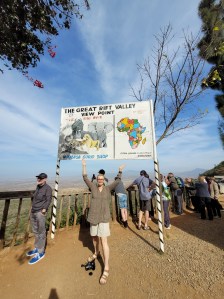
A brief history lesson: The rift valley is a lowland region that forms when Earth’s tectonic plates move apart or rift. This can happen on land or in the ocean. The Great Rift Valley is the largest on earth. The process began about 30 million years ago and was accompanied by volcanoes which produced Mt. Kilimanjaro and Mt Kenya. It is 48-64 km ( 30-40 miles) wide, on average; but is nearly 480 km (300 miles ) at its widest in the Danakil Desert in NE Africa. The walls of the valley rise about 900 m (3000 feet) above the valley floor. The earliest humans developed in the Kenyan Rift Valley about 3 million years ago, where the oldest known stone tools have been found. The origins of humanity (Homo Sapiens) can be traced back to this region about 200,000 years ago. An enormous crack in SW Kenya that measures 50 feet wide and several miles long was discovered in 2018, in an area that was previously intact. This crack is growing longer, indicating that the Rift Valley is still expanding.
The Great Rift Valley dwarfs the Grand Canyon in the USA Interestingly, the Canadian Arctic Rift is the second largest in the world. Grand Canyon is 5th.
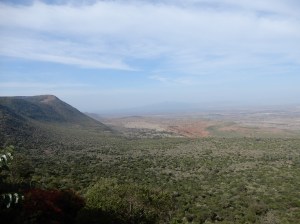
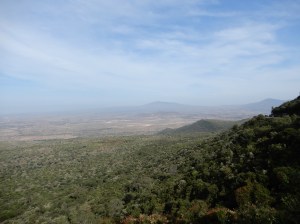
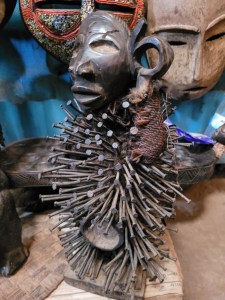
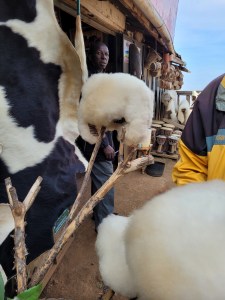
There were gift shops at the stop. They sold the regular fair of trinkets of wooden carved masks and statues. They also sold sheep wool hats. They looked very warm. They also sold sheep and cow hides, and cow tails. Some of the sheep hides still had blood stuck in the wool.
There was a steady stream of big trucks rolling slowly up and down the narrow road, which came to be a common sight throughout our journey.
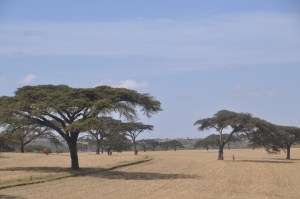
The trip was long but the landscape was interesting. Some trees were tall and skinny. Some were tall and bushy but flat on top like they had hit an invisible ceiling. Some were round and bush-like. There was a cactus-looking tree that I learned was aptly called a candelabra tree. We saw zebras and impala grazing beside the road or sleeping under trees.
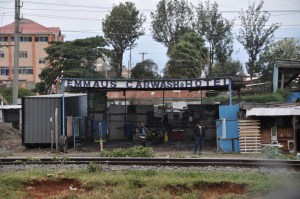
The villages we passed were interesting as well. It reminded me of India in many ways. There were men congregating everywhere, sitting on shop steps, benches, sitting on motorcycles and even on the ground. The more affluent areas had fewer men sitting around. The women we saw were generally washing clothes, hauling water, or tending kids. There were LOTS of car washes, but not many cars. There were LOTS of churches, many of them FOR profit. Some of the “preachers” go to great lengths to prove they are God’s messengers. One said he could fly, but the ropes suspending him were clearly visible. One claimed he could come back to life 3 days later if buried alive. His accomplishes were arrested for murder. Religion obviously played a huge role in people’s lives as we saw many shops with names like “Power of God Retail Shop”, “Blessed Hair Salon”, and “Divine Mercy Guest House”. But there was also “Plan B Hotel”. Sara and I both burst out laughing when we saw that. It turns out that a “Hotel” is really a restaurant – which makes the “Hotel & Butchery” less intimidating, and the “Car Wash & Hotel” understandable. What we consider a “Hotel” is called a “Lodge”.
There were lots of half-built houses and shops. Interest rates are 16% at the bank. The average income is only $350 per month. Unemployment was at 40% before Covid but skyrocketed to 60% since. People build as they can afford the building supplies (mostly brick). Finished buildings have false fronts with either a fancy name or company name on them. There were lots of Investment buildings, which was interesting because it didn’t look like anyone had any money.
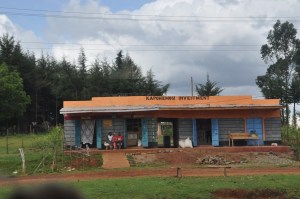
Most of the fences are made from thick branches leaning against each other, like stooks. The more affluent areas have tin or brick fences.
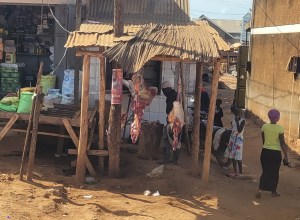
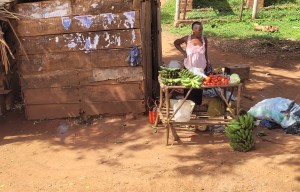
Every village had speed bumps as your entered and exited. Considering the villages are never more than a few miles apart, it was nearly impossible to make good time driving. There were women selling produce at the speed bumps. I can only imagine the wife telling her husband to pick up carrots at speed bump #2 and cabbage at speed bump #5. Corn on the cob is a ready snack and we would see people walking and even driving while munching on a cob. There were lots of butcheries with huge slabs of raw meat hanging out, and sometimes a crow picking at it. No one smokes. The average life expectancy is 70 years.
We stopped in a city, at a mall, where we could stock up on snacks and exchange money. Several of us had emailed the travel consultant about currency. She told everyone to bring U.S. cash. What a mistake!! The bank would only accept PRISTINE notes. One of our notes had a tiny highlighter mark on it (he had to point it out to us) and would not accept it. If a corner was bent it was not accepted. Hotels were even worse at being picky. They got a poorer exchange rate for bad notes or lower denomination notes. I consider this to be a total bullshit money-making scheme on the bank’s part. It is all legal tender, regardless of the shape. We managed to exchange $50 US for 5575 Kenyan Shillings at a bank. The Kenyan notes were horrible. I have seen used toilet paper look better. And they wouldn’t accept our nice U.S. Notes….???
NOTE TO FUTURE TRAVELLERS: Bring Kenyan shillings. They were accepted everywhere and exchanged easily for other currencies.
We left the main highway and took a dirt trail past a small village and through the bush until we finally arrived at Mountain Rocky Mara Spring Camp.
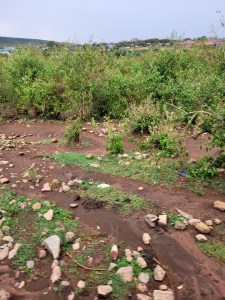
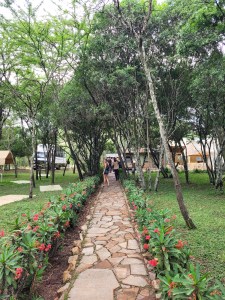
It was a lovely spot in the middle of the forest. Our accommodations were comfortable tents attached to a cement area housing a toilet and a shower.
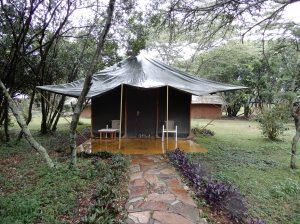
We were told to settle in as quickly as possible because we were off to the Masai Mara National Reserve. We separated into groups of 6, found a jeep and off we went. While we waited for Patrick to sort out our entry tickets we were surrounded by women trying to sell us all sorts of beaded things. We graciously declined, but they would not leave. Finally, Patrick returned and shooed them all away.
THE GAME DRIVE
There is really nothing to compare the game drive to. The top of the jeep raises up and we could (and did) stand on the seats to take pictures. We even stood on the seats just to have a better view while the driver took us along crazy dirt roads and off-road. The rains had not yet arrived so the great migration was not yet full on, but we got to see thousands of animals grazing together and on the move. I have to wonder if one were to lift all the forested areas in Canada, would we see this many animals converging together. There were zebra, springbok, wildebeest, warthogs, buffalo, giraffe, elephant, gazelle, topi, elan, ibex and ostrich all mingled together. We got closer to the animals than we could ever get in a zoo, and these were wild animals! They were also much bigger than the animals in the zoo.
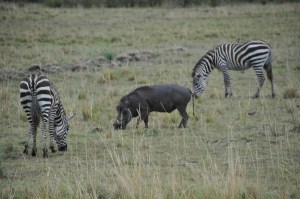
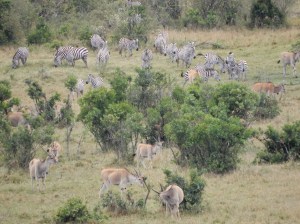
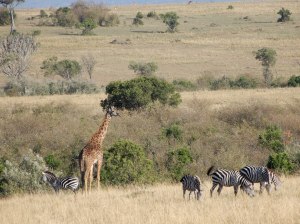
The drivers kept in touch with each other. If one saw something he let the others know. We quickly learned if we suddenly left the trail and started some serious “off-roading” across the savanna at breakneck speed (not that we went that fast, but the ride was enough to rattle your teeth) we were going to see something good! Seeing up to a dozen jeeps coming from all directions and all heading the same way and the intensity of our driver and guide had us all excited with anticipation. What was it? Elephants? Lions? Or the great illusive leopard?
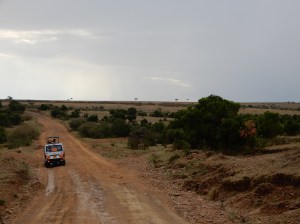
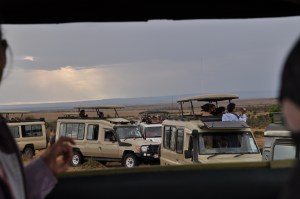
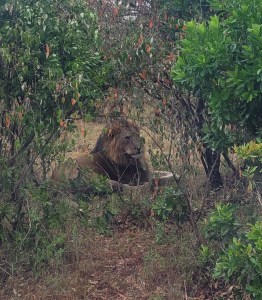
One time in particular there were 14 jeeps all parked and facing a thicket. Our guide said a male lion was spotted entering the thicket from the opposite side and we were waiting for him to emerge. We waited several minutes. Finally, our driver took matters into his own hands and drove into the thicket. What the hell!?!? Suddenly he stopped and pointed. There was the lion, hiding under a bush, not 3 meters from us! OMG! He was beautiful! He just looked at us and didn’t seem too bothered. Why should he be? He could have jumped up and snatched any one of us from the top of that jeep. Our driver informed the other jeeps that we had found the lion. Fortunately, we got the best pictures and were leaving as the other jeeps pulled up.
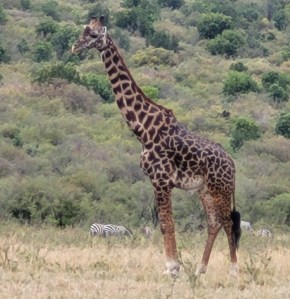
We saw many beautiful giraffes. A group of giraffes is called a tower. They are much bigger than any I had ever seen in a zoo. To watch them walking along with no restrictions was amazing. Such a powerful animal. The older they get, the darker the spots. The spots are unique to each animal, like our fingerprints. We were told if you see a giraffe running, don’t ask why. They tower above every other animal and can see danger coming from a distance, which is why smaller antelope-type animals like to stick close to giraffes.
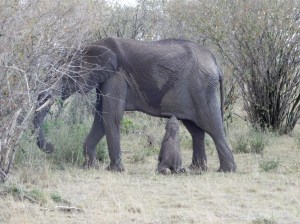
Sara spotted a female elephant with a tiny baby off in the distance. Sara quickly became the animal spotter. She could point out a tiny blip and had us all turn our cameras and binoculars in that direction. The baby elephant was only days old and was still slightly rubbery on his legs. He was SO cute. (I don’t know if it was a male or female, but I’ll call it a him.) Our driver informed the others, but we had several precious minutes alone to observe them. The baby was trying to find a teat but was too far forward. Momma was gently nudging him with her trunk to move further back. She finally took a step forward and he found his prize. He knelt down on his back legs to suckle. It was priceless!
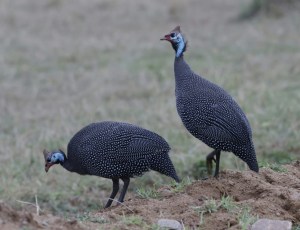
The daylight was fading and we had to head back to the camp. On the way, we spotted a flock of Guineafowl (Masai chicken). We watched them for a few seconds. They seemed so unremarkable after all the great majestic animals we had just seen. Finally, one of the gals pulled out her camera and said “It would be rude to not take a picture of them.” Good point!
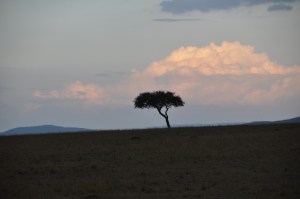
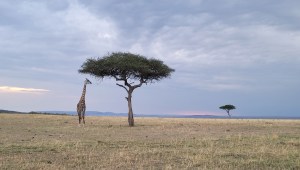
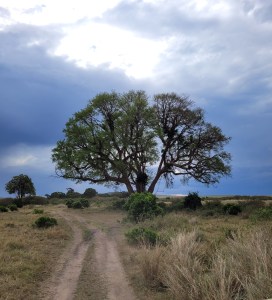
I would be amiss if I did not mention the landscape. It was flat, with few trees and reminded me of the Canadian prairies. The grass was more brown than green, but it was beautiful in its own special way
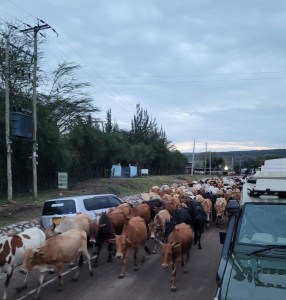
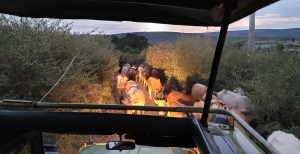
When we left the park we were confronted with a cattle traffic jam. The Masai were herding their cattle back home, to the safety of pens, before nightfall. There were hundreds of cows on the road. The men have a very sharp whistle, that sounds like a jackal, to keep the animals moving forward.
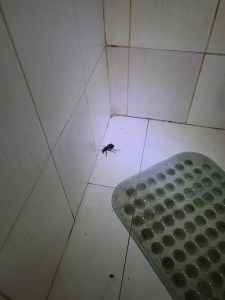
That night there was a HUGE cockroach in our shower. We didn’t want to squish it so we decided to flip the garbage can over it, with the intention of scooping it up and releasing it outside. We flipped the can over it AND IT MOVED THE CAN!! Ok, I’m done! I’m getting Patrick! He laughed at us and accused us of being afraid of everything. We were doing fine until a BUG moved the garbage can! He said it was a giant cockroach. Yeah! I told you it was BIG! No, NO, it is called a Giant Cockroach. They don’t bite, but they make a scratching sound that would have kept us up all night. And I don’t care if we had mosquito nets!
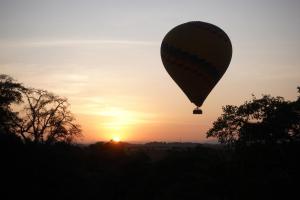
The next day we were up early. Most of the others went on a hot air balloon ride. Sara and I opted out. It was $600 US – no thanks. The rest of us took to the jeeps and spent a full day in Masai Mara. The ballooners joined us later.
While they were up in the air, we saw a cheetah on the ground. It was quite a ways off in the distance, but we got some good pictures anyway. Then it slowly began to saunter off in the direction of some zebra and impala. We didn’t hang around to see how that went. And besides, it was too far off in the distance.
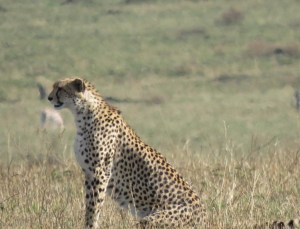
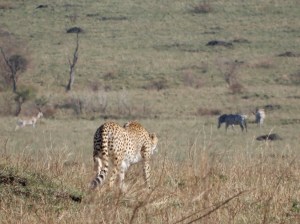
We saw LOTS of animals. And lots of babies and heavily pregnant animals.
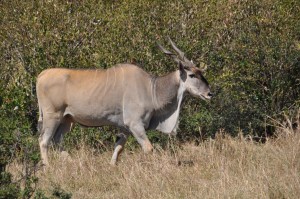
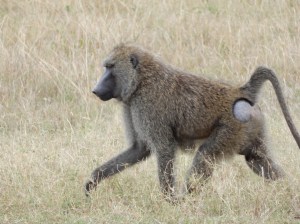
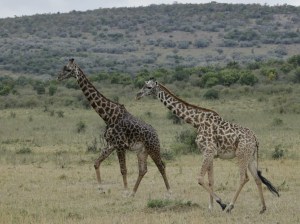
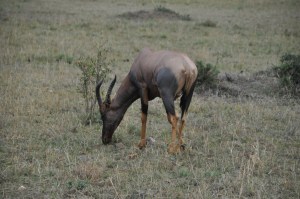
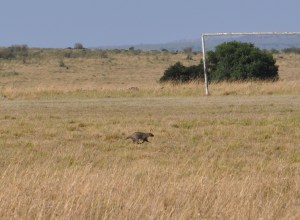
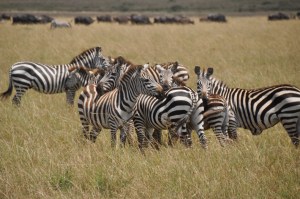
Zebras got so common we couldn’t be bothered to take pictures after a while. Zebras stand in a huddle looking over each other’s backs for protection.
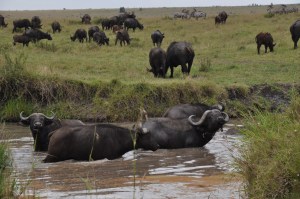
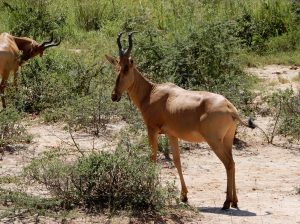
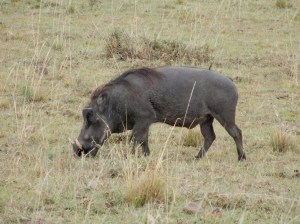
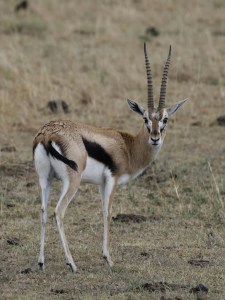
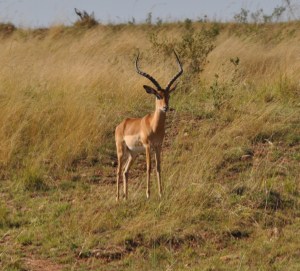
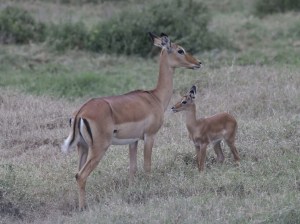
Impalas have an M on their backside letting lions know that this is MacDonald’s fast food.
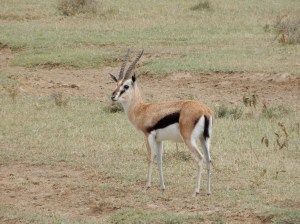
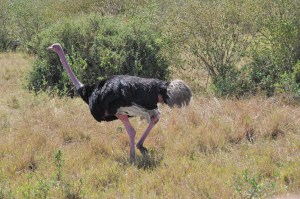
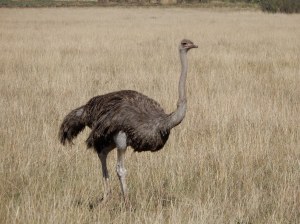
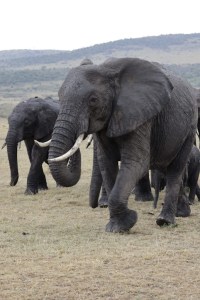
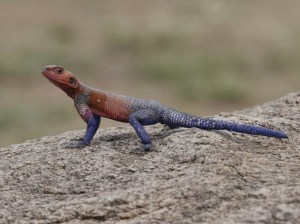
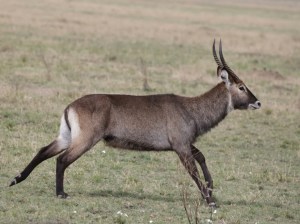
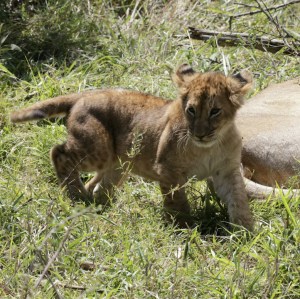
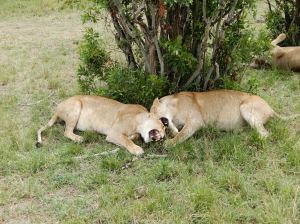
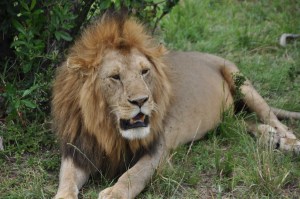
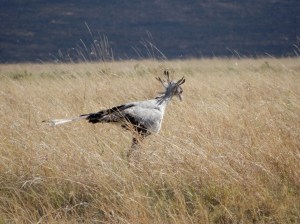
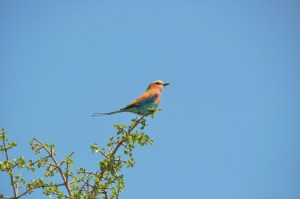
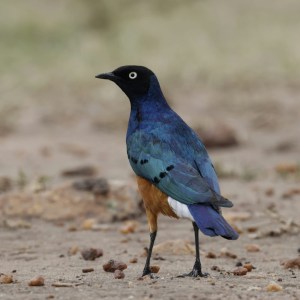
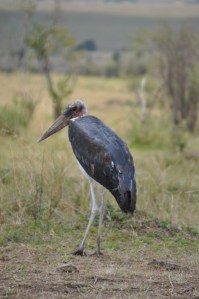
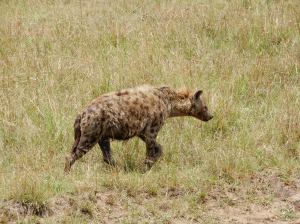
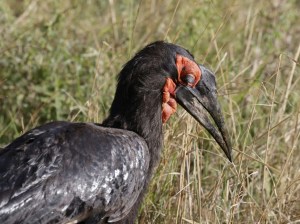
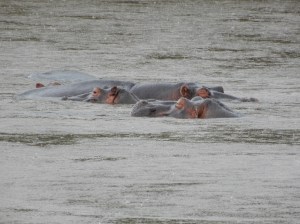
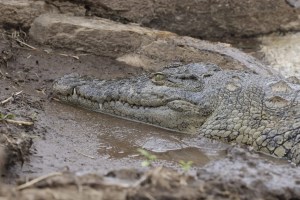
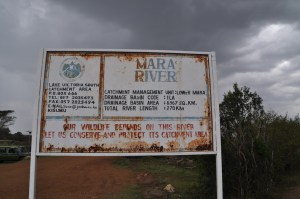
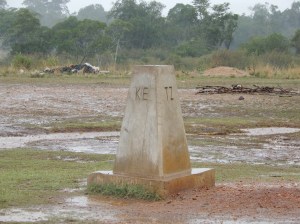
Did I mention that we saw LOTS of animals!!? We were technically in Tanzania to see the hippos and crocodiles. We crossed the Mara River, into Tanzania, where some guides took us along the river to see the beasts. It started to rain so we didn’t linger too long. One can only watch hippos grunting for a limited time anyway. We drove around the border pillar between the two countries.
We were creeping along the now muddy road, with the top of the jeep closed and the windows all steamed up from our wet clothes. Suddenly a small herd of wildebeests came shooting across the trail, at a full gallop. They leaped over some bushes beside the trail and kept on running. Wow! It happened so fast, no one had a chance to capture it properly. I got one bad shot off, through the fogged-up windows.
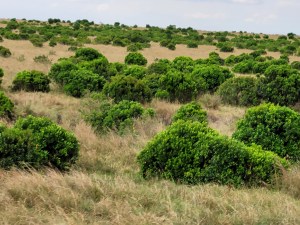
The rain seemed to happen every day, between 2:00-4:00pm and would last for 30-60 minutes. It would be sunny one minute then pouring rain the next. Just as suddenly, the sun would be out again. In that short time, the grass and shrubs seemed to get a more vivid green.
We had lunch under a huge tree. We sat on small folding chairs or on the ground while a baboon sat on
There are areas of controlled burns on the savanna. The roads keep the fire from spreading too far. This helps the new grass to grow.
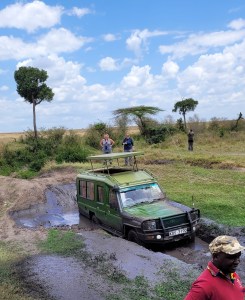
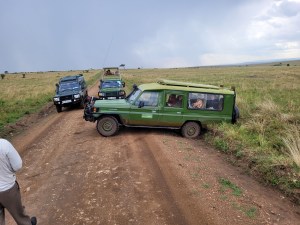
Our group was spread between 3 jeeps. 2 of the jeeps got stuck. Ours did not. However, we had to come to the assistance of both of them. One jeep tried to cross a very deep ditch and got stuck in the mud. It was too deep and slick for him to gain enough traction to escape. It was just meters from the lionesses with cubs. Everyone, naturally, had to get out of the jeep before it could be towed out. We had to get out of our jeep, as well. While a group of guys discussed how to manage the task, some of us decided it was a good time to use the bush toilet. I went behind another jeep, and Sara went behind some bushes – just across the creek from the lionesses! After she got her pants down she realized that the jeep on the lioness side of the creek had a good view of the lions as well as her! The stuck jeep was rescued. Sara escaped death and shame. All’s well that ends well.
It was an amazing day! I could not stop smiling! I was living my dream! There are really NO words to express the emotions of the experience. Everyone felt the same. Yet we met another jeep where a kid was on his tablet, while we were all looking at a majestic male lion. Everyone agreed that was just wrong, on so many levels. Maybe he was researching lions….???
SOME SWAHILI WORDS:
Jambo means Hello
Sawa Sawa means OK OK
Twende means Let’s Go.
Asante means Thank You.
Tafadhali means Please.
Pumbaa means Small Brain (sorry Lion King fans….)
Masai Mara = people who speak the Ma language
Mara = land of spots (giraffe, leopard)
Safari = journey / moving
Every day, Patrick would greet us with “Jambo Jambo! Today we are doing this or that! Sowa Sowa?” We all chimed in with the proper response. Kevin said he was going to make a sign and just hold it up, he was getting tired of the routine. LOL
DAY 4
WEDNESDAY, 19 OCTOBER
We were on the road again. This morning we stopped at a Masai Mara Village to meet Helen and learn about her organization that rescues girls from Female Genital Mutilation (FGM), promotes education, empowers widows and other vulnerable women as well as promotes community development. Check out her website here: https://tepesuacbo.org/
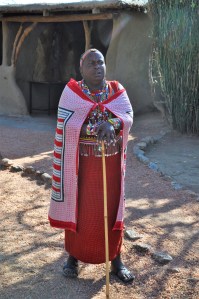
She was circumcised at age 9 (no anesthetic!), allowed to heal, then married to a 70-year-old man at age 11. Normally girls are sold for 3 cows and 1 goat. She indignantly told us that she was sold for one cow – not three or even two, just one! Men can have 5 wives. Women can only have one husband. They are married for life. If the man dies, the woman is not allowed to get remarried. She never said how old she was when her old husband died, but she did mention she has a son.
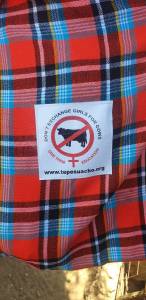
There is no divorce. If they were to divorce they would have to return the original cow investment plus any calves that are born to the original owner. This could account for an entire herd. If a man is especially abusive to his wife, the village will issue their version of a restraining order against the man. But they remain legally married.
Masai men are cattle herders. They can be gone for years moving cattle to various grazing spots. They have wives along the way. When they leave, the wife is left to care for the children and the house. The house is made of a mixture of dung, mud and water. When it rains, it falls apart. With the men gone for possibly years at a time, some women would get a boyfriend. If they had a child with the boyfriend, the child took the husband’s name and not the biological father’s name. Well, you can imagine being gone for a few years and coming home to find you are responsible for another kid, or two. Surprise! The men decided that they didn’t like this. How could they prevent it from happening? Well, let’s remove their clitoris so they don’t have the sexual urge or pleasure. And that, my friend, is how the “custom” got started.
Today, as women are better educated and as men find it harder to support large families, the trend has been to have 2 or 3 children and one wife. Boniface told me that nowadays men only take a second wife if the first one is miserable. Both men said they have equal expectations for both their sons and daughters.
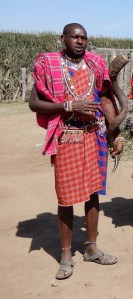
Masai men are trained to be warriors. They are trained to protect the village with their life – when they are home. They wear red clothing and jingly necklaces as their way of telling animals they are present. Every animal has a unique sound. This was the Masai’s sound. Mostly, the animals know they are there and they live in harmony, just like we saw on the savanna. If a lion looks like it is going to attack, 4 warriors form a human line, arms over each other’s shoulders. They look the lion in the eye then bend forward and stand straight again in unison. The lion sees a bigger animal with 8 eyes and is intimidated off.
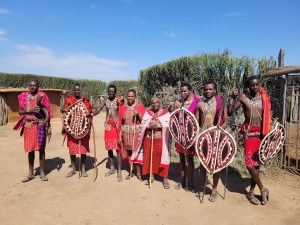
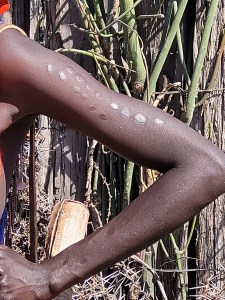
The men had tattoos which are made by heating round goat terds and then pressing them onto the skin to cause round welts. Some men had patterns literally cut into them. They asked if any one of us had a tattoo. Sara showed them the huge tattoo on her back. They were fascinated by the smoothness and colour and asked if they could touch it. I guess we have customs that intrigue them, as well.
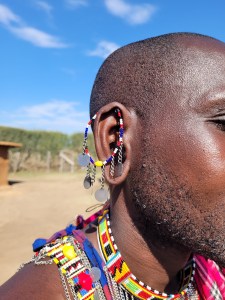
One fellow had huge ear lobes and lots of beaded rings hanging from his ears. It is a sign of bravery. The idea is not to show any sign of fear or pain. The lobe gets opened more at different stages of life – youth to adolescence, adolescence to adulthood.
This same warrior had a kudu horn. The horn is used to communicate with other villages. The kudu has a keen sense of smell and sight and is a very hard animal to capture. Therefore there is prestige in having such a horn.
The houses are very small. We were shown the interior of one. There was a spot for the small goat or cafe to sleep, a small alcove with a leather bed, and, most proudly, the kitchen. I would guess the entire house would fit quite neatly into a north American living room with room to spare.
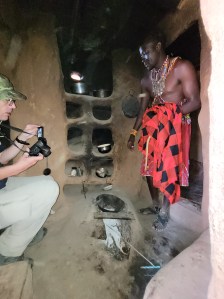
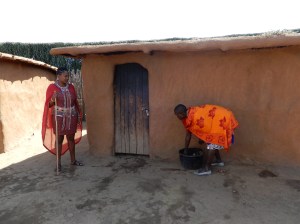
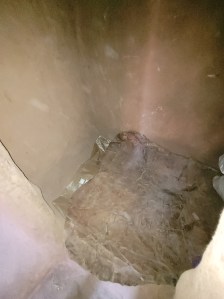
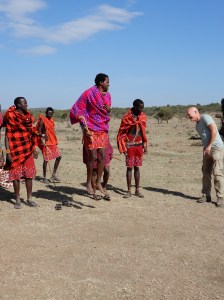
The men put on quite the performance for us. They were dressed in their Masai outfits. I made a comment that maybe they change into their jeans after we leave, but someone pointed out that we saw men dressed like this along the road, too. Three young warriors demonstrated their spear-throwing skills, attacking a tree from several feet back.
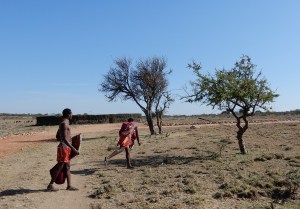
They danced and sang. They invited the men in our group to a jumping contest. We asked what the purpose of the jumping was. We were told it shows strength and agility which attracts the girls. We asked Amanda, a girl that was rescued before she was mutilated if this was true. She smiled and said “Oh, yes!” I’m not sure if the gleam in her eye was for the men in general or toward one specific young man.
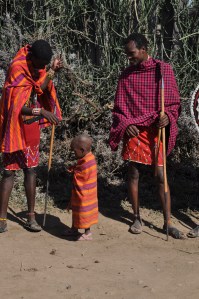
A small child approached each of us with his head bent low. Masai children do this to get a blessing from the adult. We each touched his head as he moved from person to person.
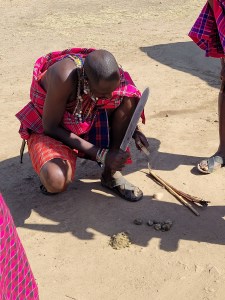
Two warriors showed us how to make a fire. One held a big knife flat in one hand and a piece of wood with holes drilled in it with another hand. There was a small piece of some kind of fluff on the knife blade. Another guy inserted a round stick into one of the drilled holes and onto the fluff. He then began to rub the round stick back and forth with the palms of his hands causing friction between the fluff and blade. Within 7 seconds he had smoke. He continued for a few more seconds. Then the first guy took the smoking fluff and placed it inside a small mound of what looked like shredded tree bark. He covered it up and started to gently blow on it. Within 2 minutes he had a proper fire.
Part of Helen’s project is to teach women to do beadwork, which they sell to support the community. They were getting ready for their market day and we were allowed 10 minutes to browse and buy. She also teaches women to sew – another revenue stream for them. Helen asked if we were approached by women selling beadwork when we were waiting to enter the National Reserve. We said yes. She said, “Well, they buy from us for a dollar and then sell it to you for three.”

Back in the truck, I got very sick. I was dizzy and weak. I felt like I was going to black out. We were stopping for gas, and Patrick pointed out where the bathrooms were. I got out of the truck and started heading the wrong way. I was so dizzy and weak that I was weaving and could hardly stand. Sara came running over, grabbed my arm and helped me to the bathroom… too late. I had soiled myself already. She went back to the truck to retrieve my rucksack while Vicky stayed with me in the bathroom. I changed my clothes and rinsed the soiled ones off the best I could. Even though I had delayed everyone and they knew what had happened to me, everyone was very gracious. I stowed my not-so-clean clothes in a storage locker at the back of the truck, with my boots. Whatever was in my system was now gone, and I felt a lot better.
That same morning, during breakfast, Sara felt sick. She made herself throw up and she was fine after. We both think it was the malaria tablets. We both had them on an empty stomach that morning. During the course of our travels, everyone got sick, to various degrees, at some point. I still think it was the tablets. Some thought it was food poisoning. Some thought it was the water. Others thought it was the heat. I wrote about “Sue’s Night Adventure” in another blog. Check it out. I have her permission to publish it.
The drive to Lake Nakuru had us going through the bread basket of Africa. The higher elevation had more rain and therefore more vegetation and more agriculture. The soil was a rich red colour. It was evident that this area was more affluent by the look of the houses. They were bigger and made of brick and mortar. There were fewer men lounging about also. We left the high plateau, dropping 250 meters and it was less green and poorer. Nakuru means dusty in Swahili.
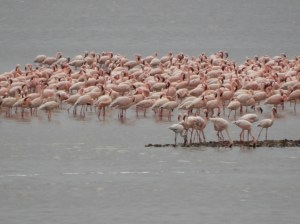
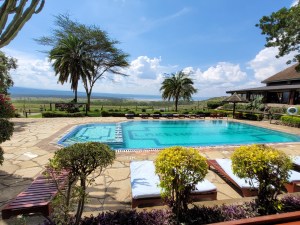
We arrived at Nakuru Lake Lodge early in the afternoon. It was a beautiful place. We had a patio that overlooked Lake Nakuru and the National Park. I looked up the cost of this place online and saw that it was $340 per night, an outrageous amount for this part of the world. We settled into our rooms and then headed out for a game drive in the Park. Because of Lake Nakuru, there are lots of birds, mostly flamingos, pelicans, terns and herons, Chris, our birder, was looking forward to it.
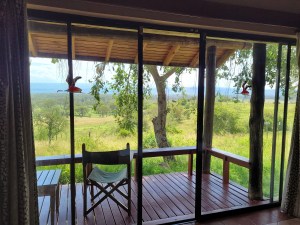
The lake has grown 150% over the past few years and is becoming less saline. The less saline, the less
brine shrimp, which is what flamingos eat. The entire system breakdown is causing the flamingos to be less concentrated than in previous years.
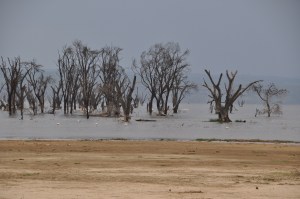
The rising water was also causing a lot of trees to drown and a road had been completely submerged.
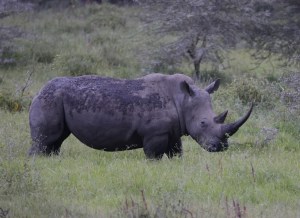
On the way to the lake, we saw several rhinoceros in the distance. They were quite far away and no one got a very good picture. However, that evening, on the way back to the camp we saw a mother and adolescent beside the road. The light was bad, but Chris got a really good picture, which he shared with the group.
Recently, there was a rhinoceros killed in the Park. The government has since put more rangers in the park to protect them. One ranger per rhino. Rangers are also told to shoot to kill any poacher – which they have done.
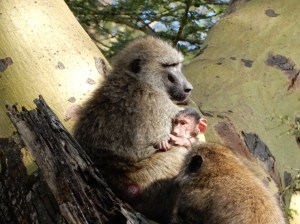
We also saw lots of cape buffalo, zebra, warthogs, impala and a troop of baboons with babies
and Rothschild giraffe. This species of giraffe is a lighter colour, has a boxier pattern to their spots and has white socks. Two young males were play fighting, whacking their long necks at one another. Even from a distance, we could hear the impacts.
Side note: giraffes stick to flat land. They can’t climb hills.
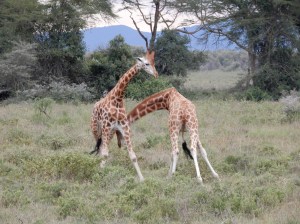
There are no elephants in Nakuru National Park. The water is too saline for them. This is really a good thing because if there were elephants they would eat all the vegetation and Nakuru would lose its wild, forested existence.
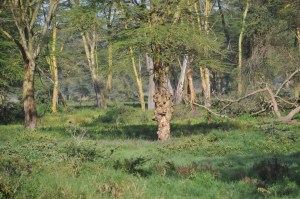
We noticed a lot of knobbly trees. Patrick explained that young rhinoceroses like to bang against the trees, but the main reason is that baboons pick at the bark of the young trees for a certain kind of medicine they can glean from them. The tree heals itself but grows these knobbly scabs in the process.
The Lodge had a swimming pool. Sara took advantage and had a quick dip that night.
DAY 5
THURSDAY, 20 OCTOBER
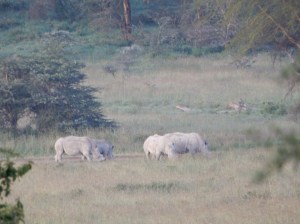
Sara opened the blinds in our room and said “Is that zebra out there? No, wait! Its rhinos!” Four rhinos were grazing off in the distance. WOW!! I don’t care what kind of fancy room a person has or how many stars it is rated at. THIS was priceless!
After breakfast, we got back in the truck to go back into the Park. We didn’t need jeeps here. First of all, Nakuru is a National Park and they have stricter off-roading rules than the Reserve (Masai Mara). There was a $250 fine if we left the trail. Secondly, we sat higher in the truck and we could open the big windows. We actually had a better view from the truck.
Chris was a fantastic (fanatic) birder. He always had a huge smile, was genuinely happy and is a very nice guy. By day 3 or 4 he had all of us on the lookout for birds. He has a camera with a paparazzi lens. Today Mandy spotted a secretary bird. We had seen one in Masai Mara, but Chris wasn’t in our group. He got so emotional when she pointed it out that he said he was having trouble focusing his camera through his misty eyes. We all thought he was joking until I saw him wiping tears.
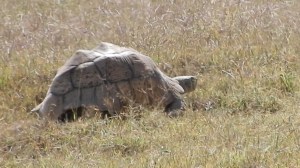
We saw more of the same animals as I mentioned earlier. However, today we saw one of the Little 5 – a leopard tortoise. Quick grab your camera before it runs away!
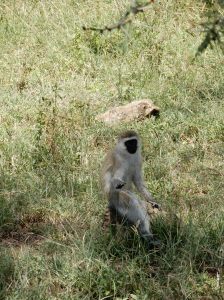
Vervet monkey – no pictures, please
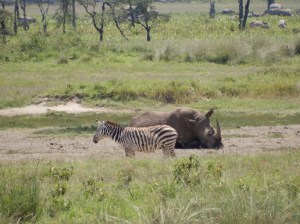
We also saw more rhinos. To put their size in perspective, look at this picture. The zebra is closer to me so you would think it would be bigger.
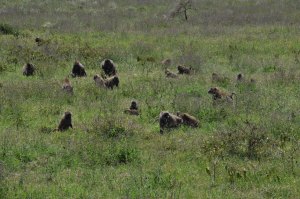
We also saw LOTS of baboons.
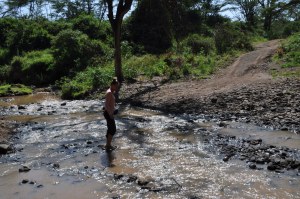
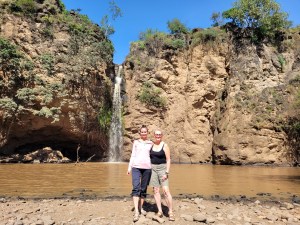
We stopped at Makalia Waterfall for a refreshing break. Sara waded across the little stream to get pictures from a different angle.
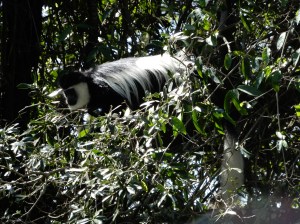
As we were about to get back in the truck someone pointed out a colobus monkey in some trees.
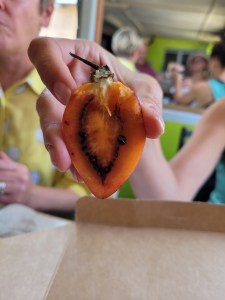
We stopped for a boxed lunch at a small village, where we ate our lunch in their restaurant. Weird. Part of the boxed lunch was a tree tomato. It was the colour and shape of a tomato and even looked like a tomato when cut open, but tasted nothing like a tomato. It was delicious.
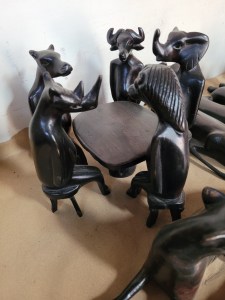
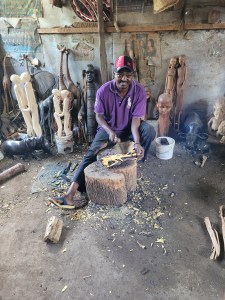
There may have been a method to their madness, as nearly everyone bought something in the gift shop. There were thousands of carved wooden figurines, some were life-size. In the back, I saw a man busily carving something. I was told they make everything there, in the back of the shop. Amazing.
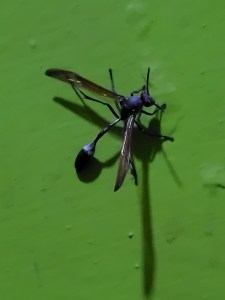
I went to the bathroom where I saw a giant wasp on the wall. It was about 3 cm long.
It was time for us to hit the road again. We made a brief stop in the city of Nakura, at a mall. A few people picked up some supplies, but mostly we just browsed.
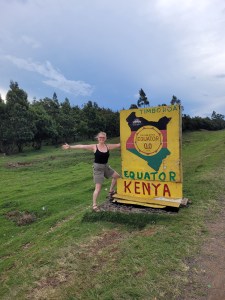
Later that day, we crossed the Equator. The marker was a shabby sign along the highway. We pulled over to take pictures and use the bush toilet next to the busy motorway.
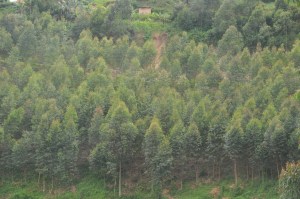
From Nakuru, we were headed for Eldoret, 150 km away. No problem, just a short drive. It took us 3.5 hours! On the way, we went through an area of planted pine which they used for lumber. Eucalyptus is also grown for its rapid growth and straight trunks, which are used for power poles. They look like Christmas trees, but with leaves instead of needles.
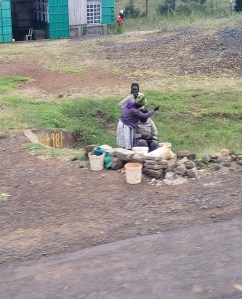
As I mentioned earlier, the drive is never boring. We saw the ever-present roadside vegetable vendors, as well as a roadside hair salon. A lady was doing hair right beside the road.
A lot of towns have garden centers set up, illegally, on medians and along the road. People set up these makeshift centers and sell potted plants. They pay no taxes because they do not own the property. They are squatters. They can be torn down by the government without warning, but in the meantime, they are making money. A lot of times the government leaves them because they usually beautify the location with their flowers.
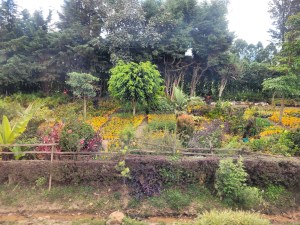
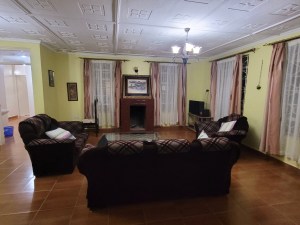
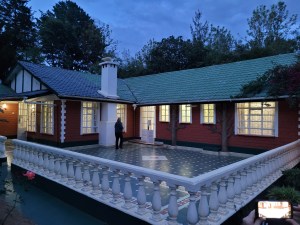
We arrived at Greenwood Resort & Camping for the night. Up to now, Sara and I had been sharing a room with two beds. Tonight I got my own room with a private bath and king bed. Some of the girls were not happy with their tiny rooms and shared bath. Management asked if I would mind if Sara shared my bathroom since she was just across a common area that was between our rooms. I said it shouldn’t matter since she was already using my shower. Bonus! They basically evicted the fellow sitting in the common area, locked the door and gave us this free space all to ourselves, complete with a fireplace.
DAY 6
FRIDAY, 21 OCTOBER
We were on the road again. Despite having some beautiful places to stay, we never really had time to enjoy them. By the time we checked in we were so tired we just wanted to eat and go to bed. We were always up early and on the road as the sun was coming up. This just confirms my theory of as long as there is a clean bed, shower and toilet it doesn’t really matter how fancy the place is.
We stopped for gas in the town where Obama’s dad was from. This area was known for its cock and bullfights – bull vs bull, not bull vs matador.
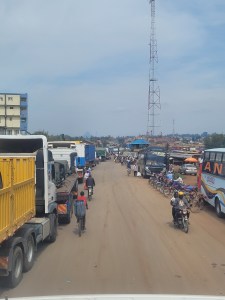
We crossed into Uganda. There was a long queue of, mostly, big trucks. Kenya has a seaport so lots of things have to go through Kenya to get to and from markets. Photos were strictly forbidden at the borders, as well as pictures of any police or security checks anywhere on our travels. The vehicle gets checked first. Further along, the travellers get processed.
Nothing is as simple as it sounds. Continue the story in Uganda….
 An Old Lady with a Backpack
Leave a comment