
My dream trip of a lifetime had ended. I was back in London.
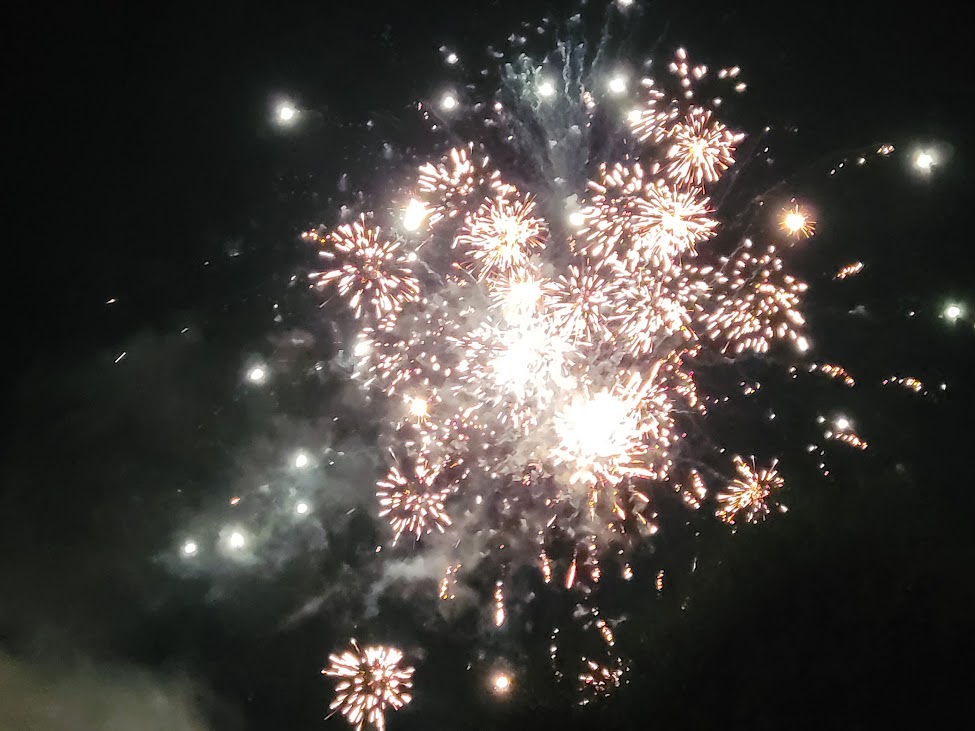
November 5 is Guy Fawkes Day. When Henry VIII founded the Church of England, Catholics were forced to practice their faith in secret. In 1605, Fawkes and a group of other Catholics plotted to blow up London’s Houses of Parliament as an act of terrorism, hoping to spark a revolution in Protestant England. Fawkes was an explosives expert, so he was the one who got caught under the Houses of Parliament with the stash of gunpowder. He and his conspirators were arrested and subsequently put to death. When Londoners found out about the thwarted plot they lit bonfires in celebration (which have evolved into fireworks). The then-King James I passed a law designating November 5 as a national day of remembrance. The sky was filled with fireworks in all directions. The kids were running back and forth between bedrooms, at the front and back of the house, to catch the most current view.
Lenny had a meeting in Woodstock. He graciously asked if I would like to tag along and spend a day in Oxford. Fantastic! He dropped me off and carried on to his meeting.
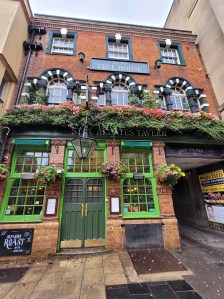
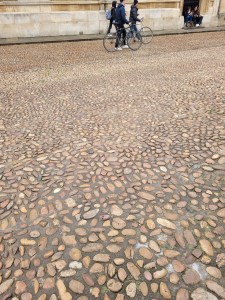
Founded around 700 ad, Oxford means “ford of the oxen”. It still has cobblestone streets.
I passed an old church with a medieval tower. It intrigued me, so I stopped in. This was St. Michael at the North Gate. The tower was built in the early 9th century. It is 18 metres (63 feet) high, 6 metres 20 feet) square and the base walls are 1.2 (4 feet) thick. I went to the top. It would have made a good vantage point to spot visitors coming from the north.
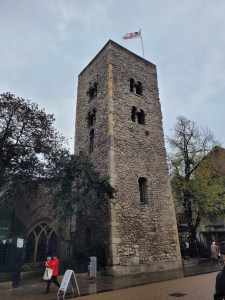
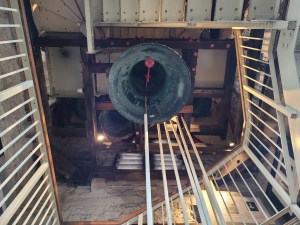
The church was built to incorporate the tower in the early 13th century. There are 4 bells, which have not been rung since the groundskeeper could remember. The vibration was causing the tower to crack. However, they were rung recently when both Prince Philip and the Queen died.
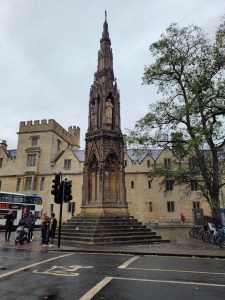
When Henry VIII became head of the Church of England, All the catholic images were removed. When Queen Anne (a Catholic) became Queen, She had the Protestant Bishops burned at the stake. The Martyrs Memorial on Broad Street marks the spot. (Don’t you love religion?)
Oxford was a key location in the 15th-century civil war. Much of the city burned to the ground when the fire from a roasting pig got away from the soldiers who had stolen the hog.
Queen Elizabeth I entered through the North Gate in 1566 and 1592. The Gate was demolished in 1772 by an act of Parliament when they condemned the streets of the city as being “so very narrow and incommodious, and so greatly obstructed by nuisances and annoyances.”.
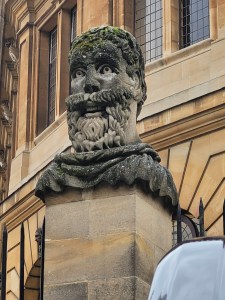
I carried on to Christ Church. University, which was founded in 1525 by King Henry VIII. It is a relatively “new” university; Balliol and Merton Colleges were built in 1249 and 1264. It is one of the largest and wealthiest colleges, with an endowment of nearly one billion dollars and a student body of around 650 students. Sir Christopher Wren designed the Tom Tower. Tom Quad is the largest quadrangle in Oxford. It’s alumni include 13 British Prime Ministers, a few foreign prime ministers, as well as foreign and domestic royal nobility.
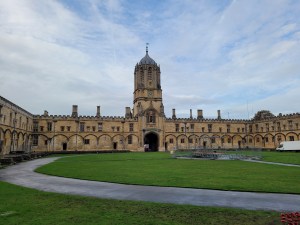
Christ Church is currently famous for being the location of the Harry Potter scenes at Hogwarts. It attracts nearly a half million tourists annually.
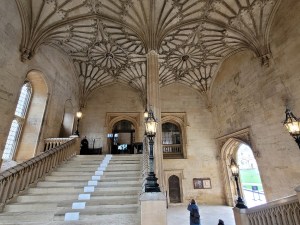
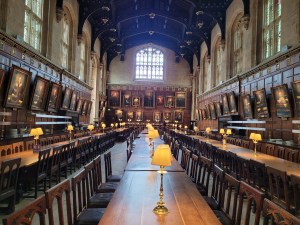
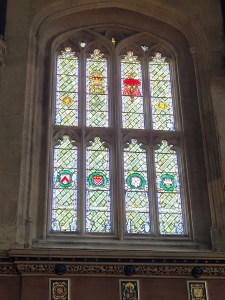
It is also where “Alice in Wonderland” was born. Charles Lutwidge Dodgson (aka Lewis Carroll) was a lecturer here. He became good friends with the Dean Henry Liddell and his three daughters, Lorina, Alice and Edith. Carroll had a bad stutter, that disappeared when he spoke to children. He used to tell them fantastic stories. One day he told a story about a girl named Alice and her adventures after she fell into a rabbit hole, which was not unlike many other stories he had previously told. But little Alice was smitten with this particular name-sake story and asked him to write it out for her. The rest is history. A stained glass window in the Great Hall commemorates the book by depicting some of the characters, easily spotted in the lower windows.
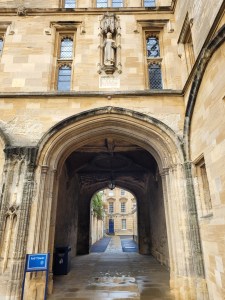
It is a grandiose facility. There are statues of the various influential people placed over various arches to commemorate them.
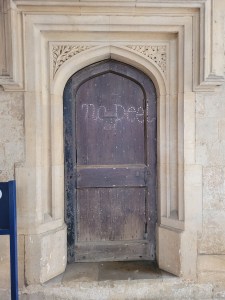
There was very old graffiti on a door. “No Peel” is marked into the door with nails, an enduring political statement still visible 200 years later. Peel was in support of Catholic emancipation, allowing them to take public office. Apparently not everyone held his view.
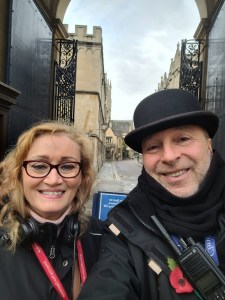
I stopped to talk to one of the guards and then carried on to the Art Gallery located on the grounds.
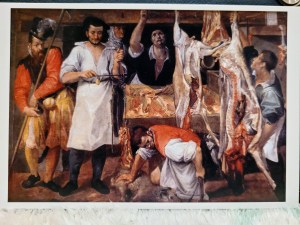
It is a small gallery and houses around 300 old masters and 2000 drawings. I noticed three empty frames and assumed that the paintings were on loan to other galleries. Wrong! The paintings were stolen! Early into the Covid lockdowns burglars broke into the gallery and stole the 3 paintings, at an estimated value of 10 million British pounds ($16 million CDN). The perpetrators have not been caught.
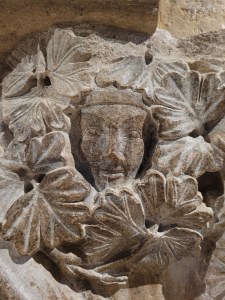
I backtracked to the cathedral entrance at Tom Quad. Here I saw the shrine of St. Frideswide, the Patron Saint of Oxford. She was a Saxon Princess and had vowed to become a nun, however, the king was determined to marry her. She fled and prayed to God for protection while she hid in a tree. God struck the King blind. He realized the error of his ways and asked Frideswide for forgiveness. She forgave him and his sight was magically restored. She began to have a reputation as a healer. Her shrine is the oldest monument in the Cathedral. It is covered in naturalistic foliage carvings – sinful stuff in those days. Perhaps because of this or because it was Catholic, it was badly damaged during the English Reformation in 1538. Living up to her healer reputation, the carving of her face among the foliage she hid in was not damaged.
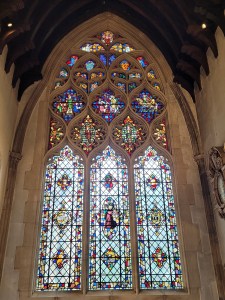
A famous window in the church is the Jonah Window, depicting the biblical story of Jonah arguing with God regarding the forgiveness of Nineveh. Stained glass windows were a way of depicting bible stories to the illiterate masses. This particular window was made in 1633 and is the only window to survive the civil war between King Charles and Parliament.
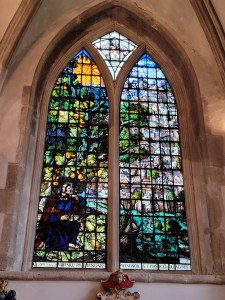
The Becket Window features the martyrdom of Thomas Becket and has been a feature of the Cathedral since 1320. It contains the oldest and finest stained glass in the Cathedral. Its survival is remarkable because Henry VIII ordered all images of Becket destroyed when he was condemned by the monarch. The face of Becket was removed, only to be replaced centuries later.
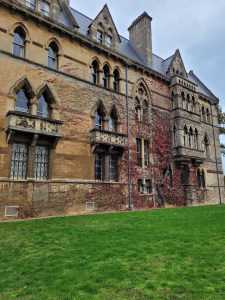
An exit through the cloisters took me out of the University and facing the Meadow with the Meadow Building behind me.
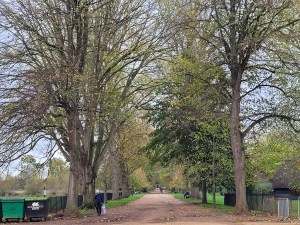
I stopped briefly at the Covered Market. I didn’t buy anything.
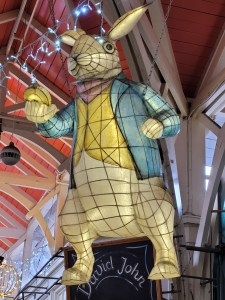
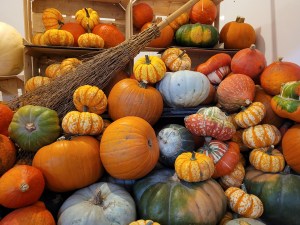
Close by was St. Mary the Virgin church. I went up the steep spiral staircase to the top of the tower.
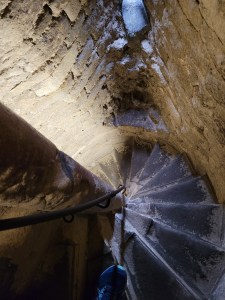
There were some spectacular views of the city, with the Radcliffe Camera being one of them.
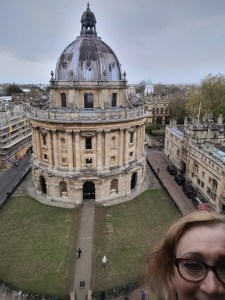
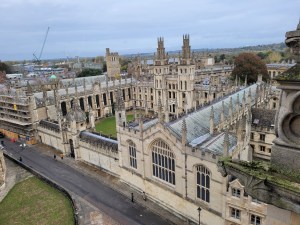
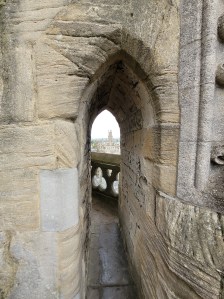
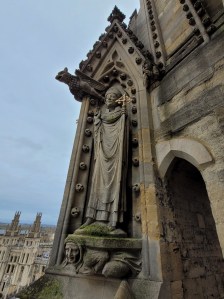
I have been to church towers before, but I really liked this one. It was very narrow on top. There was room for only one person at a time to squeeze through. I’m sure anyone claustrophobic or afraid of heights would have fainted. But I loved it! There were statues and gargoyles up close.
About this time, Lenny texted to ask how it was going. He suggested that if I could make my way to Woodstock it would help tremendously for the timeline back to London. Not a problem. I inquired about a bus and hopped on board.
We were concerned about the return trip to London. On the way to Oxford, the M25 was backed up for miles heading into the city. Protesters had taken over some overpasses and police presence was at an all-time high. They stopped the traffic until they had a chance to detain the protesters.
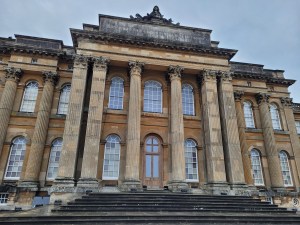
I was headed to Blenheim Palace, one of England’s largest houses. It was built between 1705 and 1722. It was designated a UNESCO World Heritage Site in 1987. It was a reward to John Churchill, the 1st Duke of Marlborough, for his military triumphs during the War of Spanish Succession. It is the ancestral home of Sir Winston Churchill and he was born here. It is the only non-royal, non-episcopal country house to hold the title of “palace”.
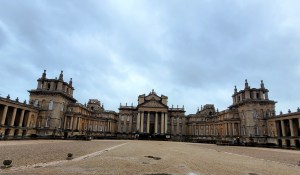
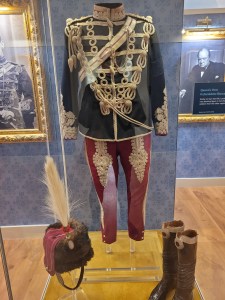
I knew I wouldn’t have time for the full tour, so I only bought a ticket to the park and grounds. The only part of the palace that I was allowed to enter was the Winston Churchill exhibition. There were bits of clothing, a lock of hair and other memorabilia on display. I whisked through, anxious to see the grounds before the looming rain started.
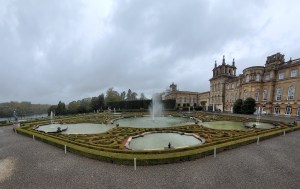
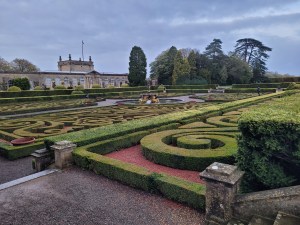
I lingered a bit at the Water Terraces. There were maze-like patterns cut into the hedges surrounding the fountain in the centre.
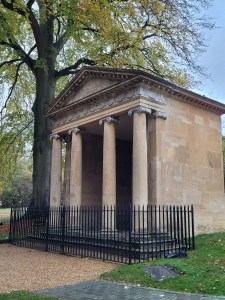
I wandered along the lake path where I came to the Temple of Diana. Churchill proposed to his wife in this temple during a rainstorm they got caught in.
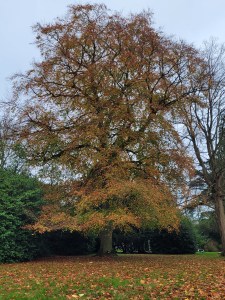
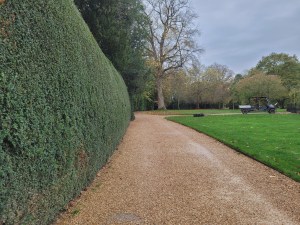
The path continued past beautiful huge trees decorated in autumn colours and along carefully manicured hedges.
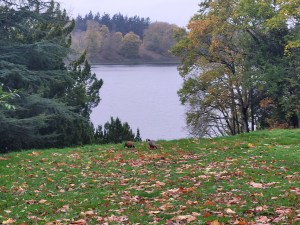
I saw a pair of pheasants.
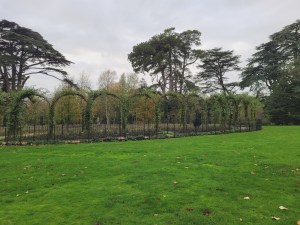
The grounds were being prepared for the Christmas season. I came to the Rose Cascades. It is a lovely rose garden where the roses climb up loops of slender hoops. A gardener was putting up lights on the hoops. I asked if he could turn them on so I could take a picture. He did, however, it was too light to really capture it.
I was trying to head back toward the main gates, in anticipation of Lenny picking me up. I thought I could exit from the other side of the Palace. It turns out I couldn’t but it was a lovely tour nonetheless. I walked past the south portico, with the 30-tonne marble bust of King Louis XIV. It was looted by the Duke of Marlborough from the city gates of Tournai during the War of Spanish Succession.
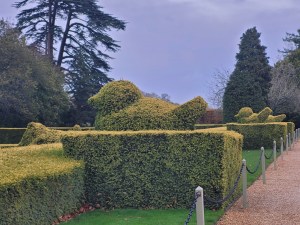
Next came the Italian Garden. It has a magnificent fountain of bronze and guild in the centre which is surrounded by maze-like hedges. Some of the hedges had been shaped to look like birds and hedgehogs. As the wind blew, the tails of the birds bounced and made them come to life.
Still thinking I could exit on this path, I found myself in the secret garden. It had little paths that shot off in many directions, and I fancied myself wandering in circles trying to escape. All the while thinking this is the most beautiful garden I have ever seen. There were little benches and bridges tucked into tranquil nooks.
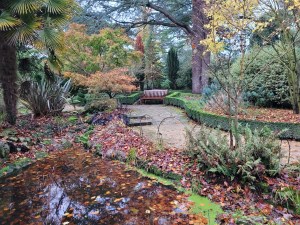
I finally found my way out of the secret garden. I had to go back to the Palace and exit the way I had come in. I made it to the main gates just seconds after Lenny arrived. I didn’t have much time at Blenheim Palace. But I did have enough time to realize I must come back!
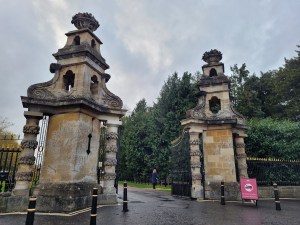
Google had the road home taking us through all sorts of little back roads to avoid the M25. We wished it were daylight, as some of the areas were absolutely lovely. Len said he may have to come back this way, just to have a better look.
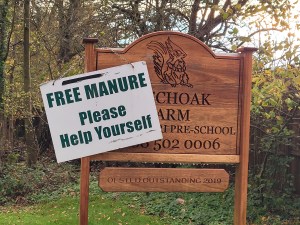
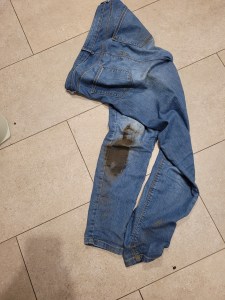
The remainder of my time was spent playing football in the back garden with Julian. I did not take it easy on him. He can kick that ball in circles around me. I slipped in the mud and he quickly asked if I was OK. Yes, I am. Boom, he scored a goal while I was down.
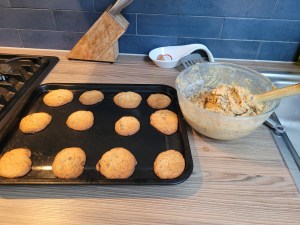
I made cookies and cupcakes. The kids were amazed that I could MAKE them. The first bite had them pleasantly surprised and they said they were better than the ones from the shop.
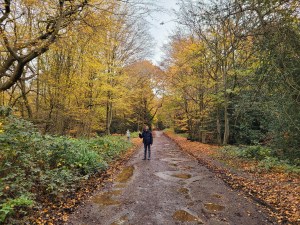
We took another walk in Epping forest. The leaves were ablaze with autumn colours. It was a cool day, with a bit of rain, but we all enjoyed the fresh air and exercise.
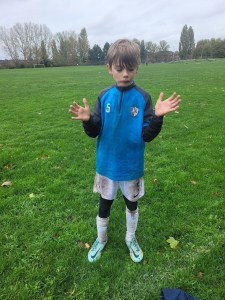
There were more Saturday morning football games. Julian had one on one goalkeeper training right after the games. The coach works him hard, but it is easy to see a huge improvement in his stopping skills. It doesn’t matter how wet and dirty he gets, he is never too tired or cold to want to stop.
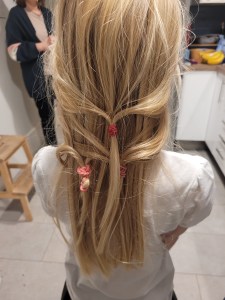
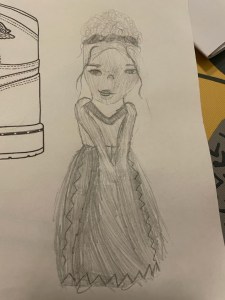
Lots of time was spent playing with Mango the cat and drawing pictures and doing hair with Freya.

I was off to Lisbon, Portugal…..
 An Old Lady with a Backpack
Leave a comment